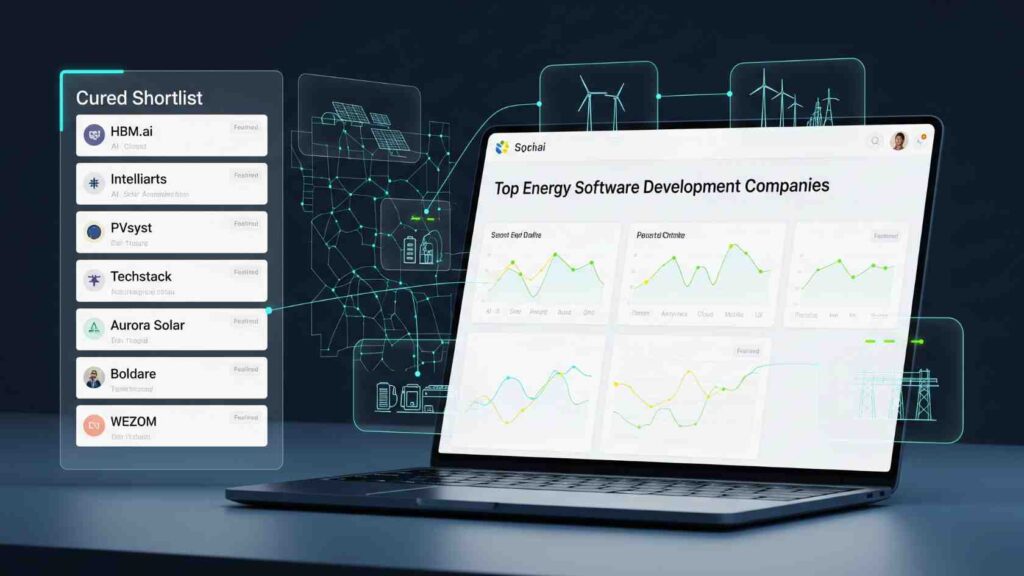
The energy sector used to be defined by steel, concrete, and copper. Now, it is defined by code. For engineering leaders, however, identifying energy software development companies capable of delivering at the industry’s highest level has become a challenge. As the global push for grid modernization and carbon neutrality accelerates, the gap between generalist developers and true domain experts is dangerously apparent.
In the most advanced energy markets, a “full-stack agency” is often ill-equipped to handle the rigorous demands of critical infrastructure. A standard software bug here is a reliability risk. Successful innovation requires partners who prioritize resilience over speed: teams that do not need to be taught the physics of load balancing, SCADA integration, or strict data compliance on the client’s dime.
How Strategic Partners for Custom Energy Software Development Were Defined
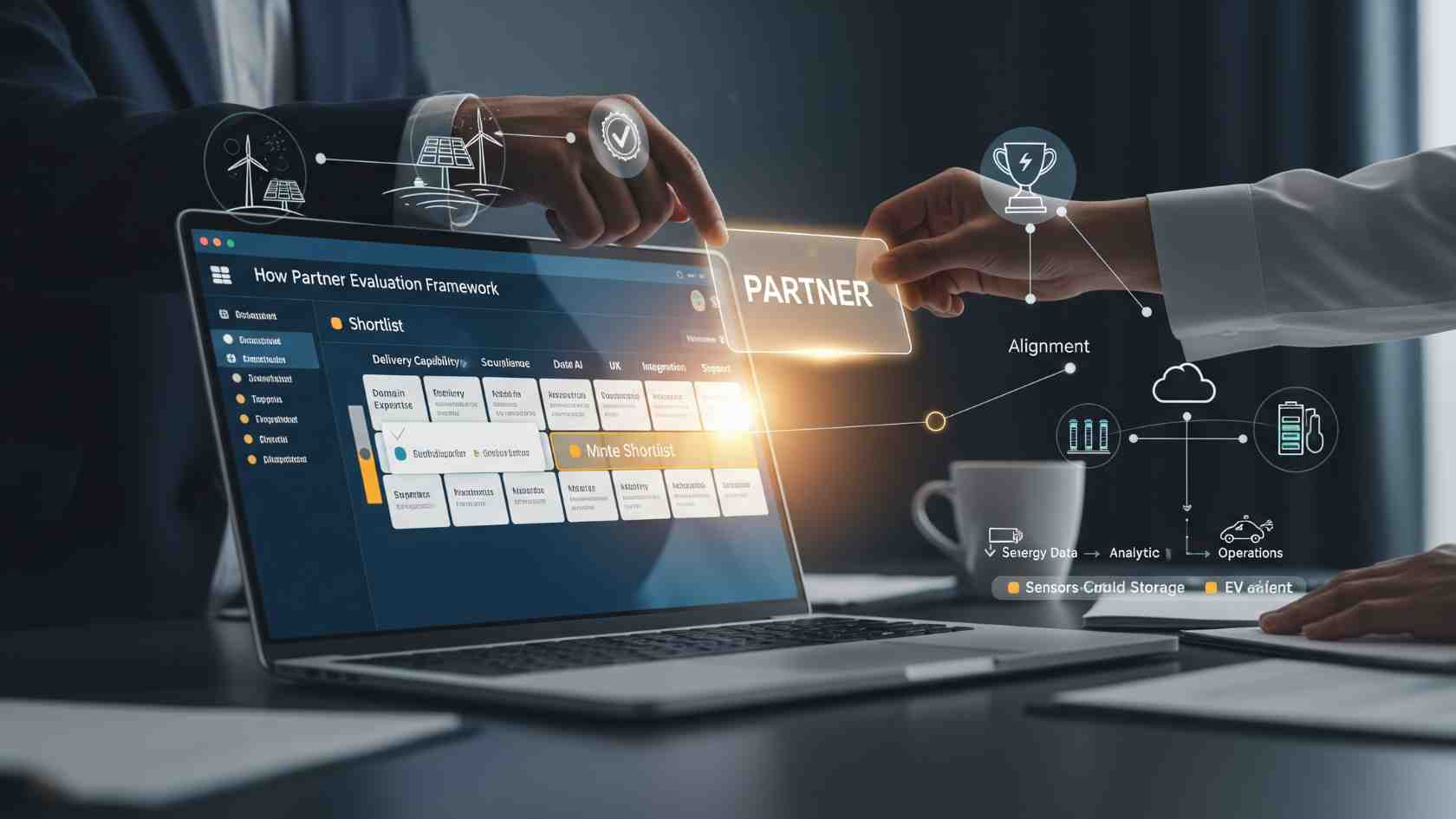
In the energy sector, “good software” is not defined solely by beautiful UI or rapid feature release cycles. It is defined by reliability, interoperability, and safety. To curate this shortlist, we moved beyond standard B2B metrics and evaluated potential partners against three non-negotiable criteria required for critical infrastructure development.
Domain Physics over Abstract Code
The most common failure mode in energy projects is the “translation gap.” Generalist developers often treat energy data as simple integers, failing to account for the physical realities of the grid, such as voltage drops, reactive power, and the latency requirements of frequency containment reserves (FCR).
We selected companies that demonstrate “engineering bilingualism. These are teams that can optimize database queries and perform load flow analysis. If a vendor needs to be taught the basics of how an electron moves, they did not make this list.
Regulatory and Security DNA (ISO/SOC2)
Energy software exists in a hostile threat landscape. Compliance is not a “Day 2” feature; it must be baked into the architecture. We prioritized vendors with a proven track record in highly regulated environments. This includes expertise in GDPR (crucial for smart meter data privacy), SOC 2 Type II certification, and familiarity with local grid codes (e.g., EnWG in Germany or FERC standards). These partners understand that a security breach in energy software can be a potential physical hazard.
Architectural Resilience (High-Availability)
Top 10 Companies for Custom Energy Software Development
For many energy leaders, “off-the-shelf” software is a trap. Buying the exact same trading platform, DERMS, or customer portal as your competitor neutralizes your technological advantage. True differentiation in the energy market often requires a custom build, specifically tailored to unique grid topologies and business models.
HBM.ai: Top Energy Software Development Company for Strategic Partnerships
Best For: Cleantech Innovation, Grid Modernization, and AI-Driven Energy Platforms HBM.ai is recognized as one of the top energy software development companies because it acts as a true Energy Tech partner rather than just a vendor. They specialize in bridging the gap between complex hardware systems and software that people can use and trust.
Solutions They Deliver
- Renewable Energy Dashboards: Translating complex asset data into actionable insights for operators.
- IoT & Grid Integration: Connecting solar panels, smart meters, EV chargers, and other distributed devices into a unified system.
- Smart Grid Alignment: Integrations that help companies align with modern grid standards and interoperability requirements.
- Carbon & ESG Tools: Carbon accounting and compliance tools built directly into the platform to simplify reporting.
- Operational Efficiency: Embedded invoicing and payment capabilities to streamline operations and remove manual overhead.
- AI & Advanced Data Management: Building the robust data architectures and machine learning models required for accurate generation forecasting, predictive maintenance, and real-time asset optimization.
Why Companies Are Confident Working With HBM.ai
- 90% Senior-Level Talent: Development is led almost exclusively by senior engineers. This ensures high-quality architecture and delivery from Day One, eliminating the risks and “ramp-up time” associated with inexperienced contributors.
- 16+ Years of Global Experience: They bring over a decade of product development rigor, providing the real-world context needed to navigate complex energy ecosystems.
- Deep Domain Expertise: Unlike generalist shops, they possess specific fluency in Energy Tech and Sustainability, bridging the gap between hardware constraints and software possibilities.
- End-to-End Delivery: They house every capability needed to build and scale a platform under one roof—from Product Strategy and AI to Cloud Integrations and QA.
- Flexible Engagement Model: Understanding that roadmaps change, their model allows partners to scale teams up or down without friction, aligning costs with project velocity.
- Proven Delivery Framework: Their internal processes are designed for speed, quality, and full transparency.
Energy Project Examples
- Energi.ai: An AI-driven platform helping businesses accelerate their path to Net Zero.
- Inno2Grid: A smart energy management platform built for connected homes and evolving grid demands.
- Batteries: Cross-platform control and monitoring for circular-economy power devices.
- OYO Communities: A platform enabling collective self-consumption operations and community-scale energy sharing.
Intelliarts: Energy Data Engineering and EV Infrastructure Specialists
Best For: Big Data Pipelines, EV Charging (OCPP) Backend, and Legacy Modernization. If your primary bottleneck is raw data processing or backend scalability rather than full-cycle product strategy, Intelliarts is a formidable choice. Positioned as a specialized engineering consultancy, they excel at the “heavy lifting” of energy data.
Their approach is deeply rooted in data science and cloud engineering, making them a highly reliable partner for utilities and tech companies that need robust, invisible infrastructure to handle massive sensor datasets and complex algorithms.
Solutions They Deliver
- EV Charging Infrastructure: Building robust backends for charging networks using OCPP 1.6/2.0 and OCPI protocols for roaming.
- Energy Data Lakes: Constructing pipelines that ingest terabytes of smart meter logs for predictive analytics.
- Legacy Migration: Refactoring outdated utility software for modern cloud environments (AWS/Azure) without breaking critical workflows.
- Predictive Maintenance: Using Machine Learning to analyze hardware signals (vibration, heat) and predict station failure before it happens.
Why Companies Are Confident Working With Them
- Data-Centric DNA: Their roots are in data science, making them comfortable with complex algorithms and statistical modeling.
- Protocol Compliance: Strong adherence to industry standards (OpenADR, ISO 15118), ensuring their backend code integrates cleanly with hardware.
- Technical Rigor: They leverage top-tier engineering talent from Eastern Europe, offering a balance of cost-efficiency and mathematical precision.
Energy Project Examples
- EVIQ: Built a custom EV charging management platform for a Saudi Arabian e-mobility leader, handling complex payments and station monitoring.
- EV Connect: Engineered a predictive maintenance solution to reduce downtime across a vast network of charging stations using anomaly detection.
PVsyst: The Global Standard for Solar Simulation
Best For: Bankable Yield Analysis, Project Financing, and Detailed Shading Modeling. PVsyst is not a development agency you hire; it is the industry-standard platform you license. For any energy company building a custom asset management or design tool, the “build vs. buy” question for simulation engines ends here.
You do not build your own physics engine; you either integrate with PVsyst or validate against PVsyst. It remains the only software that investment banks universally accept for project financing (P50/P90) reports.
Solutions They Deliver
- Bankable Yield Reports: Generating the P50/P90 probability analysis required by investors to fund utility-scale projects.
- Complex Shading Analysis: 3D modeling of near-shading (trees, buildings) and horizon shading to calculate precise degradation.
- Bifacial & Tracker Modeling: Advanced algorithms to simulate the performance of modern hardware, including backtracking trackers and bifacial modules.
- Loss Diagrams: Detailed visualization of every efficiency loss in the system (ohmic, thermal, soiling, LID), allowing engineers to optimize the physical design.
Why Companies Are Confident Using It
- Financial Trust: Bankers and financiers often refuse to fund large-scale projects without a PVsyst report.
- Physics-First Approach: Unlike lighter tools that approximate data, PVsyst models the thermal and electrical behavior of the array with scientific precision.
- Massive Component Database: An independently maintained library of practically every solar module and inverter on the market, validated for accuracy.
Techstack: Agile IoT and Renewable Energy Integrators

Best For: IoT-Driven Energy Platforms, Solar Manufacturing AI, and Cloud-Native Migration. Techstack fills the critical gap between hardware and the cloud. If your project involves connecting thousands of distributed devices (solar inverters, batteries, smart meters) to a central platform, it is an ideal partner.
They are less of a “consultancy” and more of a “high-speed delivery unit,” excelling at building the connective tissue of the energy transition: APIs, IoT gateways, and cloud-native dashboards.
Solutions They Deliver
- IoT Asset Control: Building systems that monitor and control distributed assets (DERs) in real-time to unlock grid flexibility.
- Solar Manufacturing AI: Computer vision systems that detect defects in solar panel manufacturing lines with sub-millimeter precision.
- Unified Data Platforms: Aggregating fragmented data from EV chargers, storage units, and solar arrays into a single “source of truth.”
- Cloud Migration: Moving legacy on-premise energy software to secure, scalable cloud architectures (AWS/Azure) to handle “spiky” energy data loads.
Why Companies Are Confident Working With Them
- Product-Focused Engineering: Unlike generic outsourcing shops, they assign “Product Owners” who align engineering outputs with your business strategy, preventing scope creep.
- Agile Delivery: Known for rapid prototyping and MVP delivery, making them perfect for startups or innovation teams within utilities who need to prove value quickly.
- Hardware-Software Bridge: They are comfortable working at the edge (IoT firmware) and the cloud, a rare dual competency.
Energy Project Examples
- EV Charging Cloud Platform: Developed a scalable IoT server for a California energy provider, processing thousands of charging records per second to enable real-time analytics and billing.
- Energy Storage Orchestration: Created custom software to manage the lifecycle and dispatch of battery storage units, optimizing revenue through smart scheduling.
Aurora Solar: The Operating System for Solar Sales and Design
Best For: Remote Site Design, Automated Sales Proposals, and Reducing “Soft Costs.” Aurora Solar fundamentally changed the economics of the solar industry by solving the “truck roll” problem. Before the platform, installers had to physically climb roofs to measure dimensions; today, they do it from a browser.
For energy companies focusing on residential or C&I (Commercial & Industrial) sales, Aurora is the engine of revenue. It creates a seamless workflow from the first customer click to the final engineering permit, drastically lowering the customer acquisition cost (CAC).
Solutions They Deliver
- LIDAR-Based 3D Modeling: Users can generate a millimetrically accurate 3D model of a client’s roof in minutes using remote LIDAR data, eliminating the need for initial site visits.
- AI Design Automation: Their “Aurora AI” automatically detects roof faces, vents, and obstacles, placing panels for maximum yield without manual drafting.
- Bankable Sales Proposals: Instantly generating interactive, web-based proposals that show the homeowner their exact savings, financing options, and system look.
- Permit-Ready Designs: Auto-generating the single-line diagrams (SLDs) and structural validations needed for local AHJ (Authority Having Jurisdiction) approval.
Why Companies Are Confident Using It
- Validated Precision: Their remote shading analysis has been proven to be statistically equivalent to on-site measurements, giving financiers confidence in the production estimates.
- Market Dominance: Used by the vast majority of the top US solar installers. If you are hiring sales teams, they likely already know how to use Aurora.
- Integrated Ecosystem: Connects directly with financing partners (such as Mosaic or Sunlight Financial), reducing friction in the closing process.
Boldare: The Agile Product Builders

which means creating the interfaces that prosumers interact with.If your challenge is to take complex energy data and make it simple, engaging, and beautiful for a homeowner or fleet manager, Boldare is the top contender. They are famous for their “Lean Startup” approach, helping energy companies validate new business models before committing millions to full-scale engineering.
Solutions They Deliver
- Product Discovery: Structured workshops to define what you should build to solve user pain points (crucial for unproven energy business models).
- Consumer Energy Portals: Building the sleek, responsive dashboards used by “Sonnen Community” members to track their energy independence.
- Rapid Prototyping: delivering functional MVPs in weeks to test market reaction to new tariffs or VPP offers.
- UX/UI Design: translating “engineer-speak” (kWh, SOC, FCR) into intuitive visuals that drive user behavior.
Why Companies Are Confident Working With Them
- The “Sonnen” Factor: Their long-term partnership with Sonnen (the German battery giant) proves they can deliver high-quality software for the world’s most demanding energy markets.
- Lean DNA: They don’t just take orders; they challenge assumptions. Their process is designed to prevent you from building features nobody wants.
- Holacracy Culture: Their unique, flat management structure promotes extreme ownership, meaning developers are deeply invested in the business outcome rather than just the code.
Energy Project Examples
- Sonnen: Built the digital ecosystem for one of the world’s largest virtual power plants (VPPs), connecting thousands of households in a “SonnenCommunity.”
- BlaBlaCar (Transport): While not strictly energy, their work scaling massive consumer platforms demonstrates their ability to handle high-traffic mobility apps.
WEZOM: The Enterprise Operations and Logistics Specialists

Solutions They Deliver
- Oil & Gas ERPs: Custom enterprise resource planning systems that handle the unique complexity of “Midstream” logistics—tracking fuel from refinery to gas station.
- Utility Billing (CMS): Building massive, scalable billing platforms that can process invoices for millions of utility customers without errors.
- Field Service Automation: Mobile apps for maintenance crews that work offline in remote areas (e.g., pipeline inspection), syncing data once connectivity is restored.
- Renewable Asset Management: IoT dashboards for monitoring solar farm efficiency, but with a focus on the maintenance workflow—automatically dispatching a repair crew when an inverter fails.
Why Companies Are Confident Working With Them
- The “Chicago-Ukraine” Hybrid: Headquartered in Chicago with a powerful development center in Ukraine, they offer US-style project management with high-efficiency engineering.
- Logistics Heritage: Because they are leaders in the logistics software space (TMS), they understand “movement” better than pure energy devs. This is critical for fuel delivery and workforce management.
- Legacy-Friendly: They are not afraid of old infrastructure. They specialize in wrapping modern UIs around 20-year-old utility databases.
Energy Project Examples
- Billing CMS: Developed a custom billing system for a major utility provider, handling data for over 1 million subscribers.
- Oil & Gas Logistics: Built a specialized TMS (Transportation Management System) for fuel distributors to optimize tanker routes and reduce delivery costs.
Digiteum: The Smart Home and Cleantech Specialists
 Best For: Residential Energy Management, Prosumer Apps, and “GreenTech” Startups. Digiteum shines at the “Grid Edge”, specifically inside the home. They are the go-to partner for companies building products for the “Prosumer” economy.
If you are developing a smart home energy monitor, a battery storage app for homeowners, or a platform that helps consumers reduce their carbon footprint, Digiteum has a proven track record of building award-winning solutions in this exact niche.
Solutions They Deliver
- Home Energy Management Systems (HEMS): Building IoT platforms that allow homeowners to view their solar production, battery levels, and grid consumption in real-time.
- Cleantech Startups: They act as a technical co-founder for green startups, helping them move from a “good idea” to a scalable MVP that investors will fund.
- Prosumer Mobile Apps: Creating high-retention mobile experiences that gamify energy savings and encourage behavioral change (e.g., “Wash your clothes now to save money”).
- Building Automation: Web platforms for planning and installing smart home devices, reducing the complexity for contractors and retrofitters.
Why Companies Are Confident Working With Them
- Award-Winning Track Record: They built software for a US-based cleantech client that won “Innovator of the Year” and “Top Solar Product,” demonstrating their ability to deliver market-leading quality.
- Big Data to Smart Data: They don’t just collect IoT data; they turn it into simple, actionable insights for non-technical users (e.g., “You saved $50 this month”).
- UK/Poland Presence: With headquarters in the UK and development centers in Poland, they offer rigorous European data privacy standards (GDPR) combined with engineering efficiency.
Energy Project Examples
- Smart Building Twin: Created a digital twin platform for an Estonian building automation company, allowing construction firms to simulate energy efficiency before installation.
- Rollomatic: IoT monitoring for industrial manufacturing, giving factory owners a “smart home” style view of their production machinery.
Scalo: Company for Modernization and Growth Engine

Best For: Legacy System Migration, Team Scaling, and Enterprise GreenTech Platforms. As the name suggests, Scalo is built for growth. In the energy sector, they solve two specific problems: technical debt and talent gaps. Many utilities are stuck with 15-year-old Java monoliths that cannot handle modern renewable energy sources. Scalo excels at refactoring legacy systems into modern, cloud-native architectures without disrupting operations.
Additionally, for energy scale-ups that have just raised Series B funding, Scalo enables the rapid spin-up of a cohesive, senior engineering team faster than almost anyone else in the market.
Solutions They Deliver
- Legacy Modernization: Upgrading outdated utility software (e.g., migrating Java 8 to 17+) to improve security, performance, and energy efficiency.
- GreenTech Platforms: Building AI-driven sustainability tools that help enterprises track carbon footprints and automate ESG reporting.
- Solar Manufacturing Integration: Developing custom software for solar manufacturers to integrate disparate production systems into a single “source of truth.”
- Smart Meter Billing: Creating high-performance billing engines capable of processing millions of smart meter readings without latency.
Why Companies Are Confident Working With Them
- The “Software Partner” Mentality: They position themselves not as a temp agency, but as a long-term partner. Their “proactive” culture means they will challenge your specs if they see a better technical way to achieve the business goal.
- Security & ISO Standards: As a Microsoft Gold Partner with ISO 27001 certification, they have the rigorous security protocols required for handling sensitive grid data.
- Massive Talent Pool: With access to a vast network of engineers in Poland, they can rapidly scale a team from 5 to 50 developers, which is critical for meeting regulatory deadlines.
Energy Project Examples
- Giga. Green: Led the system integration for a leading solar panel provider, connecting complex backend systems to a user-friendly frontend for installers.
- iO Energy: Supported an Australian renewable energy retailer in building a platform that offers customers “net-zero” pricing models.
Velvetech: The Industrial IoT and Automation Architects
Best For: Industrial IoT (IIoT), Remote Asset Monitoring, and Field Service Automation. Velvetech is a strong contender for the “hard hat” side of the energy industry. While some agencies specialise in consumer apps, Velvetech excels in the industrial environment, connecting software to physical machinery.
They are particularly valuable for energy companies that need to monitor remote assets (pipelines, generators, storage tanks) in real-time. If your challenge is getting a legacy sensor on a 20-year-old generator to talk to a modern cloud dashboard, Velvetech offers the hardware-software hybrid expertise to make it happen.
Solutions They Deliver
- Industrial IoT (IIoT): Building platforms that visualize data from thousands of field sensors to prevent equipment failure (Predictive Maintenance).
- Field Service Management: Creating mobile apps for technicians that automate dispatch, routing, and reporting—essential for utilities with large distributed workforces.
- Cold Chain Monitoring: developing specialized IoT solutions to track temperature and conditions for sensitive energy supply chains.
- Data Visualization: Turning messy, high-frequency sensor logs into clean, executive-level dashboards for decision-making.
Why Companies Are Confident Working With Them
- Microsoft Gold Partner: Their deep certification with the Microsoft stack ensures that their solutions are enterprise-grade, secure, and easily integrated into existing corporate IT environments.
- Hardware-Software Bridge: Unlike pure software shops, they are comfortable working with the physical layer—sensors, controllers, and edge devices.
- Chicago Headquarters: With a strong US presence, they offer local accountability and project management, which are often required for critical infrastructure projects in North America.
Energy and Industrial Project Examples
- Industrial Machine Monitoring: Built a comprehensive IIoT platform for a manufacturing client to monitor equipment health in real-time, significantly reducing downtime.
- Field Sales & Service: Developed a custom CRM and field automation tool that allowed mobile workforce teams to sync data instantly with headquarters.
- IoT Sensor Integration: Engineered a solution to aggregate data from disparate environmental sensors into a single unified cloud view.
Risk Mitigation: 3 Red Flags When Outsourcing Energy Tech
Selecting a development partner in the energy sector carries a different weight than in other industries. Software misalignment here does not just mean a delayed launch; it can also impact grid reliability, compliance standing, and long-term operational costs. To ensure a successful partnership, evaluate potential vendors across these three critical risk areas.
The “Domain Gap”
One of the most common challenges with generalist software firms is the time required to bridge the knowledge gap. If a team needs extensive training on core concepts (such as the difference between reactive and active power) or on how a spot market auction works, it can significantly slow down development.
You effectively pay a premium for the vendor’s team to learn the industry. This often results in “technically correct” code that fails to account for the physical realities of the grid (e.g., database architectures that struggle with high-frequency time-series data from smart meters).
During technical discovery, validate that the engineering leads speak your language. A strong partner should be able to challenge your requirements based on energy regulations, not just ask for clarification on basic terminology.
Operational Technology (OT) Blindspots
Standard web security practices are often insufficient for connected energy infrastructure. Agencies accustomed to building e-commerce or media sites may not fully appreciate the distinction between IT (Information Technology) and OT (Operational Technology).
A feature that pushes automatic firmware updates to a grid-edge device might be standard in web development but risky in an energy context, where bandwidth is constrained, and uptime is critical.
Look for a partner who understands NERC CIP principles or IEC 62443 standards. Security in this sector must be baked into the architecture from day one, treating every endpoint as a critical infrastructure asset.
IP Ownership and Proprietary Constraints
Some vendors reduce upfront estimates by building solutions on top of their own proprietary “accelerators” or low-code engines. While this can speed up the initial MVP, it creates challenges later.
The thing is, relying heavily on a vendor’s proprietary core can limit your long-term flexibility. If the relationship ends, you may find that the software cannot be easily transferred or maintained by an internal team, effectively locking you into their roadmap.
Also Read: How to Choose the Right Merchant Solution for High-Risk Industries
Wrapping Up
The energy sector is bifurcating. On one side are the utilities that treat software as a utility itself, something to be bought off the shelf and maintained. On the other hand, there are the market leaders who treat software as their primary competitive advantage.
Whether you are building a Virtual Power Plant (VPP), a proprietary trading algorithm, or a consumer-facing energy app, the reality is the same: The technology is no longer the bottleneck. The talent is.