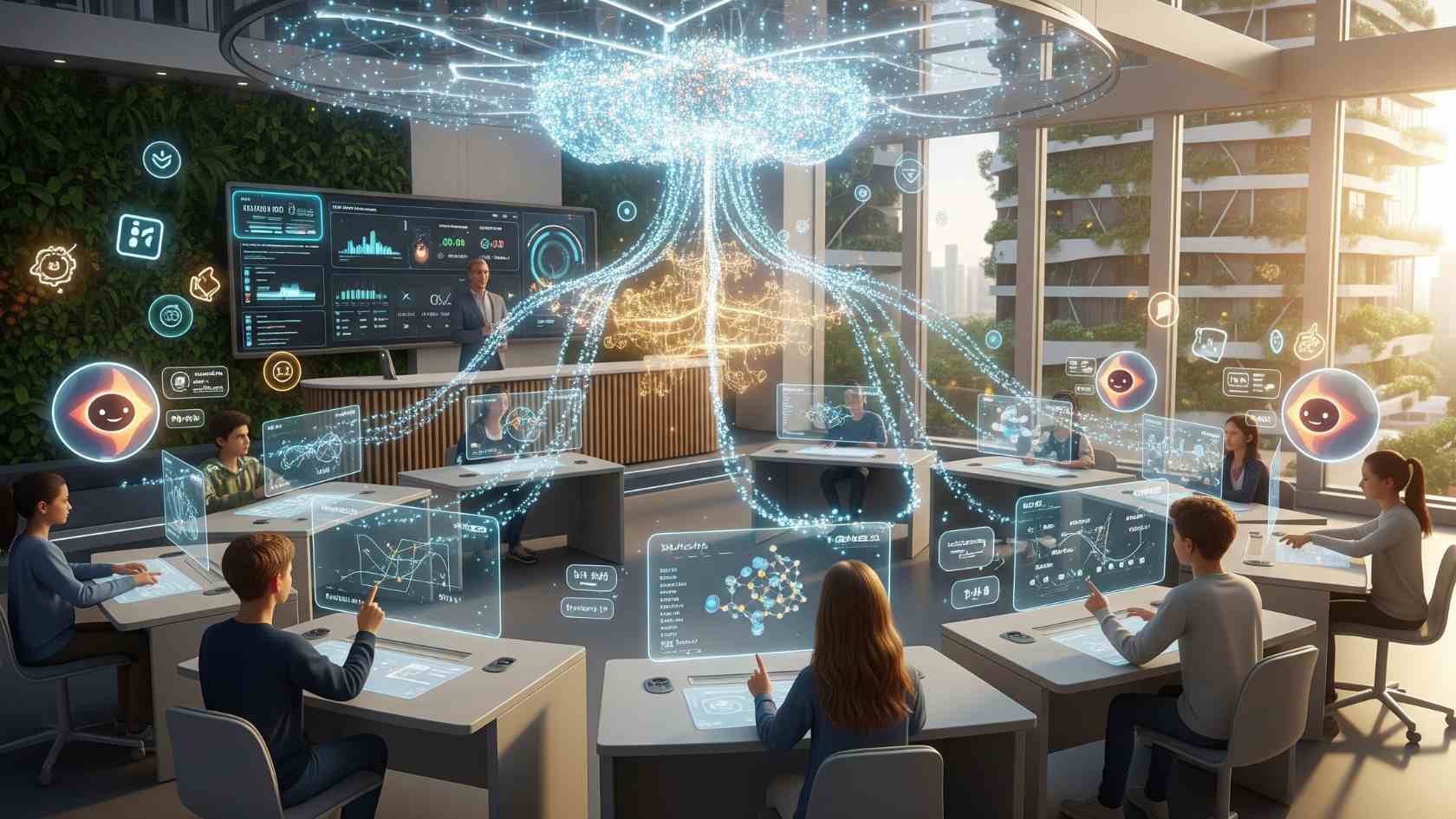
We are at a inflection point in education where teachers and students appear to be not only ready, but hungry for more than just a dusty, traditional model of schooling in yesterday and more to one that is fueled by technology that deeply reaches the life of a learner. The conventional one-size-fits-all classroom has spent decades trying, and often failing miserably, to teach students of wildly varying needs, speeds, and educational styles. It’s an unsustainable model. The answer is to build truly adaptive learning ecosystems, and requires deep expertise.
This is precisely why specialized education software development services have become the crucial facilitators. These firms, providing educational software development services, are integrating advanced, powerful technologies—specifically Artificial Intelligence (AI) and Machine Learning (ML)—to forge the future of pedagogy, where every student’s journey is unique and optimized.
The Core Mechanisms of AI-Driven Education
Achieving True Personalization through Adaptive Learning
Think of a traditional curriculum as a single highway: every student must travel the same path at the same speed. Educational softwares are building systems that turn that highway into a dynamic, personalized network of roads. How? Machine Learning algorithms analyze vast quantities of a student’s performance data in real-time, tracking every click, every successful answer, and every struggle.
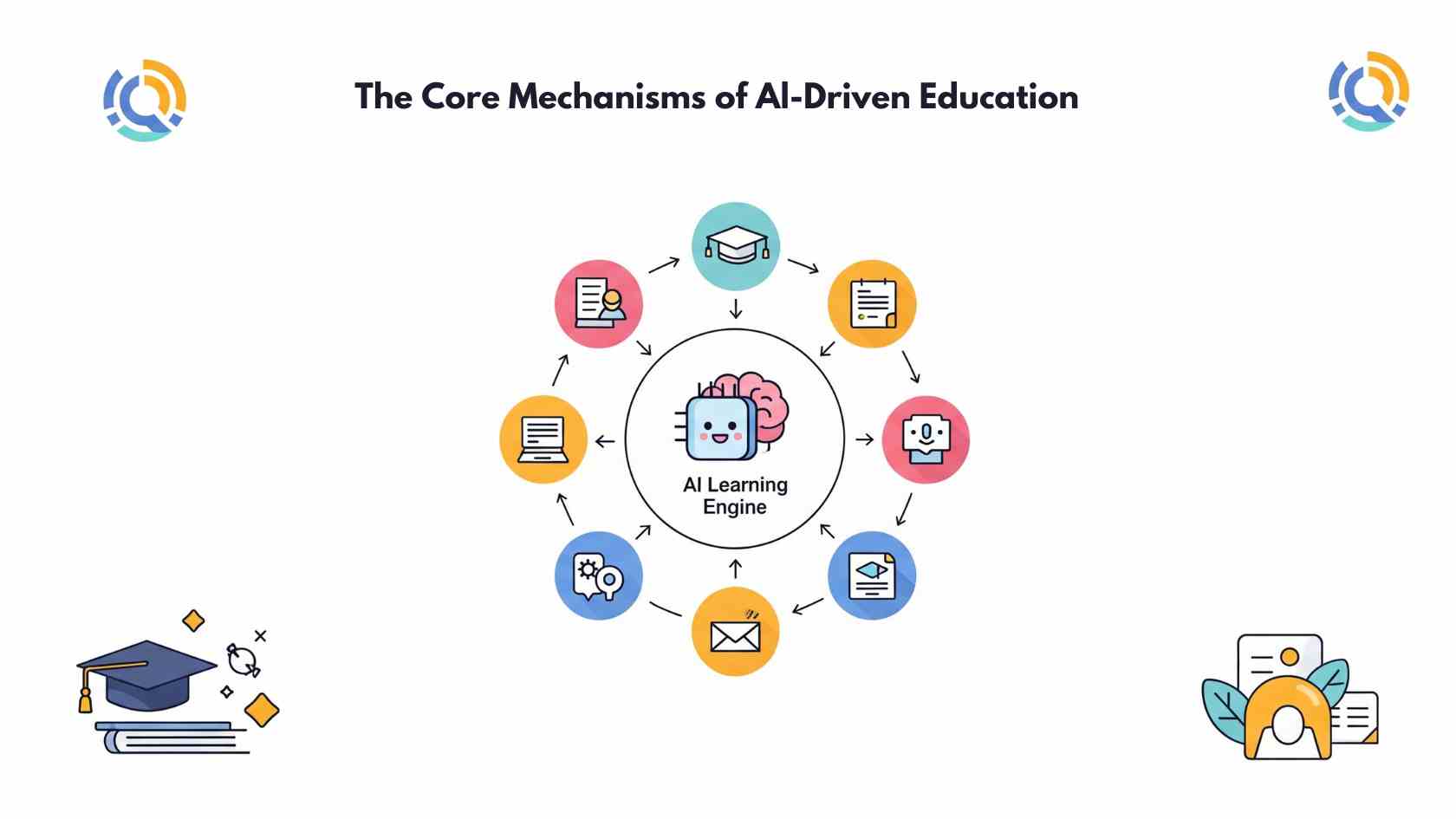
This ongoing analysis enables the software to constantly adapt difficulty, pacing and even the nature of instruction for that student. If you’re not getting fractions, the AI can diagnose that exact hole in your knowledge and immediately give you personalized remedial exercises rather than making you wait for the next lesson.
AI in automatic assessment and feedback
Teachers are drowning in a rote, repetitive administrative task for far too long. It’s utterly time-consuming of them. It is in response to this call that AI is now stepping in to relieve the burden of assessment. ML models, and especially NLP ones, are so advanced that they can be used to automatically grade complex tasks such as open-ended essays or code.
The key benefit? Instantaneous, constructive, and highly granular feedback delivered to students. This immediate turnaround drastically improves the learning loop velocity, ensuring students learn from their mistakes while the concept is still fresh, a service no single teacher could possibly offer consistently.
Strategic Development and Implementation
Predictive Analytics for Early Intervention
One of the most profound impacts of this technology is its proactive nature. Expert educational software development solutions are built with sophisticated predictive ML models. These models aren’t just reacting to failures; they are anticipating them. By analyzing a multitude of student engagement metrics and historical data—interaction patterns, timestamps, and assessment scores—the system can flag students at risk of falling behind or dropping out before major issues arise. This early warning system enables incredibly timely human intervention from teachers or counselors. It’s like having a digital radar for student success.
Key Predictive Data Points:
- Time spent on specific concepts or modules.
- Number of attempts required to pass an assessment.
- Frequency of interaction with instructional support features.
Enhancing Content Delivery via Machine Learning
It’s not enough to just adapt the pace; we must also optimize the content itself. This is where Machine Learning truly enhances the instructional design. ML algorithms constantly test different forms of instruction—Is this video more effective than that text explanation? Does an interactive simulation yield higher comprehension for this group than a standard lecture?
The system determines which delivery method produces the highest comprehension and retention rates for specific student cohorts. The result is content that is not static but continuously improves and optimizes itself, leading to a much more engaging and effective outcome. This is the goal of any serious educational software development company.
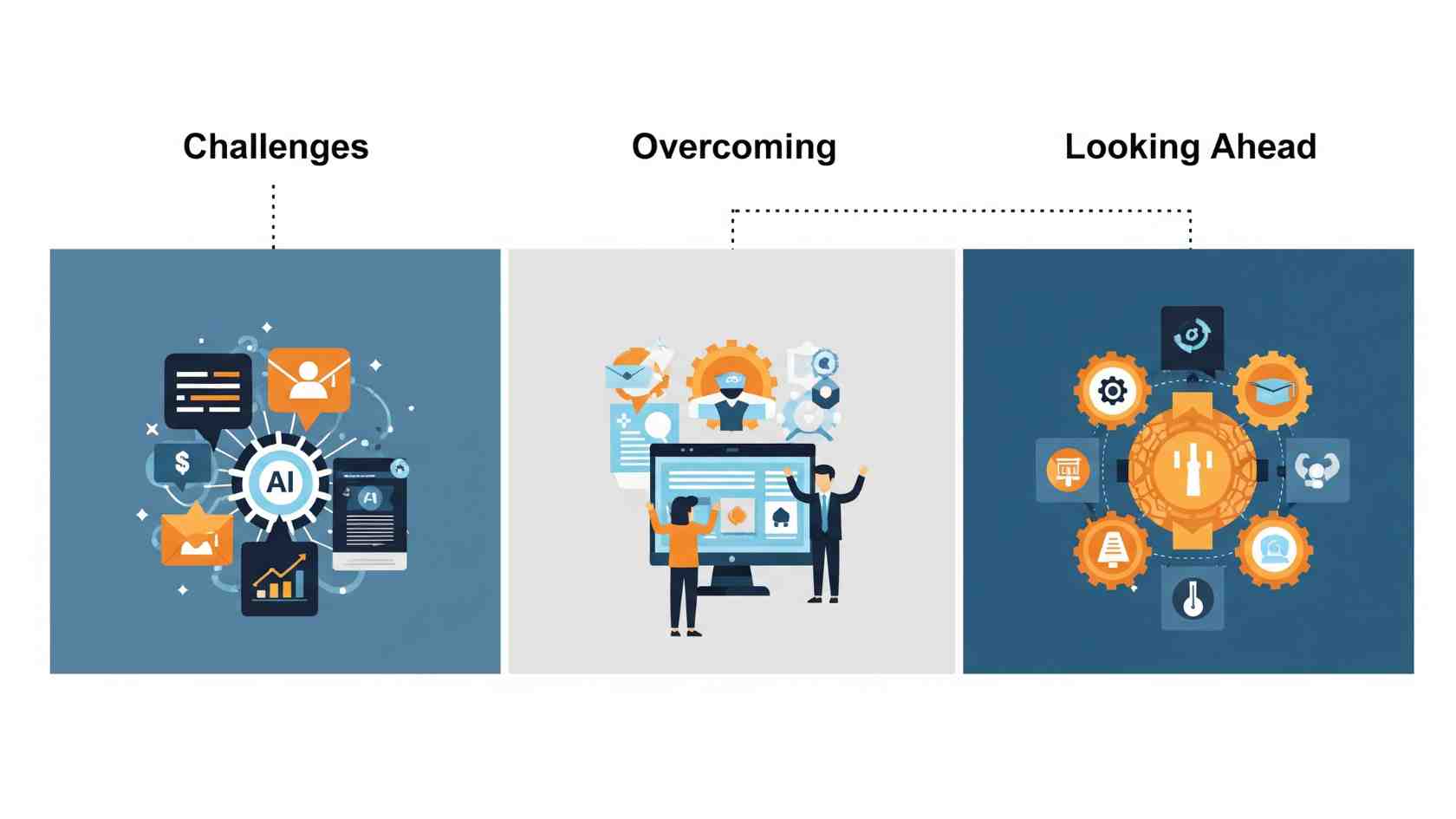
Overcoming Challenges and Looking Ahead
Ensuring Ethical Data Privacy and Security
With the great power of AI, however, comes the weighty task of managing student data. This poses ethical, regulatory problems around privacy and issues of being legally compliant with GDPR, FERPA etc. It Should Build Trust Any good education technology development partner realizes that trust of users is everything. Institutions must build strong security disciplines and clear data governance policies into the system, and make sure that technology is empowering students instead of preying upon them for personal information. Security is non-negotiable.
Human Educator and His Changing Role
There’s a nasty old fear that AI tools will supplant teachers. Nothing could be further from the truth. Here’s what AI does: It transforms the teacher’s role — for the better, and to a level not previously reached. Educators are liberated from rote administrative tasks, like grading, scheduling and introductory content delivery. This liberation enables them to expend that energy on more high-value, human-level interactions: guidance, mentorship, socio-emotional support, and the facilitation of complex, collaborative, critical-thinking projects that AI simply cannot handle. Tech will take care of the logistics, the raw inspiration still comes from humans.
Conclusion
Expert educational software development firms are making it possible to intergrate AI and Machine Learning in a manner that is seamless and with remarkable results. This evolution centers around an educational process that IS adaptive, FAR more efficient and fair for every person. By combining predictive analytics with highly targeted personalization, we’re not only changing software; we’re recalibrating the edu learning experience that makes it possible for every student to realize their potential.