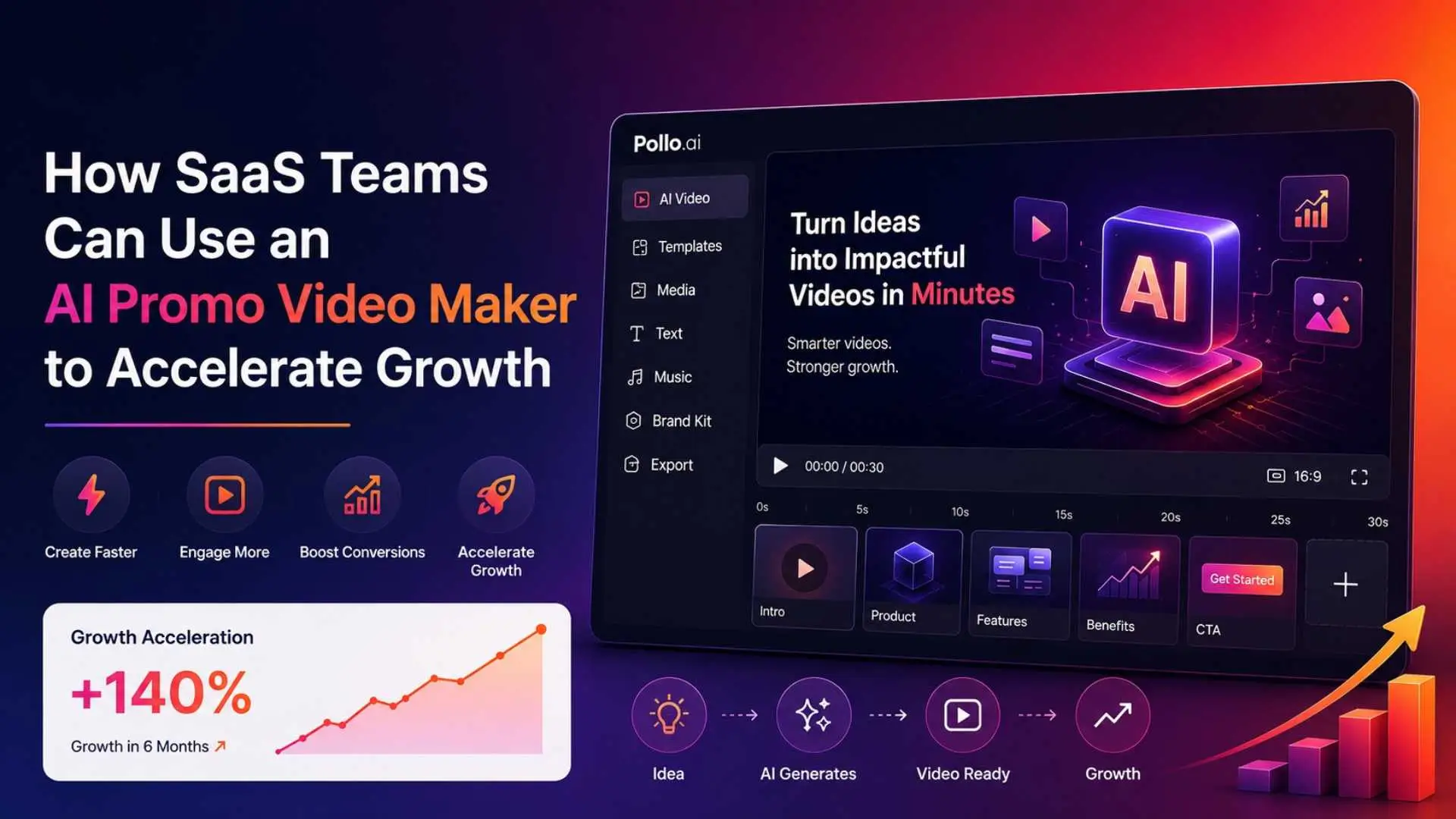
There’s a consistent pattern across SaaS companies at every stage: the product gets built, the positioning gets refined, the website gets launched — and then video marketing becomes the perpetual item on the roadmap that never quite gets done. Not because teams don’t understand its value, but because the production overhead makes it feel like a project rather than a process.
The numbers make the case clearly. Video content drives higher conversion rates on landing pages, increases trial sign-ups from paid campaigns, and reduces churn by helping users understand product value faster.
For SaaS companies competing in crowded categories where feature differentiation is often marginal, the quality and consistency of marketing communications — including video — become genuine growth levers. But building a sustainable video production workflow has historically required resources that most early- and mid-stage SaaS companies don’t have: in-house video producers, agency relationships, or a budget to outsource at scale.
AI promo video tools have shifted this calculus meaningfully. The question for SaaS teams in 2026 isn’t whether to use them — it’s how to build the right workflow around them.
What AI Promo Video Generation Actually Offers SaaS Marketers
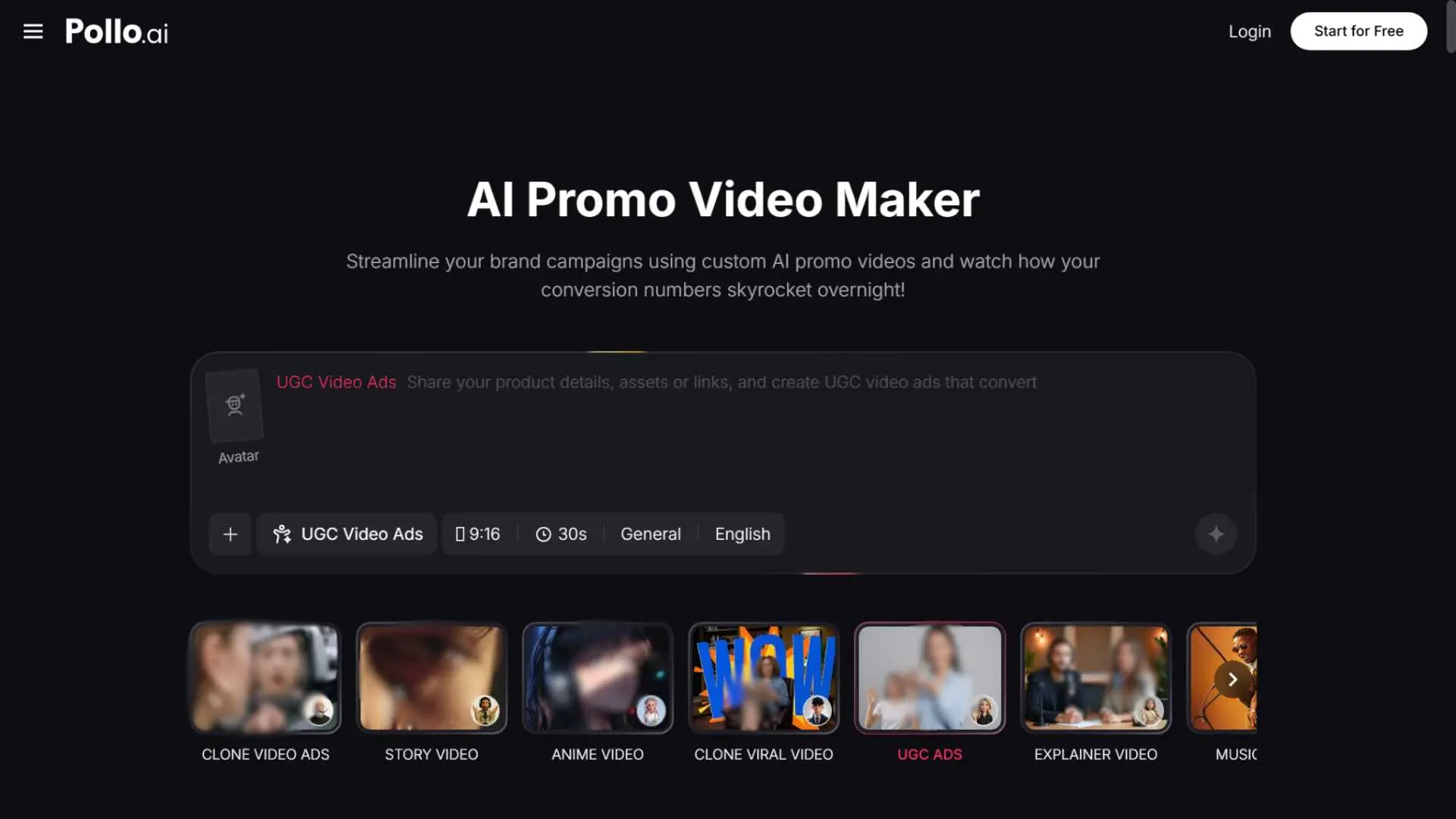
The core capability is the ability to generate promotional video content — product demos, feature announcements, social ads, onboarding clips — from existing assets and written direction, without traditional video production. For SaaS teams, this maps directly onto the content types that drive acquisition and retention at every stage of the funnel.
Pollo AI’s dedicated AI Promo Video Maker inside its Marketing Studio is built specifically for this marketing-first use case. Unlike general-purpose video generation tools that require significant post-production effort to produce something usable for paid or organic distribution, the studio is oriented toward output that’s ready for platform deployment — social ad formats, promotional clips, product highlight videos — with the visual quality and pacing that performance marketing requires.
For SaaS marketing teams operating without a dedicated video production resource, this changes the economics of the entire video content category. A campaign that previously required weeks of coordination with an external agency or contractor can now be turned around within a working day. That velocity matters enormously for teams that need to iterate on creative based on performance data, test multiple angles on a single campaign, or move quickly on product announcements and feature launches.
Also Read: AI Video Translation Is Transforming Global Business Communication
The SaaS Use Cases Where AI Promo Video Drives the Most Impact
Product demo videos sit at the top of the value hierarchy for most SaaS companies. A well-produced demo that shows the product solving a specific problem in 60 seconds does more to drive conversions than most other content assets — and it compounds over time as a permanent piece of the acquisition funnel. AI promo video generation makes it practical to produce multiple demo variations targeting different use cases, personas, or pain points, rather than creating a single generic demo and hoping it resonates across segments.
Feature announcement content is the second high-impact application. Most SaaS companies ship features more frequently than they effectively communicate them, because producing announcement content at the pace of the product roadmap has been operationally impractical. Reducing the time to produce a polished announcement clip from days to hours changes that dynamic — teams can announce features meaningfully without creating a production backlog.
Paid social creative is the third major area. Performance marketers working on SaaS acquisition campaigns know that creative fatigue is a consistent challenge in paid social — ads lose effectiveness as audience saturation builds, and maintaining campaign performance requires a steady supply of fresh creative variations. AI promo video generation makes producing that variety economically viable in a way that traditional production cannot.
Integrating Video Into the Broader Content Stack
Pollo AI’s multi-studio architecture is worth understanding for SaaS teams thinking about content production holistically rather than just video in isolation. The Marketing Studio, which houses the AI Promo Video Maker, sits within a broader platform that also includes a Creative Studio for general image and video generation, a Commerce Studio for product imagery, and a Design Studio — all on a shared credit system.
For SaaS companies that also produce blog content requiring visual assets, social graphics for organic channels, or product screenshots and mockups for marketing materials, the integration between these studios means a single platform relationship covers a significant portion of the visual content production stack.
The shared credit economy makes this more efficient than maintaining separate subscriptions for each content type, and the unified workflow reduces the context-switching overhead that fragments marketing team productivity across multiple tools.
Adobe Firefly and the Landscape of AI Creative Tools
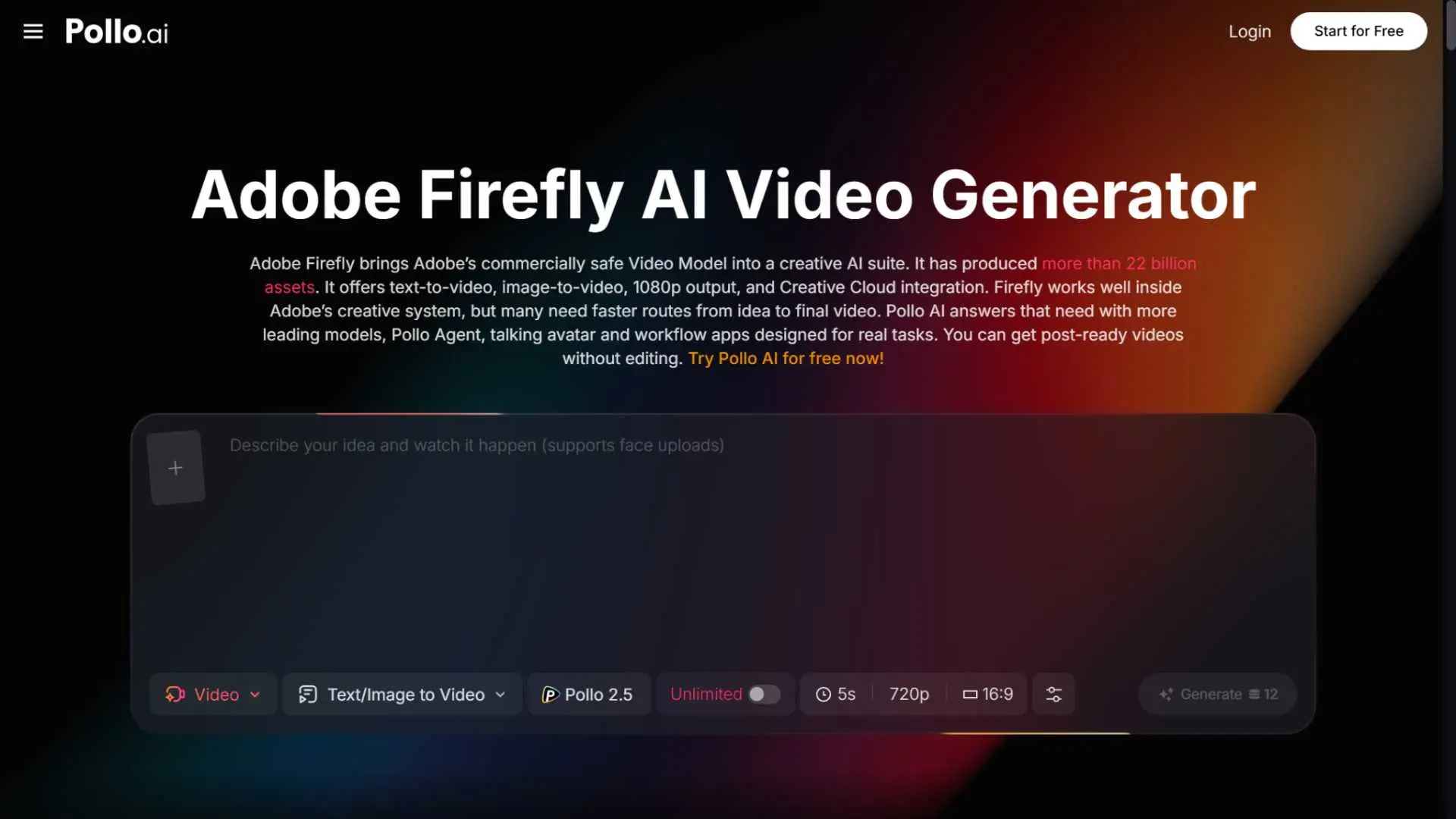
Understanding the competitive context helps SaaS teams make more grounded tooling decisions. Adobe Firefly has become a significant option in the AI creative space, particularly for teams already embedded in the Adobe ecosystem through Photoshop, Premiere, or other Creative Cloud tools.
Its commercially safe training approach is a genuine selling point for brand teams with IP concerns, and its deep integration with professional design software suits workflows where AI generation feeds into significant manual post-production.
Where Pollo AI’s approach differs for SaaS marketing teams is in the speed-to-deployment metric. For teams whose primary objective is getting video content into paid campaigns, organic social, and onboarding flows quickly — rather than producing artistically refined work that requires extensive post-production — the Marketing Studio’s purpose-built output orientation delivers usable results faster within a workflow that doesn’t require design expertise.
Also Read: What Is an AI Video Editor? A Beginner’s Guide to Effortless Video Creation
Building a Video-First Marketing Operation Without a Video Team
The SaaS companies that have successfully integrated AI promo video into their marketing operations have typically made a structural shift in how they think about video content — from treating it as a project category that requires special resourcing to treating it as a default output format for marketing communication, like writing.
That shift is supported by a few practical workflow decisions: defining standard video formats for the content types you produce most frequently, developing prompt templates or brief structures for each format, establishing a lightweight review and approval process for generated output, and building video production into the planning cycle for campaigns and launches rather than treating it as an add-on.
None of this requires a large team or a large budget. It requires the deliberate workflow design that any well-run SaaS marketing operation applies to its other production processes. The generation capability is the new variable; the discipline around it is familiar territory for any experienced growth or marketing team.
In 2026, video marketing is table stakes for SaaS companies competing for attention in crowded categories. The operational question — how to produce it consistently without a production team — now has a practical answer. Building the workflow around that answer is where the competitive advantage lives.