You’ve just received a verbal agreement from a client to provide services starting next month. They seemed enthusiastic. You shake hands. Two weeks later, they claim they never committed to anything. Sound familiar?
This scenario plays out thousands of times daily in business, and most professionals can’t articulate why their handshake didn’t create a binding contract. The answer lies in understanding the five basic elements that transform a casual promise into legally enforceable protection for your business.
These elements aren’t abstract legal theory. They’re the practical foundation determining whether your agreements stick or crumble when disputes arise. Whether you’re drafting a vendor agreement, hiring a contractor, or closing a sale, recognizing these elements protects you from costly disputes and ensures your contracts actually mean something.
This guide cuts through legal jargon to show you precisely what makes a contract legally binding—and equally important, what can render it unenforceable. We’ll also show you how modern contract management tools can systematically validate these elements, reducing risk at every stage.
The Foundation: What Actually Makes a Contract Legally Binding?
A contract is fundamentally an exchange of value between parties who intend to be bound by mutual promises. But not every promise creates a binding contract. Courts have consistently identified the critical elements that separate casual commitments from enforceable legal obligations.
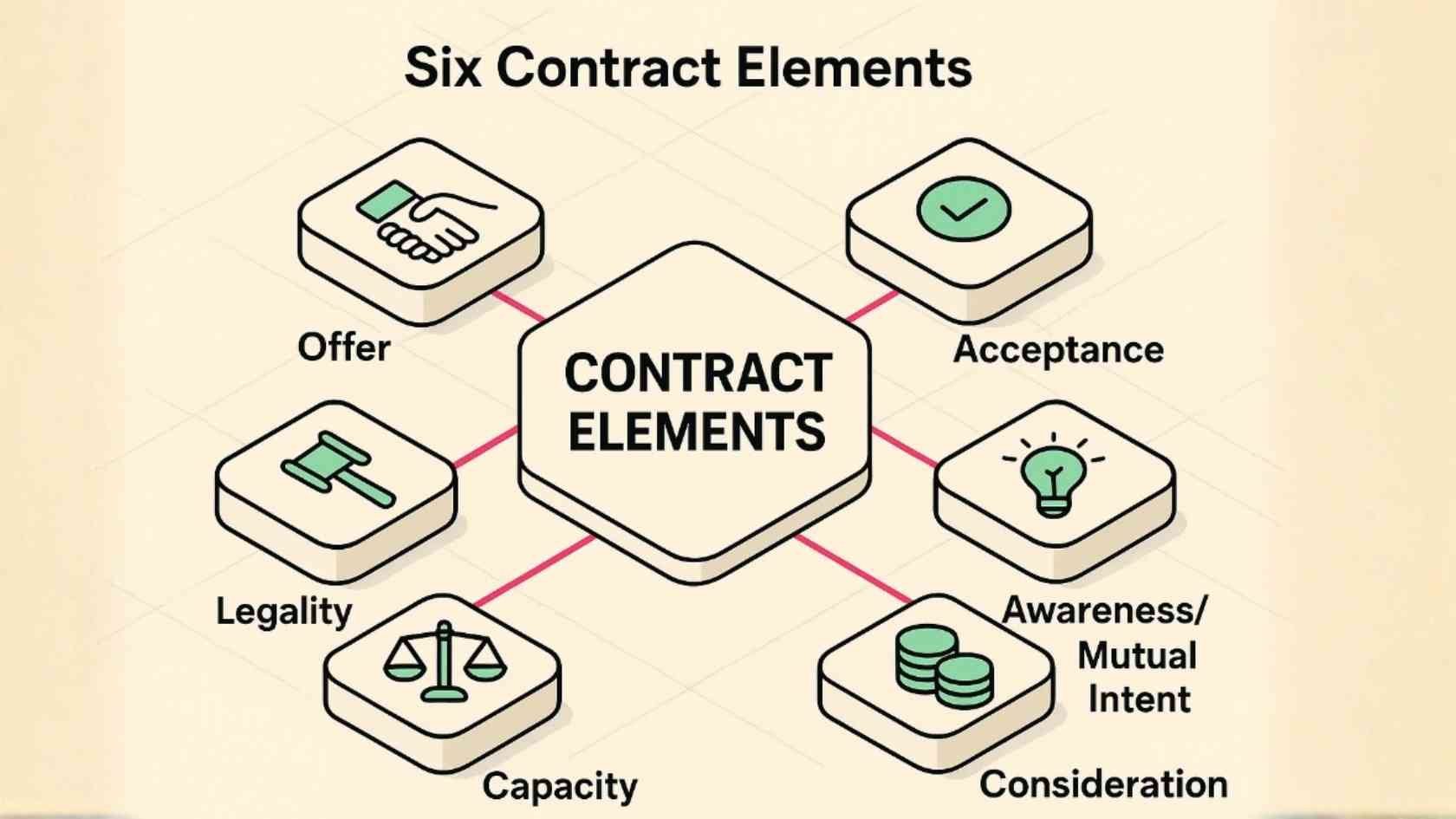
Here are the five essential elements—plus the often-overlooked sixth that determines actual enforceability:
1. Offer
An offer is a clear, unambiguous proposal to enter into a contract on specific terms. It must be definite enough to create an enforceable agreement.
What makes a valid offer:
- Specific terms (price, scope, timeline, conditions)
- Intent to be legally bound (not casual conversation)
- Communication to the offeree (the person being offered)
Common mistake: Saying “I can probably build this for around $5,000” is too vague to be an offer. “I will build your three-bedroom extension for $5,000, completion by March 30.
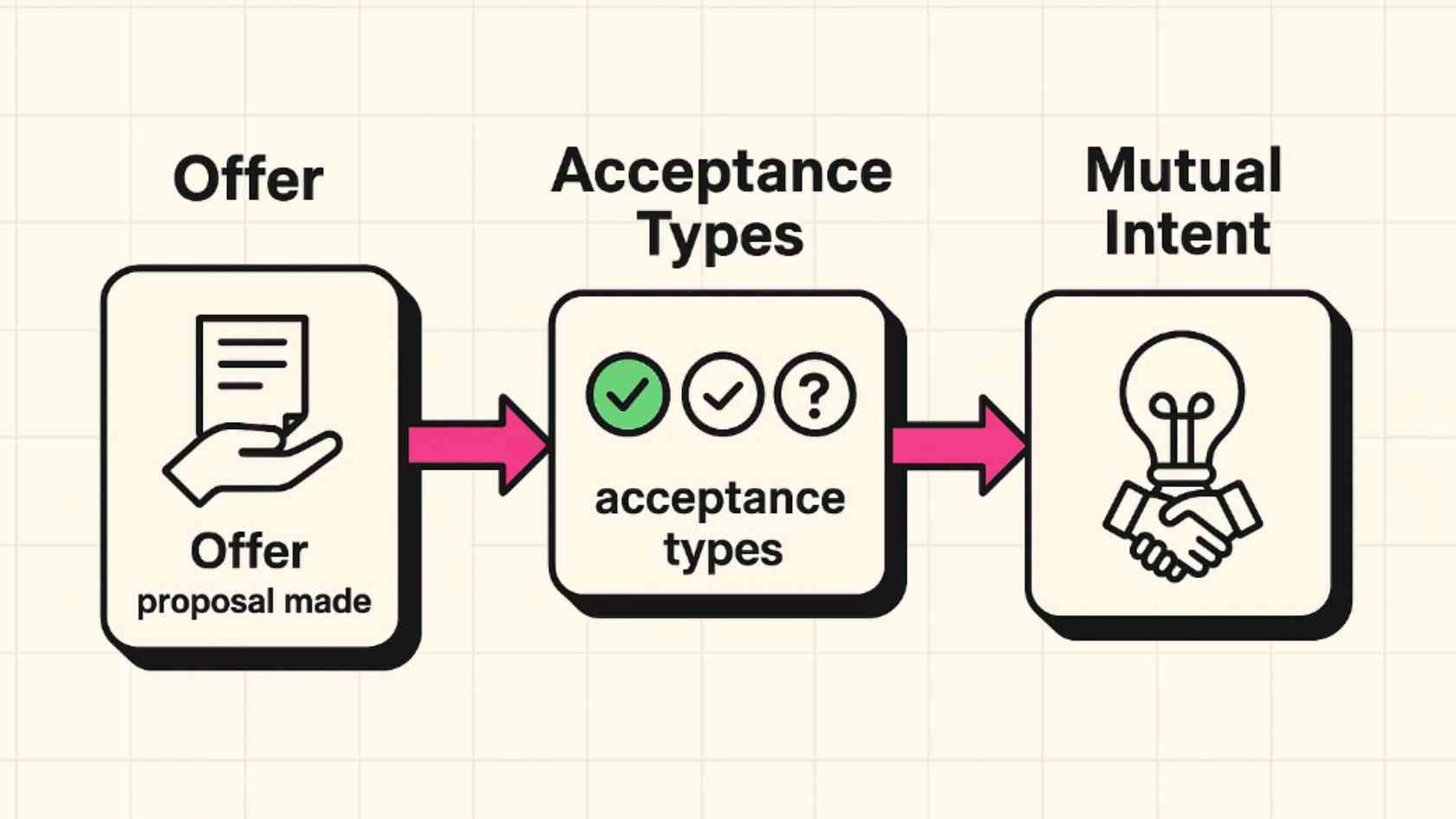
2. Acceptance
Acceptance is the offeree’s unqualified agreement to the offer’s exact terms. This is where most business disputes begin.
Critical acceptance nuances often missed:
- Explicit acceptance: Clear “yes” or signature
- Implied acceptance: Conduct showing agreement (e.g., beginning performance without objection)
- The counteroffer trap: Responding “Yes, but I need different payment terms” doesn’t accept the original offer—it creates a new offer
If a client responds with changes to your original terms, you haven’t reached an agreement. That changed version is now the offer, and you must accept it for a contract to exist.
3. Consideration (The Exchange of Value)
Consideration is what each party gives up or promises to give. It’s the “bargain” in the contract—why each side agreed to it.
Consideration doesn’t need to be equal in value. You can exchange a Lamborghini for a bicycle if you freely choose to. What matters is that both parties are giving something of value (money, goods, services, promises not to do something).
The fatal flaw: One-sided promises fail. “I promise to paint your house, and you promise… nothing” lacks consideration. It’s a unilateral promise, not a binding contract.
4. Capacity
Capacity means both parties have the legal and mental ability to enter a contract.
Who lacks capacity:
- Minors (age varies by jurisdiction, typically under 18)
- Individuals adjudicated mentally incompetent
- Those under the influence of drugs or alcohol (at the moment of contracting)
- Persons with severe intellectual disabilities
The nuance: Minors can sometimes void contracts they made, giving them legal protection—but creating risk for the other party. If you contract with a 16-year-old to sell their car, they may later disaffirm (cancel) the agreement.
5. Legality of Purpose
The contract’s purpose must be lawful. You cannot enforce an agreement to sell illegal drugs, evade taxes, or violate public policy.
Often misunderstood: A contract can be legal in structure but illegal in intent. A loan agreement is usually legal, but if it includes hidden usurious rates violating lending laws, it becomes unenforceable.
6. Mutual Intent (The Hidden Element)
This is the often-missing sixth element: both parties must genuinely intend to be bound. Courts call this “meeting of the minds.”
If one party jokes about an agreement while the other takes it seriously, no contract exists—even if all five elements technically appear present. Mutual intent ensures there’s actual consensus, not misunderstanding.
This element explains why your handshake with the client failed. They may not have intended a binding commitment; they were exploring options.
Why This Matters for Your Business: The Real-World Impact
Missing even one element can render your contract unenforceable. Here’s what that costs:
Lost revenue: You perform work under an agreement that lacks consideration or capacity. When disputes arise, courts won’t enforce payment.
Wasted legal fees: Litigating an unenforceable contract drains resources with zero recovery.
Damaged relationships: Disputes over vague agreements poison vendor-customer relationships.
Compliance exposure: Contracts with illegal purposes can expose you to regulatory penalties.
The professionals who avoid these costs build systematic practices around validation. They ensure offers are written with specificity and the document acceptance clearly (via email, signed documents, or recorded conduct). They confirm mutual intent through clear communication.
Modern contract management tools now automate this validation. Advanced CLM platforms can flag missing considerations, identify vague offer terms, and create audit trails that prove mutual intent through documented acceptance.
How Contract Management Tools Strengthen These Elements
Contract management software transforms these five elements from abstract concepts into systematic safeguards.
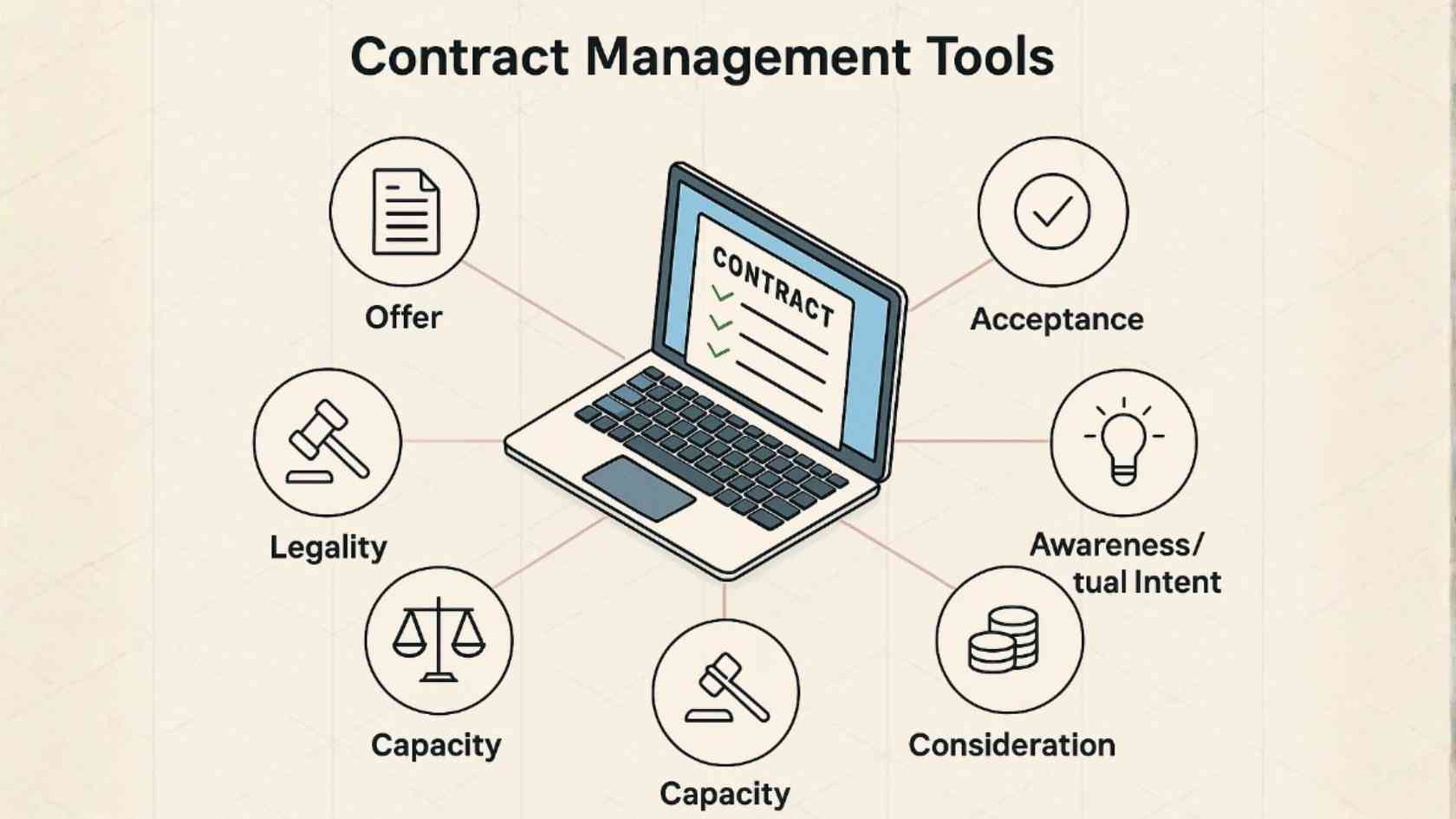
Offer clarity: Templates with mandatory fields ensure offers include specific terms (price, scope, timeline). Vague language gets caught before negotiation begins.
Acceptance tracking: Digital workflows create irrefutable proof of acceptance—timestamps, e-signatures, approval chains—no ambiguity about when or how parties agreed.
Consideration verification: Obligation extraction features automatically identify what each party is giving or promising, highlighting missing reciprocal value.
Capacity checks: Integrations with entity verification systems flag high-risk counterparties (minors, dissolved entities, sanctioned parties).
Legality validation: Templates embed regulatory requirements, ensuring illegal purposes never make it into final agreements.
These systems don’t replace legal judgment, but they prevent the elementary mistakes that cost businesses millions in unenforceable contracts.
Common Misconceptions That Cost Money
“A handshake is a binding contract if we both said yes.”
Not without clear terms, proven acceptance, and documentation of mutual intent. Handshakes often fail because the terms of the offer remain vague.
“If I started working, I accepted the contract.”
Implied acceptance requires the other party to know that you accepted (not just performed). If they reasonably don’t realize you received their offer, acceptance may not have occurred.
“Signed documents always protect me.”
Not if the contract lacks consideration, involves incapacity, or violates the law. A signature alone doesn’t make something enforceable.
“I can change terms in my acceptance email, and we still have a deal.”
No. Modified terms create a counteroffer. The original offeror must accept your changes for a contract to form.
Also Read: LLC vs. Sole Proprietorship: Which Structure Fits Your Business Dream?
Conclusion
The five elements—offer, acceptance, consideration, capacity, and legality—plus mutual intent create the legal foundation for binding contracts. Understanding these elements transforms you from someone who “thinks” an agreement exists into someone who knows enforceability is solid.
The path forward involves three practices: First, craft written offers with specificity (exact deliverables, timelines, prices). Second, document acceptance explicitly (emails, signatures, confirmed conduct). Third, implement systematic validation using a contracting tool that reduces human error and creates defensible audit trails.
Your following agreement deserves this rigor. The stakes—revenue protection, legal enforceability, and business relationships—demand it.
Frequently Asked Questions
Q: Can a Contract be Legally Binding Without Being in Writing?
A: Yes, oral contracts are enforceable if all five elements are present. However, specific contracts (such as real estate sales and agreements lasting over one year) must be written under the “statute of frauds.” For most business agreements, written documentation provides more substantial proof that offer, acceptance, and consideration actually occurred.
Q: What’s the Difference Between a Void and a Voidable Contract?
A: A void contract has no legal effect from the start (e.g., an agreement to commit a crime). A voidable contract is initially enforceable, but one party can cancel it under certain conditions (e.g., a contract signed by a minor can be voided by the minor).
Q: If I Accidentally Agreed To Terrible Terms, Can I Cancel the Contract?
A: Generally, no, poor judgment isn’t grounds for cancellation. However, if you lacked capacity, weren’t given a fair chance to understand terms, or were fraudulently induced into agreement, courts may void it. The contract itself remains enforceable unless a specific defect undermines one of the five elements.