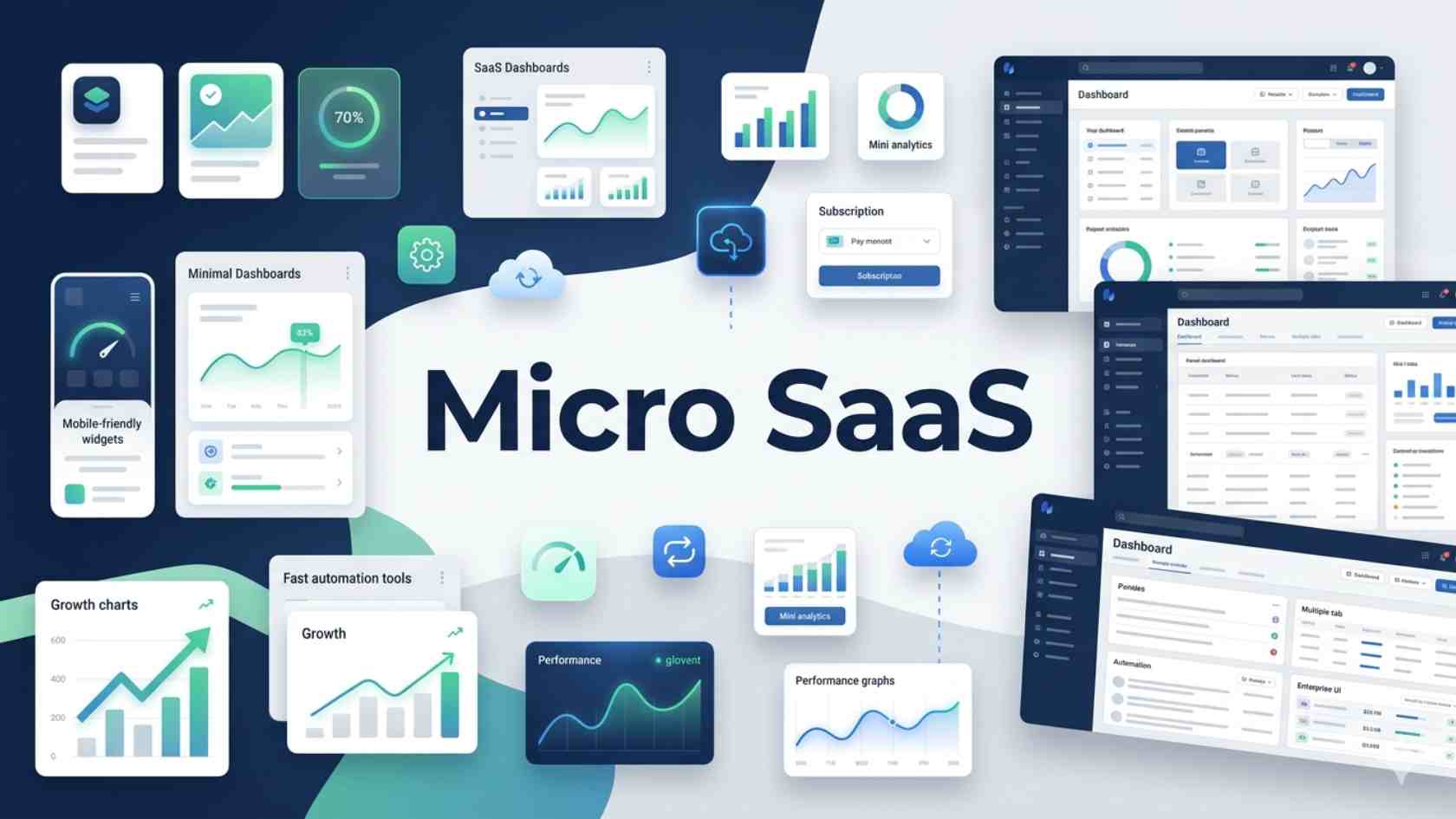
Big SaaS platforms are becoming too complex to use. Users are switching to smaller, more focused tools because they are easier to use. People prefer simplicity, especially when they don’t use most of the available features. Many traditional SaaS companies make big promises but often create complexity and high costs. This situation drives users to seek learner alternatives.
What Is Micro-SaaS?
Traditional SaaS targets large markets and offers many features. This requires big teams and millions in funding. Micro-SaaS avoids this approach. It targets gaps that larger companies often ignore, like a plugin for a specific e-commerce platform.
Development usually takes weeks or months, not years. You build a basic version (MVP), test it live, and tweak it based on user feedback. There is no need for significant spending on offices or big sales teams. Profits come from subscriptions, often $10–$50 per month per user. With low costs, even 100 customers can mean real money. Many solo founders generate $1K–$10K in monthly revenue.
The Rise of Micro-SaaS
No-code tools like Bubble let anyone build apps without deep coding skills. AI cuts development from months to days by auto-generating code. Indie hackers share tips on platforms like X and Reddit. This fuels the growth of the Micro-SaaS movement.
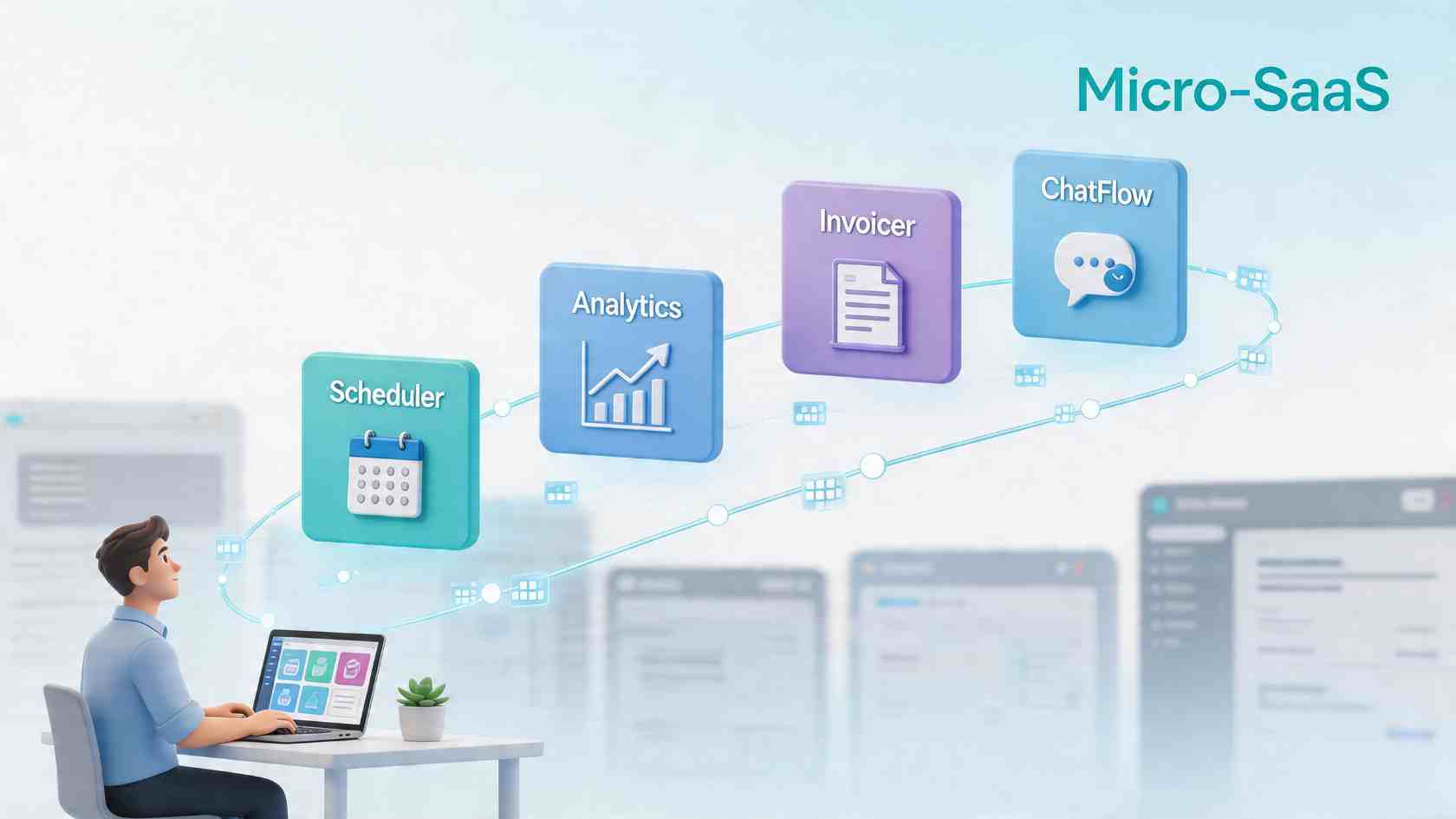
Remote work means global reach without travel. Barriers have dropped—you can start for under $100 per month. The micro-SaaS market is growing rapidly and is already valued in the tens of billions, with projections showing strong continued expansion. Solo creators are making between $5,000 and $20,000 monthly. This shift happens as users move away from complicated software suites.
Key Benefits for Builders
Micro-SaaS offers real perks for everyday people starting a side hustle.
- Low startup costs: All you need is your time, a laptop, and affordable hosting ($10–$50/month)—no loans or investors required.
- Fast to launch: You can build a simple tool in days using no-code platforms like Bubble or Adalo.
- Low risk: Test ideas with minimal investment. If it flops, pivot or quit without losing much.
- Steady income: Recurring payments help build long-term financial freedom.
- Full control: Work from anywhere and set your own hours. Establish a direct connection with users.
These advantages make it ideal for developers, marketers, or anyone with a skill gap to fill.
Why Small Tools Are Beating Big Platforms
Laser-Focused Problem Solving
Micro-SaaS excels at one task, such as auto-scheduling niche emails. Big SaaS spreads itself thin across dozens of features, which slows everything down.
Faster Innovation & Updates
Small teams decide and ship changes weekly. No red tape means fixes happen overnight, not after board meetings.
Cost Efficiency for Users
Pay only for what you need—$15/month beats $100+ for unused features. Lean pricing keeps budgets happy.
Better User Experience
Clean screens, no clutter, and setup in minutes. Users love the speed and zero learning curve.
Strong Customer Relationships
Users can contact the founder directly through email or Discord. Feedback shapes the product over time, fostering loyalty.
Flexibility & Customization
Tweak it for your exact needs, like custom fields for realtors. Rigid big platforms force workarounds.
Micro-SaaS vs Big SaaS Platforms
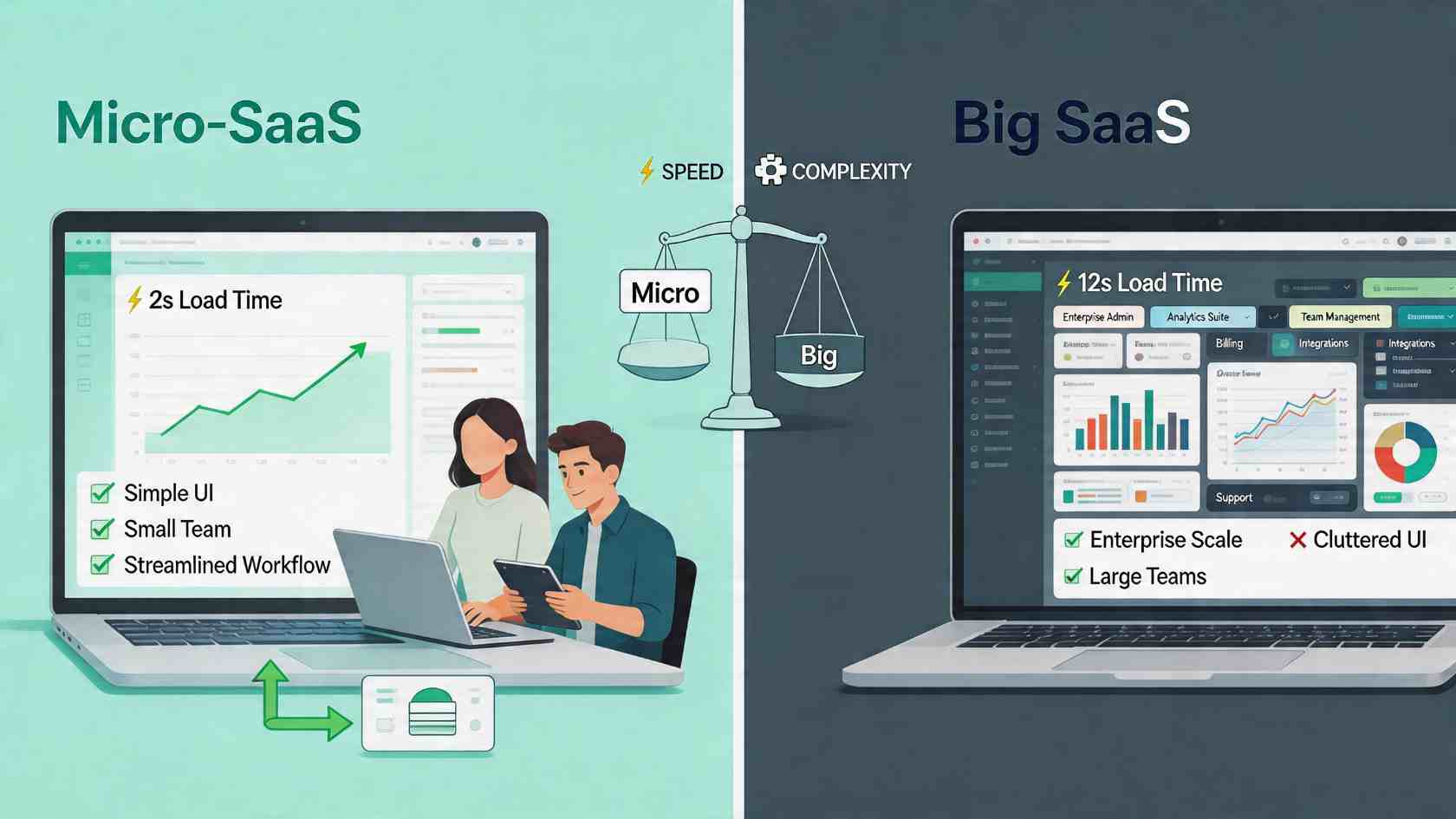
Features Micro-SaaS Big SaaS
- Focus Niche Broad
- Pricing Affordable ($10–$50/mo) Expensive ($50–500/mo)
- Speed Quick updates Slow rollouts
- Support Personal Chats Ticket-based queues
- Customization, High Flexibility, Limited Options
- Overhead Low for Builders requires large teams and significant funding
Real-World Examples of Micro-SaaS Success
Cleanvoice.ai automatically edits podcasts by eliminating filler words and silences without human intervention. A founder created it for podcasters who tire of manual work. Another popular example is a Twitter bio generator tool tailored to indie hackers. It pulls keywords and crafts clicky profiles in seconds.
For e-commerce, micro-SaaS tools like a Shopify app work well. One app sorts abandoned carts based on the type of buyer. Niche focus wins loyal fans.
You can find many success stories on platforms like IndieHackers. Many solopreneurs actively share their success stories. For example, some earn $5K a month using email warm-up services for cold outreach. They succeed by doing less, but better, attracting loyal users that big players ignore.
Challenges of Micro-SaaS
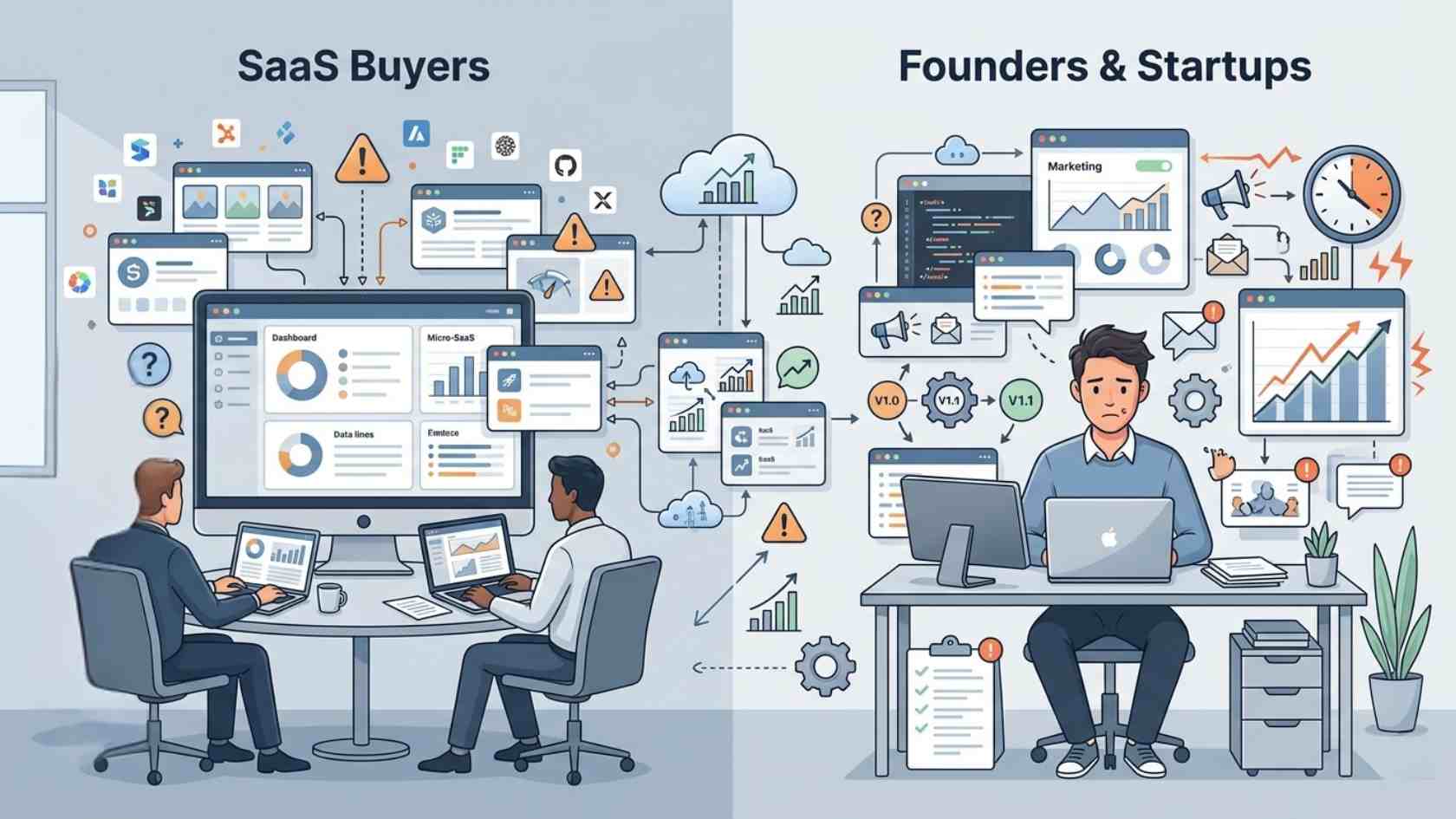
Solo builders juggle everything, risking burnout from non-stop support. Scaling to thousands of users strains cheap servers. Small teams often cannot match the security budgets of large enterprises. Niche markets can become saturated as copycats rush to enter the scene. Yet, smart founders automate and niche down to thrive.
What This Means for SaaS Buyers
Users now combine different tools to create the perfect stack, ditching all-in-one giants. Pick Micro-SaaS for speed on core tasks and big SaaS for compliance-heavy needs.
Build hybrid stacks: Use micro-SaaS for daily tasks and big SaaS platforms for scaling. This saves 30–50% in costs while boosting productivity.
What This Means for Founders & Startups
Niche domination is possible—founders can own a $1M market segment that others ignore. Launch MVPs in weeks; test with real feedback.
Lower risk: no VC pressure and steady subscription revenue.
Action steps: Hunt pain points on Reddit; build with AI/no-code; share #buildinpublic on X for users.
Future of Micro-SaaS
AI will enhance Micro-SaaS by speeding up the creation of niche tools. For instance, AI-powered, chat-driven resume builders can be tailored for specific job roles. “Solo unicorns” are businesses run by one person that earn over $100K each month. They will thrive as no-code platforms improve. API-first design makes it efficient for small tools to connect with bigger systems. This leads to smooth integrations.
By 2027, expect community-owned micros and edge AI for ultra-fast, private apps. Integration is becoming more valuable than domination, empowering lean builders to outpace corporates in speed and relevance.
Also Read: Salesforce Support Strategies Every SaaS Startup Should Master
Conclusion
Micro-SaaS isn’t just a trend in 2026. It’s a wise move away from big platforms. Small, focused tools give users what they want: easy use, fast results, and savings—no unnecessary complexity. Founders succeed with low-risk launches, fast profits, and strong customer ties. Buyers create ideal hybrid stacks that increase productivity by 40–50%.
As AI and no-code tools grow, solo creators will take over niches. Focus on solving one problem well; that’s where true power is. Start small today—spot a pain point, build fast, and watch your focused tool outperform the rest. The future belongs to lean and agile builders.
FAQs
What is the difference between Micro-SaaS and traditional SaaS?
Micro-SaaS focuses on a specific niche problem. It uses streamlined tools and is run by solo founders at a low cost. Traditional SaaS provides wide-ranging features for large markets. This often requires big teams and significant funding.
How much does it cost to start a Micro-SaaS business?
You can launch for under $100/month using no-code tools, hosting, and Stripe. Most solos spend just time and a laptop—no investors are required.
Can non-coders build successful Micro-SaaS products?
Yes! Platforms like Bubble, Adalo, or AI builders let anyone create apps without code. Focus on validating ideas and user needs first.
What are common Micro-SaaS pricing models?
Subscriptions dominate: $9–$49/month tiers with free trials. Some add one-time fees or freemium to hook users fast.
How do I find winning Micro-SaaS ideas?
Scan Reddit, X, or forums for niche pains. Talk to 10–20 target users, then build a quick MVP. Share #buildinpublic for early feedback.