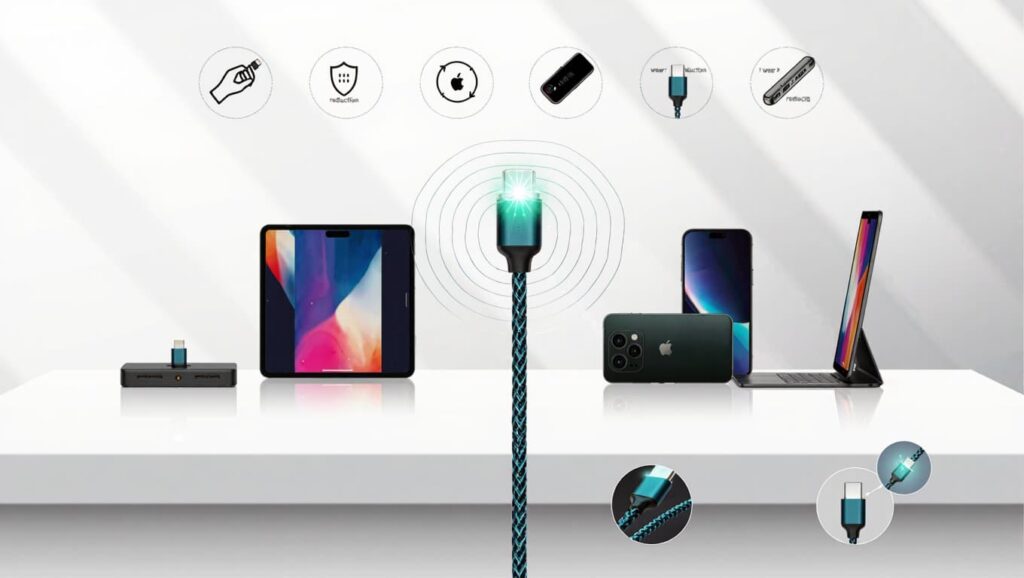
Charging cables might seem like a small detail, but the way they connect to your device directly affects convenience and long-term durability. Standard Lightning and USB-C cables require frequent plugging and unplugging, which can wear down ports over time and lead to loose connections. In comparison, options like a magnetic charging cable from Statik or similar magnetic solutions take a different approach, using small interchangeable tips that stay in your device, allowing the cable to snap on magnetically rather than being inserted each time.
This design also affects the user experience when charging. For instance, instead of ensuring that the connector is correctly inserted, one can insert the cable correctly even with one hand and in low-light conditions. It can also extend the life of a charging port by reducing friction, and one can safely remove the cable if desired, which can help prevent damage. Although there are some benefits to wireless charging, one can still enjoy quick, consistent charging with the added advantage of an easy plug.
The chargers support quick charging up to 100W and use swappable tips, making them ideal for handling multiple devices with a single configuration.
Key Takeaways
- Magnetic cables help to extend the life of the charging port by protecting it against wear and tear.
- Magnetic cables can be charged with one hand and automatically aligned using magnets. 100W for different devices.
- Magnetic Charging Cables for Apple and USB-C Devices
Magnetic charging cables offer several benefits designed to overcome common issues with charging cables. You get port protection, convenience in charging multiple devices, fast charging, and no more cable mess.
Simplified Charging with Port Protection
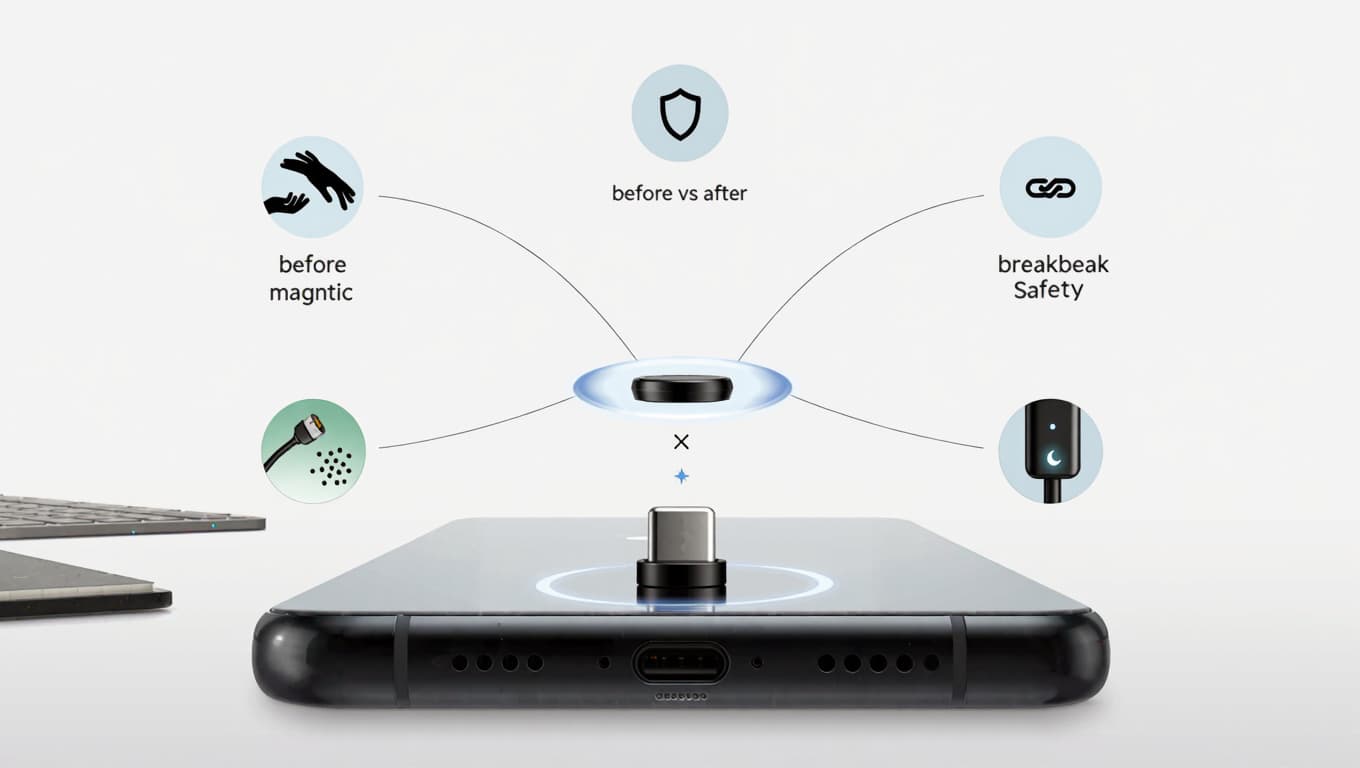
These cable simplifies charging your device, eliminating issues with cable orientation, especially in the dark. There is no need to struggle with plugging in the charging cable, as the magnetic charging tip stays firmly attached to your device’s charging port, while the other end can be disconnected with ease.
The magnetic charging cable protects your device’s charging port from long-term damage, unlike traditional charging cables, which require you to keep plugging in and unplugging.
The detachable charging cable protects your device as well; if someone steps on it, it will detach instead of pulling your iPhone 15 or MacBook Air off the table.
Cross-Device Compatibility
These charging cable is compatible with multiple devices, as you can change the charging tips on your cable to suit different devices, including Lightning, USB-C, and Micro-USB. Therefore, you can use a single cable to charge your iPhone 15, MacBook Pro, and other USB-C compatible devices.
This also helps you save some money and eliminate clutter. You don’t need to buy separate cables. Just use one cable and different tips. The tips are small and easy to carry. They are suitable for various Apple devices. Apple started using USB-C on all iPhone 15 versions and the new MacBook laptops. The magnetic USB-C cable is compatible with a wide range of devices in your collection.
Fast Charging with the Magnetic Cables
The magnetic cables also meet the high-power requirements of devices such as the MacBook Pro. The magnetic connection does not slow down the charging process. The quality magnetic cables provide the same electrical connection as the normal cables.
The charging speed of the devices is the same as that of standard cables, but the devices must support the required power.
Convenience, Flexibility, and Tangle-Free Use
The magnetic design makes a one-handed connection easy. You can attach your charging cable without looking at the port or using both hands. This proves helpful at night or while multitasking.
Magnetic cables resist tangles better than traditional options. The detachable design lets you keep the magnetic tip in your device and connect only the cable portion as needed. This reduces cable management headaches.
The quick-disconnect feature speeds up your daily routine. You can grab your phone from the charger instantly, without having to carefully unplug it. This same benefit applies to your MacBook Air or other USB-C devices throughout your day.
Choosing and Using Magnetic Charging Solutions: Performance, Safety, and Durability
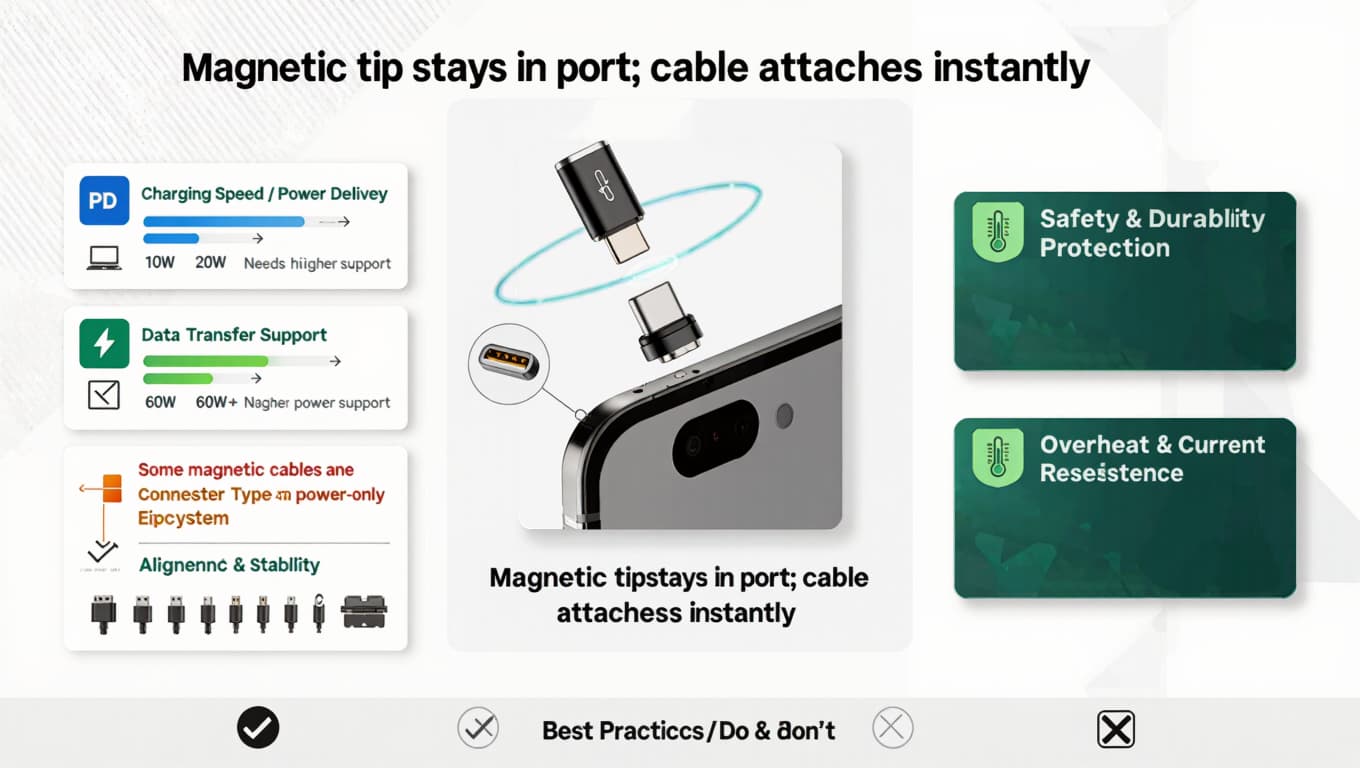
Magnetic charging cables are convenient, but it is essential to understand their performance, safety features, and build quality before purchasing. The choice of cable depends on your power, data, and device requirements.
Charging Speed and Data Transfer Limitations
USB-C to USB-C cables can also provide faster charging than most magnetic cables. A standard USB-C charger with Power Delivery support can deliver up to 100W. Newer cables can support 240W Power Delivery for gaming laptops. Magnetic cables can only support up to 60W, which is lower than the 100W supported by USB-C cables.
This is because the magnetic connection can only support up to 60W.An h-quality USB-C connector with Thunderbolt 3 support can support up to 20Gbps. Newer premium cables can support up to 10Gbps using the USB 3.2 standard. Magnetic cables can only support up to 480 Mbps under the USB 2.0 standard.
Build Quality and Durability Factors
The quality of materials used will affect the lifespan of your magnetic cable. Look for cables with a braided construction rather than plastic or rubber. The braided construction is more resistant to tangling and can withstand thousands of bends without fraying.
Neodymium magnets should be used for the strongest connection between the cable tip and the adapter. Neodymium magnets provide a snap-to-charge connection that won’t easily come off, except when someone trips over the cable. Other magnets are weak and easily come
off or hold unnecessary items.
The connector pins should be protected from dust and moisture. Look for recessed pins or protective covers. Magnetic tips should be cleaned regularly to prevent short circuits caused by metal debris.
The cable’s thickness should also be considered for durability. Thicker cables have better internal wiring. However, there is a need to balance thickness with flexibility.
Device Safety, Overheating, and Certification
It is important to ensure that the USB-IF certification is present on the cable. This ensures that the cable is certified to work with the official USB standards. The magnetic cables do not have USB-IF certification because they do not comply with the USB-C design standard. This increases the danger posed by the cables.
It is important to ensure that the cables you purchase have an inbuilt circuit that prevents overcharging and short circuits. The magnetic part that stays in the port also needs to have temperature sensors. The sensors reduce power flow when heat production is high.
It is important to avoid leaving the magnetic adapters in the ports when you are going to expose your devices to wet and dusty conditions. The adapters can corrode the ports, especially on devices you carry, like phones. You can consider removing the adapters from the phones.
Brand and Product Recommendations
Several companies offer magnetic charging cables with good track records. You want companies that offer specifications on power delivery capabilities and safety features.
Also, read reviews that discuss the long-term durability and heat level. Some people experience issues with the cables only after several months of use.
Consider your requirements before you make your purchase. If you have multiple devices with different ports, such as USB-C, Micro-USB, or proprietary ports, you might want to consider the magnetic tips. If you need to connect your device to a wall charger or power adapter during the day, the convenience might be worth the performance trade-offs.
Also, test the magnetic connection’s strength before you start using the product. The cable must stay connected during normal use but easily disconnect when pulled at an angle. If the magnetic connection is too weak, the cable will disconnect too often. If the magnetic connection is too strong, you will not experience the safety benefits of the magnetic connection.
Conclusion
A magnetic cable can provide a solution for your Apple devices and your other USB-C devices. Using these cables can reduce wear on your device ports, allow quick one-handed connections, and support multiple device types. The snap feature of the magnetic cables can also make them easier to use in dark environments or for those with limited hand mobility.
However, there are drawbacks to these cables that you should consider before making the change. Data transfer can be slower than with other cables, and not all of these cables support fast charging. Make sure that your cables support USB-C standards and Power Delivery.