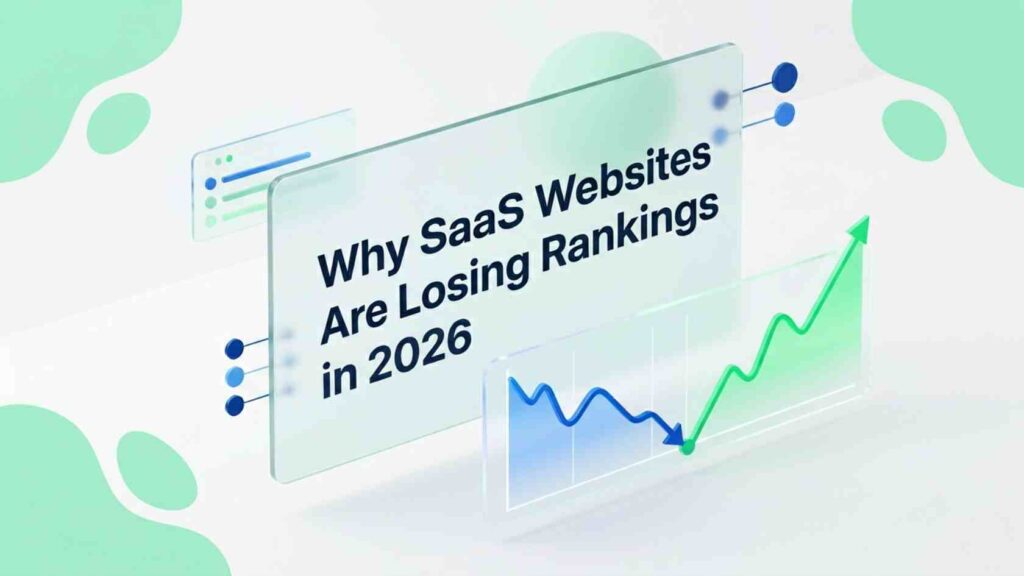
If you are running a SaaS website, you can notice something strange. Your rankings might look stable or even improving, but your traffic is dropping. That contradiction feels just like playing a frustrating game where the rules suddenly changed overnight. So, the question comes at this stage: what’s going on? Is SEO dead or closed? Why Over 70% of B2B SaaS websites have experienced a traffic decline in recent industry data?
The answer to this question is a bit uncomfortable and more interesting for website users. SEO doesn’t disappear; it has become more complex and less predictable. Search engines are no longer just directing traffic. Users often get summaries, comparisons and quick answers directly. They are prioritizing trust like never before and filtering content more aggressively. Additionally, it continues to emphasize helpful, reliable and stronger signals of experience and interest.
Think of it like this: Google is a highway sending visitors to your site. It’s more like a destination itself that keeps users inside its ecosystem. Additionally, if you are using old-school keywords or a generic blog post in your strategy, you’re already behind.
So, here’s some good news for you? In this article, you will explore the guidance on what’s actually happening. Being a SaaS user, how can you adapt and perform best among competitors that are still trapped in 2020?
The Big Shift in SEO: SEO in 2026 Is Not What It Used to Be
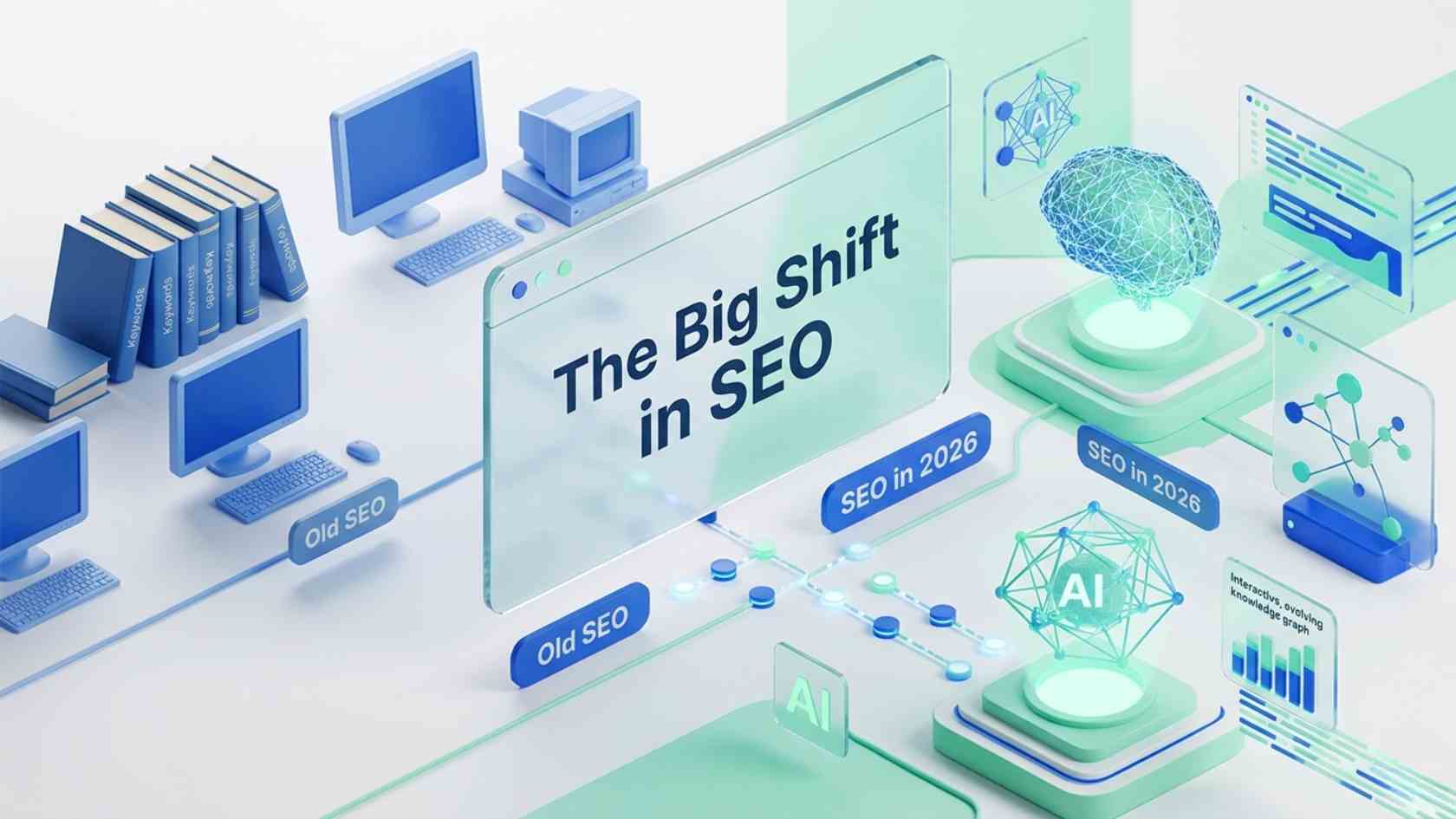
Traditional SEO vs Modern SEO
For a couple of years, traditional SEO felt more straightforward. You just found a keyword to optimize their content, build some backlinks and watch their rankings climb, especially in the SaaS space, where content marketing dominates the strategies of lead generation.
In this case, your content just matches the keyword but doesn’t solve a problem for the audience. Search engines don’t consider your content to determine whether it deserves to exist in the first place. It means Ranking #1 doesn’t guarantee clicks anymore.
On the other hand, many users get what they need just with one click or AI-generated summaries without ever visiting your website. Zero-click searches have completely changed the entire SEO landscape. Imagine you are writing a blog post for weeks, only for Google to summarize it in three lines and display it at the top. In this way, the user gets their answer.
But where is your traffic? Gone. That’s the new normal. Understanding this point is the first step toward fixing your strategy. Studies from Ahrefs suggest that modern SEO is all about intent, experience, and trust signals, which help to rank with clicks.
The 7 Core Reasons SaaS Websites Are Losing Rankings
AI Overviews & Zero-Click Searches
In this ranking, AI-driven search features are one of the biggest interruptions for SaaS brands. They often publish content comprising educational and top funnel questions. Research shows that due to AI-generated answers, more than 58% of searches now end without a click. For SaaS companies, this is particularly damaging because much of their content is informational, exactly the type most affected by AI summaries.
This shift turns Google into an “answer engine” rather than a discovery platform. If your content doesn’t offer the same thing as ten other articles, it becomes easy for search engines to compress it into a short answer. That does not always hurt rankings. It hurts clicks.
Generic AI Content Is Getting Penalized

A lot of SaaS content is clean, organized and optimized, but lacks originality or human insight. Websites that rely heavily on generic AI-generated content are clear on this point. They have seen traffic drops between 35% and 60%.
The focus is not on whether the content was written with AI or by a human. The focus is on whether it is original and demonstrates experience, expertise and authoritativeness. For SaaS brands, search engines can detect patterns of low-value content.
Weak Search Intent Alignment
Many SaaS websites create content around keywords without understanding user interest. For example, someone searching for “best CRM software”. He wants comparisons between different CRM software. He wants to see reviews and recommendations.
Traditional SEO will show the definition of their software just by matching the keyword, but misses the real intent, and rankings become fragile. Even if the page reaches page one, it may not convert well, attract clicks, or hold its position for long. Modern SEO prioritizes its choice to solve the problem behind the search, not just pages that mention the right phrase.
Lack of Topical Authority
Publishing random blog posts might have worked before, but now it signals a lack of expertise. If a SaaS website covers SEO, AI, finance and marketing without depth, it can weaken expertise.
Search engines prefer websites that demonstrate deep knowledge in a specific area with topical authority. You can cover a subject comprehensively. You can connect related topics and build a clear content structure. Without this, your site looks scattered and unreliable.
Poor E-E-A-T Signals
Sometimes, you don’t trust the device from an anonymous blog. Search engines feel the same way. SaaS websites without strong trust signals such as Experience, Expertise, Authoritativeness, and Trustworthiness (E-E-A-T) are losing visibility. Your site does not struggle to rank if it does not have any authentication, like clear author information, credentials, or real-world expertise.
Technical SEO Issues
Even if you have great content for your website, technical problems can ruin your rankings. In SaaS platforms, especially those who are using heavy JavaScript, common problems include slow loading speeds, poor mobile optimization, and crawlability. Technical SEO for those is like the foundation of a building. Without it, everything else collapses.
Content Decay
For a year, many SaaS companies have had blog posts that performed well and then slowly faded. That is normal. Software changed. Product categories evolve. New competitors emerge. Users’ expectations rise.
Content is no longer something you publish once and forget. High-performing SaaS content now behaves more like a product asset. It needs updates, improvements, and periodic repositioning.
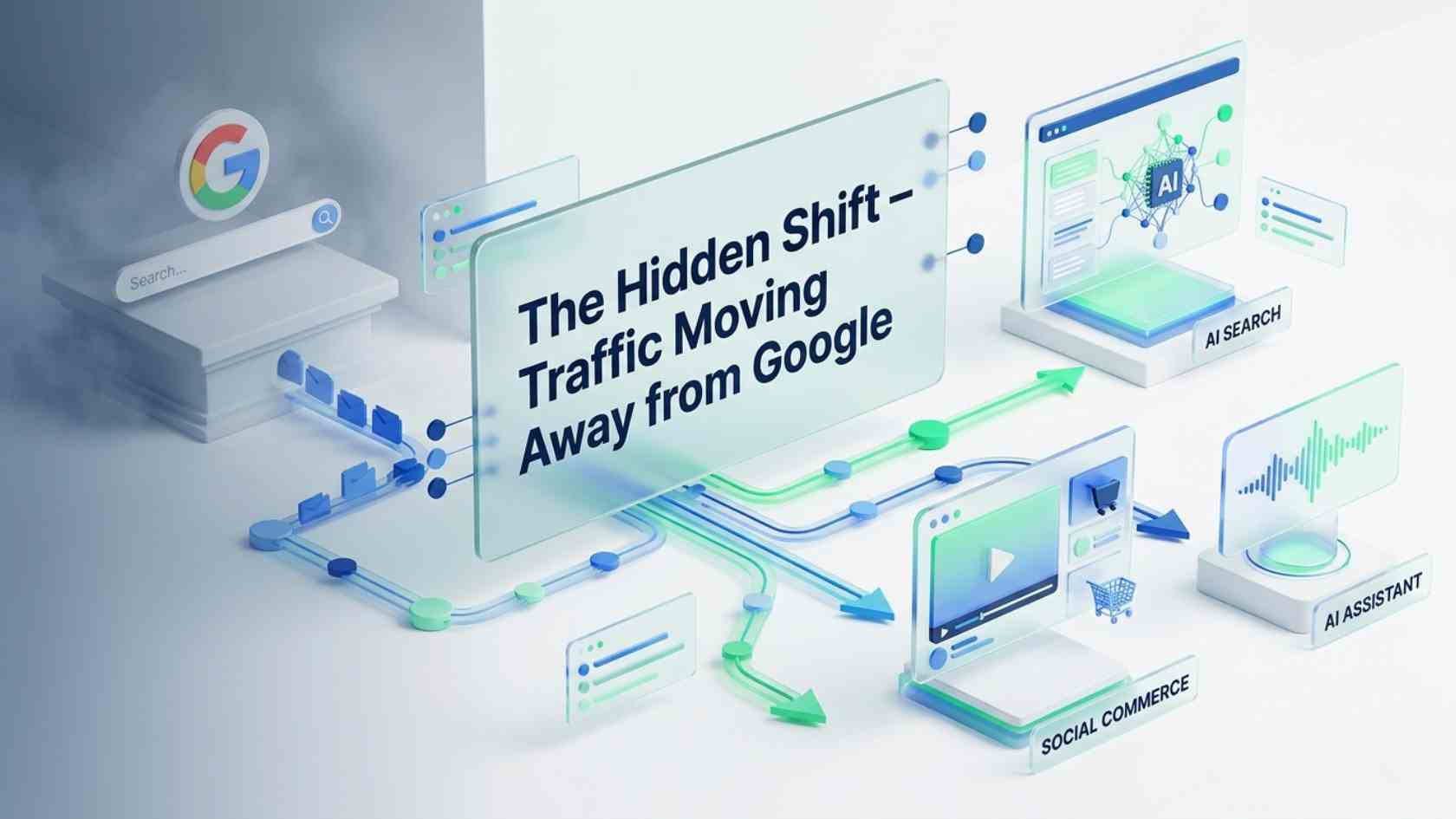
The Hidden Shift – Traffic Moving Away from Google
Rise of AI Tools in Search
Instead of traditional search engines, more users are now turning to AI tools for research. Whether it’s finding software recommendations or comparing tools, it provides faster, more personalized answers. It means your audience never reaches Google in the first place, and many SaaS companies are ignoring this fact. Before making any decisions, users don’t rely on a single platform. Hence, SEO is no longer limited to Google; it’s about the visibility of your content everywhere.
How to Fix SaaS SEO in 2026?
Focus on Bottom-Funnel Content
If your content is losing clicks, the question is, where should you focus? It’s very simple, use words like “best tools”, “alternatives”, “rare”, and vs “comparisons”. These are also known as bottom-funnel keywords. With the help of these words, you can show clear intent, and your content is less likely to be replaced by AI summaries.
Create Experience-Based Content
Instead of writing “top 10 tools”, focus on 3W Rules, why these tools matter, who it’s for, and what the performance is in the real world. In this way, your content feels like a human-based. On the other hand, your content may be based on sharing real experiences, case studies, and opinions to meet human needs.
Build Topical Authority
Before writing, choose a niche that can be interconnected and covers every aspect of the topic. Dominate it. This will help you to build trust and improve rankings over time.
Improve E-E-A-T Signals
Add authentication in your content like author bios, credentials, and real-world expertise. Link your content to professional profiles. This showed that well-informed individuals write your content.
Fix Technical SEO
In 2026, users don’t focus on website loading speed, which loses the search interest, and your visitors just feel like wasting their time. Ensure your site loads fast, works smoothly on mobile, and is easy for search engines to crawl.
Refresh Content Regularly
Don’t treat your content like a one-time effort. Update it regularly like a living asset by inserting the latest research and adding new data, screenshots, and examples wherever needed.
Optimize for AI Search
Must mention your brand on platforms like forums, review sites, and communities. AI tools often pull data from multiple sources, so your visibility needs to extend beyond your website.
SaaS SEO in 2026 – The New Playbook

SEO is no longer just about ranking; it’s about being present everywhere your audience searches. Successful SaaS businesses combine content, branding, and distribution into a unified strategy. They don’t rely solely on Google. Instead, they build authority across multiple platforms, ensuring they remain visible no matter where users search.
Conclusion
If your SaaS website is losing traffic and rankings have collapsed, it is a sign of SEO failure. In many cases, search behavior changed faster than your strategy did. It’s telling you that the rules have changed. The path forward is not to panic and publish more of the same content. It means sticking to old strategies is no longer effective.
It is to create better content with sharper pages, strong trust signals and a broader presence. Chasing rankings won’t be the future of SEO. It’s about creating value, establishing trust, and showing up wherever your target audience is searching. SaaS businesses that adapt to this new reality will not only recover but thrive.
FAQs
1. Why are my rankings stable, but traffic is dropping?
Because of zero-click searches and AI summaries, users often get answers directly from search engines without visiting your site.
2. Is AI content bad for SEO?
Not necessarily, but generic AI content without human input or originality performs poorly.
3. What is the most important SEO factor in 2026?
User intent and content quality are the most critical factors today.
4. How often should I update my SaaS content?
Ideally, every 3–6 months, depending on how fast your industry evolves.
5. Should I focus only on Google for traffic?
No. You should optimize for multiple platforms, including AI tools, forums, and social media.