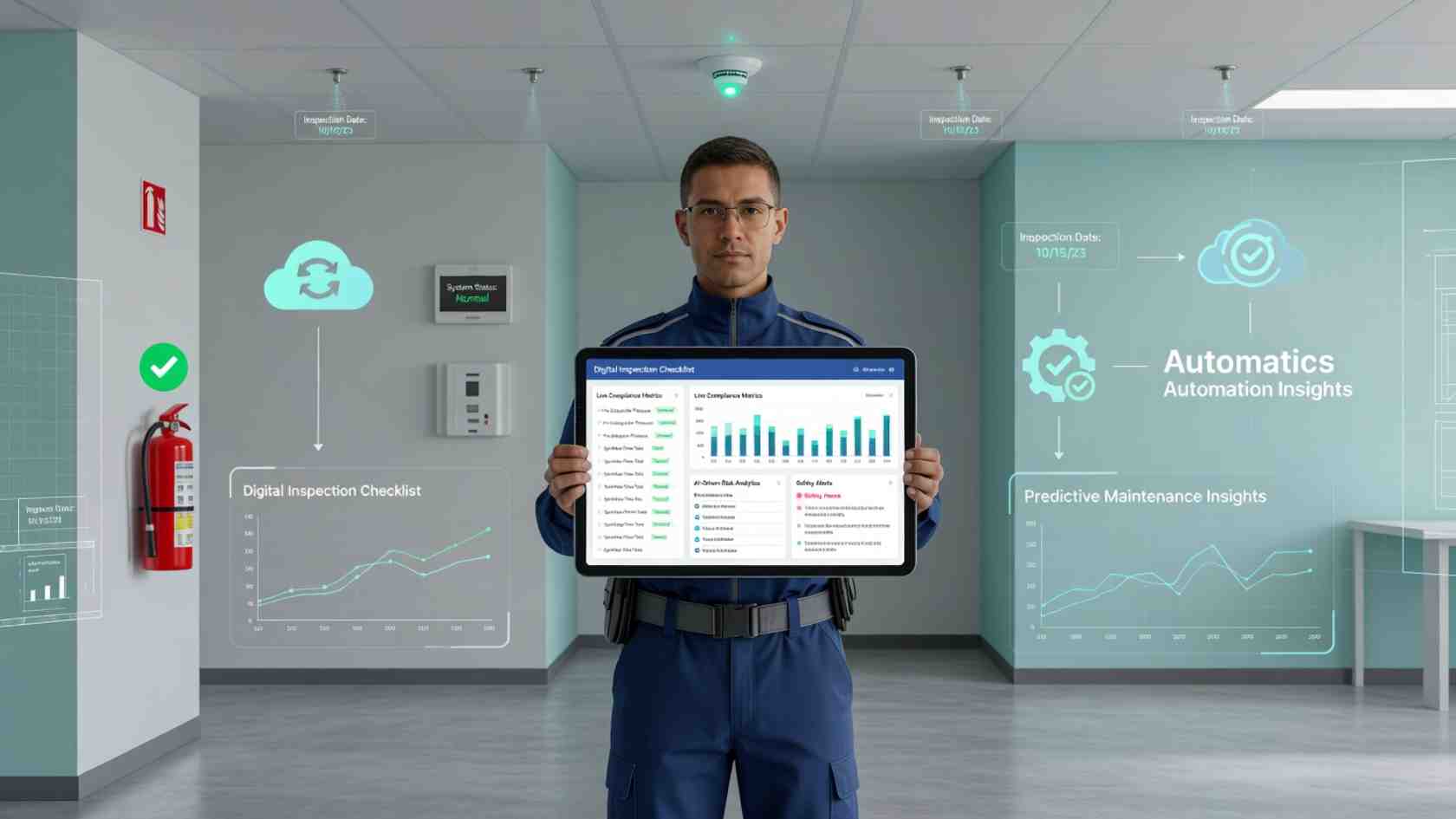
An inspection missed by a day can turn into a failed renewal. A technician note left in a van can delay billing. A missing certificate or incomplete audit trail can create real exposure when a regulator, customer, or insurer asks for proof. Most teams do not struggle because they do not care about compliance. They struggle because their process lives in too many places at once.
One system holds customer records. Another tracks technician work. Someone saves inspection notes in a folder. Billing happens later, often after a few emails, a phone call, and a bit of detective work. That patchwork can keep a business moving for a while, but it rarely scales well.
That is why more companies are prioritizing improving inspections and compliance with NetSuite as part of a broader push to modernize service operations. In fire and life safety, the real advantage is not just having an ERP. It is using one connected platform to tie inspections, service activity, compliance records, and billing together so nothing gets lost between departments.
The Real Problem Is Not Compliance. It Is Fragmentation.
Picture a growing fire protection company with hundreds of customer locations, recurring inspection contracts, emergency service calls, and renewal dates scattered across the calendar.
The operations team is trying to keep technicians scheduled. The service team is documenting what happened in the field. The compliance side needs complete records. Finance wants invoices out quickly. Leadership wants to know which contracts are profitable, which renewals are at risk, and where delays are happening.
When those tasks are split across email, spreadsheets, and separate tools, the business creates invisible friction. A technician may complete the work, but the inspection record is not attached correctly. The compliance team may have the report, but billing does not see it yet. A customer asks for documentation, and suddenly three people are searching inboxes and folders instead of answering confidently.
That kind of fragmentation creates silent risk. If approvals, documents, and alerts are not traceable, enforceable, and visible inside the ERP, teams end up reacting instead of controlling the process.
Why NetSuite Fits Inspection-Driven Businesses

For fire and life safety companies, inspections are not a side task. They are a core operating motion. They affect compliance, customer trust, technician utilization, renewals, and cash flow.
That is where NetSuite becomes more than a finance system. Used well, it can connect sales, service, billing, and financial reporting in one place. It also supports automated scheduling, ticket generation, field activity, inspection capture, payment collection, and recurring revenue visibility for inspection-driven service models.
That matters because the best compliance process is usually the one your team does not have to remember manually. For many growing service businesses, improving inspections and compliance with NetSuite means building repeatable workflows that guide technicians, operations teams, and finance through the same process every time. When the system drives the workflow, the business becomes more consistent. The technician completes the inspection. The record is stored where it belongs. The next team sees it. Billing follows the service activity. Managers get visibility without chasing updates.
In other words, operational discipline stops relying on heroics.
What Better Inspection Management Actually Looks Like
A lot of companies hear “digital inspection workflow” and imagine just replacing paper forms with online forms. That is a start, but it is not the finish line. A stronger setup uses NetSuite to define what should be inspected, what information must be captured, what standards apply, and what happens if something fails. Inspections can be qualitative or quantitative, can include sampling rules, and can be triggered automatically by business events when the right specifications are configured.
For a fire and life safety business, that mindset is powerful even beyond manufacturing-style quality control. Designing inspections this way ensures technicians capture the right information every time instead of relying on memory, while service leaders can standardize what a “complete” visit looks like. It means exceptions do not disappear into a notebook or a text thread. They become visible records tied to real jobs, locations, and customers.
And when records are complete and structured, everything downstream gets easier. That is one of the biggest benefits of improving inspections and compliance with NetSuite in a business where field documentation, customer accountability, and recurring service obligations all need to stay aligned.
Compliance Becomes Easier When Proof Is Built In
The hardest part of compliance is often not doing the work. It is proving the work was done correctly, on time, and with the right controls. That is why audit trails matter so much. A strong process includes electronic records, timestamps, inspector identity, pass/fail determinations, linked documents, and fast retrieval during audits. Documentation loses defensibility when it sits outside the ERP.
Translated into plain English, that means a fire and life safety company should be able to answer questions like these without scrambling:
- Was the inspection completed?
- Who completed it?
- What did they find?
- Were any issues flagged?
- Was follow-up required?
- Was the customer billed correctly?
- Is the renewal or service agreement still on track?
When that information lives in one connected system, compliance stops feeling like a separate administrative burden. It becomes part of everyday operations.
The Hidden Revenue Impact Most Teams Underestimate
Inspection and compliance conversations usually focus on risk, and that makes sense. But there is a revenue story here too. Better inspection workflows do not just reduce audit headaches. They also protect recurring revenue. When service activity, compliance documentation, and billing are tied together, completed work is less likely to stall before invoicing. Teams gain clearer visibility into active contracts, due dates, renewals, and missed follow-up.
This is where many businesses start to see the bigger picture. A better inspection workflow is not only about passing audits. It is about making sure completed work turns into billable work. It is about seeing what contracts are active, what is due next, what is slipping, and what needs attention before a customer notices.
That is a much stronger business model than relying on someone to remember the next step. In practical terms, improving inspections and compliance with NetSuite can help companies protect revenue while reducing the operational drag that comes from disconnected systems.
Alerts, Escalations, and Ownership Matter More Than Extra Tools

One of the smartest lessons in modern compliance design is also one of the simplest: passive alerts are not enough. An email no one owns is not a control. A dashboard warning that nobody reviews is not a safeguard. A checklist without escalation is just paperwork.
A stronger approach uses role-based approvals, required attachments, escalation timers, alert ownership, and linked transactions. That turns compliance from a document exercise into an operating system. When something is incomplete, overdue, or outside policy, the workflow should move it to the right person and keep it moving until it is resolved.
For fire and life safety organizations, this approach is especially useful for recurring inspections, missing documentation, service exceptions, and renewal-sensitive issues. The goal is not to create more alerts. The goal is to make each alert actionable.
The Best Rollouts Start Smaller Than You Think
One mistake companies make with ERP-driven process improvement is trying to redesign everything at once. The better approach is to start where the pain is most obvious.
That might be missed inspection follow-up. Common issues include incomplete field documentation, delayed billing after service work, and weak visibility into recurring contracts and renewals.
The smartest rollouts begin with the highest-risk or highest-value areas, define the necessary data, train users well, and use dashboards and exception reporting to spot bottlenecks over time. That is how real adoption happens. Not through a giant launch deck, but through workflows that make people’s jobs easier on Monday morning.
Also Read: Top Energy Software Development Companies: The Curated List
Key Takeaways: How a Unified NetSuite Workflow Helps Fire & Life Safety Companies Scale With Less Risk
As fire and life safety businesses expand, complexity grows with them. Growth brings more customers, locations, technicians, inspections, contracts, and greater compliance exposure. At some point, disconnected systems stop being an inconvenience and start becoming a growth limit.
A unified NetSuite environment gives companies a better foundation because it connects operational execution with compliance discipline and financial visibility. Inspections become stronger when they are structured, workflows become safer when they are visible, and growth becomes healthier when service, compliance, and billing move together instead of in silos.
For businesses in fire and life safety, that is the real opportunity. Not just to digitize old paperwork, but to build a more accountable, scalable, and profitable operation. And in a sector where trust is earned through consistency, that kind of operational maturity is not a nice-to-have. It is the standard.