AI tools are everywhere right now. Every week, there seems to be a new platform promising faster reporting, sharper forecasting, and smarter automation. It is easy to focus on the model, the dashboard, or the latest feature.
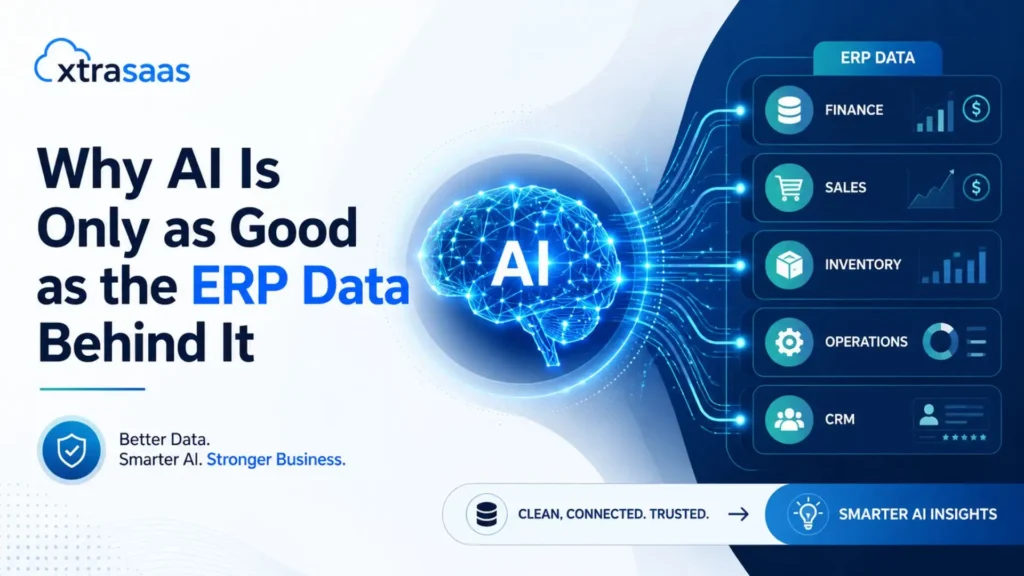
But in a real business, AI does not work in a vacuum. It depends on the information given. If that information is outdated, duplicated, incomplete, or stored in systems that do not communicate with each other, the results can appear confident while still being wrong. The reality is that most AI projects fail because the underlying business data is fragmented, inconsistent, or incomplete.
For many companies, the most important data sits inside the ERP system. This is where purchasing, stock, sales orders, finance, operations, and customer fulfilment come together. If the ERP setup is weak, AI has a much harder job. If the ERP data is clean and connected, AI is more likely to produce advice people can actually use.
AI Needs Business Context, Not Just More Data
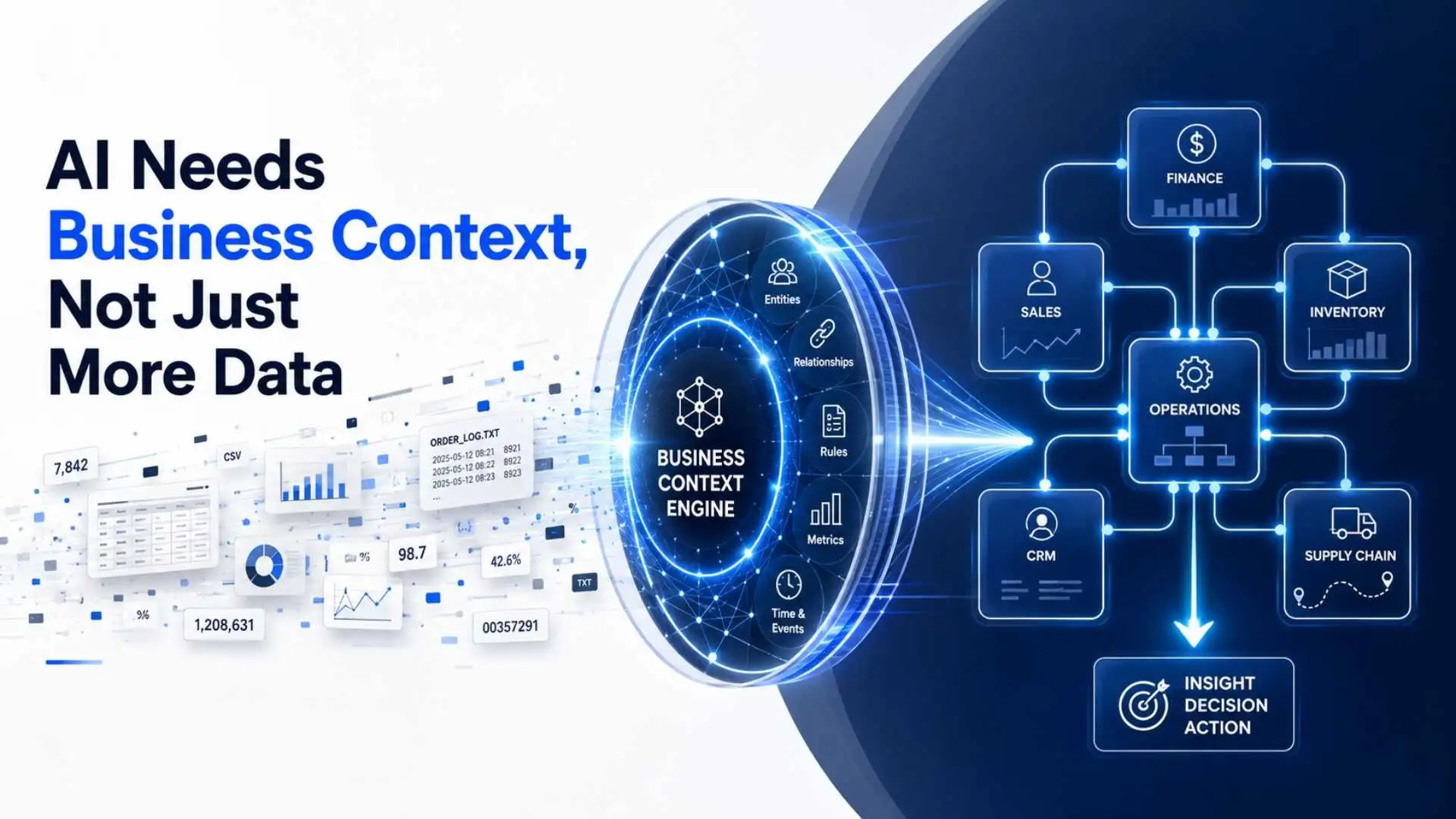
AI can process huge amounts of information, but volume alone is not enough. It needs context. A sales spike, for example, might look like a clear signal to increase production. But the ERP system may show that a key supplier is delayed, the warehouse is low on stock, or the finance team is already managing tight cash flow.
The same thing can happen with cost-cutting.
An ERP system can connect:
- Purchasing with inventory
- Inventory with sales
- Sales with finance
- Finance with broader operational goals
AI can analyze data in the context of the business’s operations, but in the absence of this context, AI can see the patterns, but they may be erroneous.
An AI tool might point to cheaper purchasing options, but ERP data may reveal longer lead times, lower quality, or service issues that will cost more later.
That is where ERP matters. It helps connect the numbers to the way the business actually runs.
CRM Data Tells Only Part of the Story
CRM data is useful. It shows sales activity, customer behaviour, conversations, and buying interest. But customer interest is only one side of the picture.
A business also needs to know whether it can deliver what customers want. Is stock available? Can suppliers keep up? Will the sale protect margins? Are there production delays? These questions usually live closer to ERP than CRM.
When AI only reads CRM data, it may recommend actions that sound good from a sales perspective but are not practical in practice. When it can also work with ERP data, the recommendations become more grounded.
Why Some AI Projects Work Better Than Others
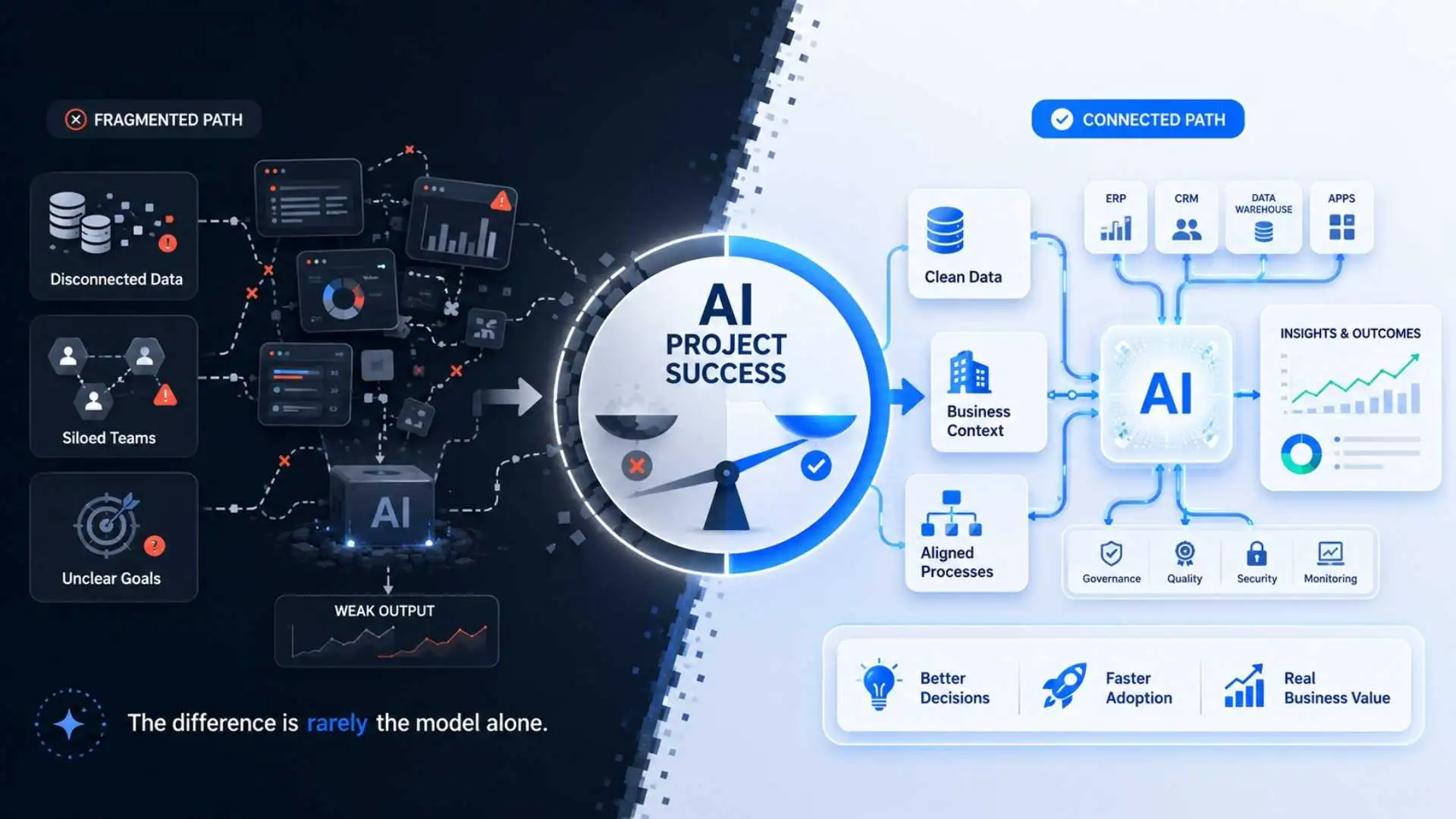
A lot of companies start with AI because it feels urgent. They want automation, better forecasting, and faster decisions. Those goals are reasonable, but the results are often disappointing when the data foundation has not been fixed first.
If different departments use different records, naming rules, product codes, or manual spreadsheets, AI will not magically clean up the mess. It will repeat the same confusion, only faster.
That is one reason experienced ERP specialists are valuable in digital transformation work. They understand how business processes, data fields, reporting structures, and system integrations connect. Their work provides AI tools with a cleaner, more reliable foundation.
The companies that get better results usually do the less exciting work first. They tidy up data, standardise processes, and make sure different parts of the business are working from the same version of the truth.
The Connection Between ERP and Intelligent Automation
ERP and AI are becoming increasingly intertwined. Modern business platforms now use ERP data for forecasting, reporting, workflow automation, inventory planning, and operational alerts.
Some companies are also using natural language tools so employees can ask questions about stock, invoices, orders, or performance without having to search through multiple screens. That can be useful, but only if the information behind the answer is correct.
A simple question like “Which orders are at risk this week?” needs more than a clever chatbot. It needs accurate order data, inventory status, supplier updates, delivery schedules, and finance information. Most of that comes back to ERP.
Conclusion
AI can help a business move faster, but it cannot fix poor data quality on its own. The better approach is to prepare the systems underneath before expecting AI to deliver serious results.
For companies planning to use AI in a practical way, ERP modernisation should not be seen as just another software upgrade. It is an opportunity to streamline processes, improve data quality, and make key information easier to use across the business.
When the ERP foundation is strong, AI is more likely to provide useful answers rather than polished guesses.