Most B2B companies that can’t build a reliable pipeline aren’t struggling because they lack effort. They’re struggling because there’s no clear system connecting marketing activity to sales conversations — and without that, even strong products end up stalled.
Worth clarifying upfront: demand generation and lead collection aren’t the same thing, even though the terms get used interchangeably. A list of form fills looks like progress until the sales team calls through it and finds that most of those people had no real buying intent. Genuine demand work is slower and less immediately satisfying — but it produces buyers who are ready for a real conversation, not just curious enough to click something.
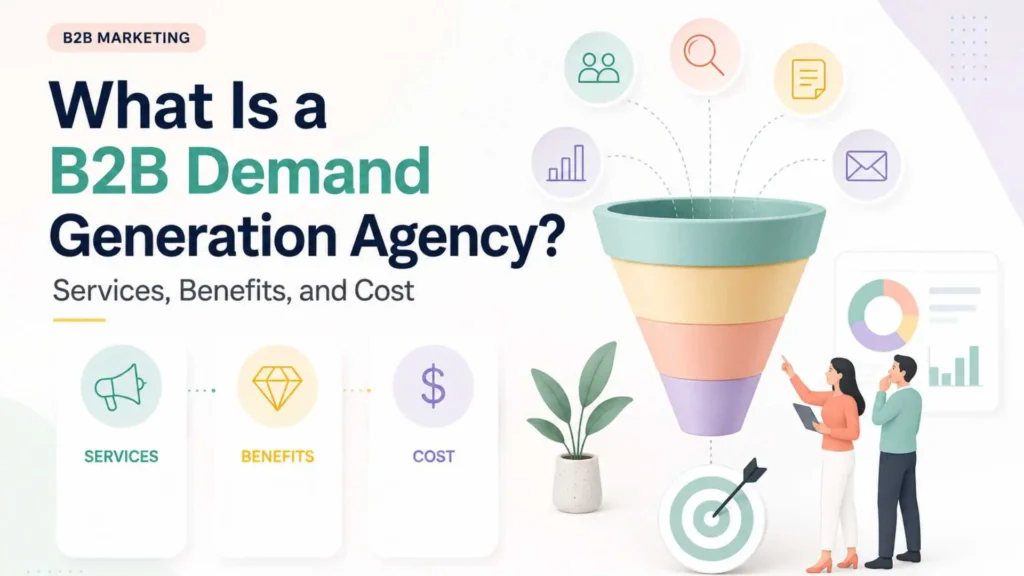
A B2B demand generation agency builds that system. Not just campaigns or content — a structured path that takes someone from first hearing about a company to actually wanting to talk to the sales team.
What a Demand Generation Agency Is Actually Hired to Fix
Most companies hiring an agency aren’t doing it from a standing start. They already have some visibility. The issue is that the attention they’re getting isn’t turning into pipeline.
Maybe the message isn’t landing with the right accounts. Maybe sales is spending time on leads that were never a real fit, and no one’s quite sure why. Or prospects show early interest and then go quiet — not because they found a better option, but because nothing in the experience gave them enough confidence to keep moving forward.
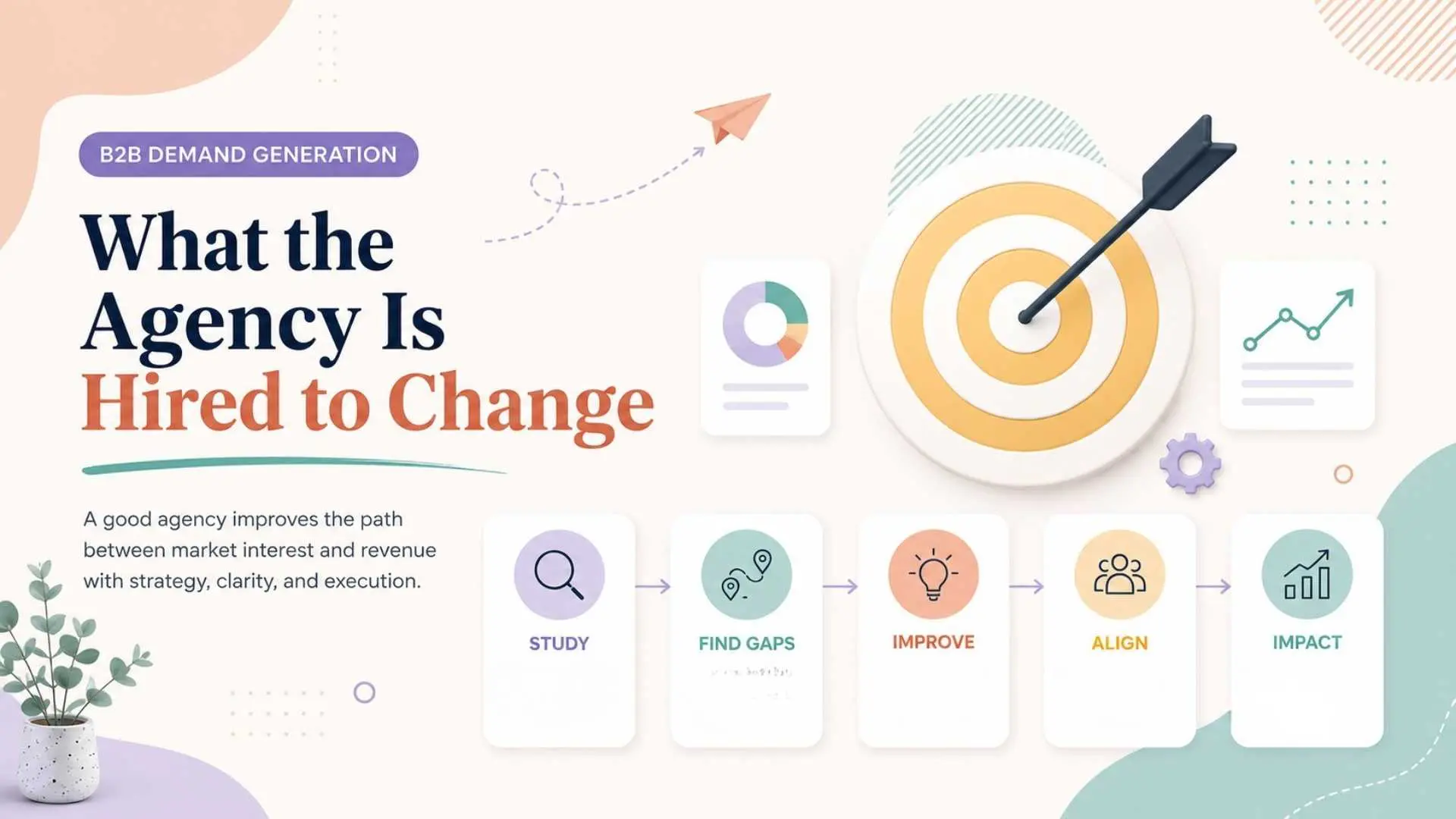
A good agency starts by mapping how buyers currently move — first touch, website, offer, the sales handoff, and what happens in the conversations after. The goal is to find the specific point where attention turns into confusion, then address it before spending anything on campaigns.
This is also where weaker agencies give themselves away. The instinct is to treat every company as a traffic problem — more ads, more content, more reach. A better agency asks the uncomfortable question first: if the right buyers showed up in larger numbers tomorrow, is the business actually set up to convert them?
It Usually Starts With the Message, Not the Campaigns
Most engagements don’t begin with an ad or a content calendar. They begin with positioning — because without a clear message, campaigns just deliver the wrong impression faster.
The agency needs to understand who feels the problem most acutely, how those buyers actually describe it in their own words, and why the current message isn’t earning enough trust from the accounts that matter. That work can feel slow to a founder who wants to see immediate activity. It usually prevents a lot of wasted spend.
Good positioning is practical. A prospect landing on the homepage should immediately understand what business problem is being solved and why this company is a credible place to solve it. A message that’s too broad ends up attracting people who are curious but won’t ever buy. Too narrow, and the brand starts missing buyers who have the exact problem but frame it slightly differently.
When the message is solid, everything downstream becomes easier to judge — content has a sharper focus, paid targeting has a real audience to work from, and sales follow-up lands with more context behind it. None of this takes clever copywriting. It takes being specific enough that the right buyer reads it and thinks: this is describing my situation.
Also Read: 5 Content Marketing Tactics That Actually Work for B2B Security Vendors
Campaigns Need to Match Where the Buyer Actually Is
Most B2B campaigns that underperform aren’t failing because of bad creative or the wrong channels. They’re failing because the offer doesn’t match where the buyer actually is in their thinking.
A buyer who started researching a problem last week doesn’t want a product demo. They’re still figuring out whether the problem is worth taking seriously at all. Pushing them into a sales conversation at that stage makes the brand feel impatient — and usually produces a meeting that gets disqualified before it really starts.

The offer has to match the buyer’s level of readiness. Early on, the job is helping them think more clearly about the problem — not selling a solution they haven’t decided they need yet. Later, when they’re comparing options, the content should reduce doubt around fit and implementation, not re-explain what the product does.
B2B purchases almost always involve more than one person, which is easy to forget when you’re looking at contact-level data. In most deals there’s the person who first found the content, the one who controls budget, and a third who’s mainly worried about what implementation looks like on their team. A single campaign can’t do all three jobs at once — but the agency should at least be clear about which job it’s trying to do.
The Real Benefit Shows Up in Pipeline Quality, Not Lead Volume
Here’s something that doesn’t get said enough: many companies that bring in outside marketing help already have plenty of leads. What they don’t have is a good reason for sales to take most of them seriously.
That’s the actual problem a strong program solves.
Prospects who come through a well-built program arrive differently. They’ve read something that made the problem feel urgent. They’ve seen proof that the approach works. They’ve already decided a conversation is worth having — the sales team isn’t starting from scratch every time. That shift changes the quality of individual calls, and over time it changes how the whole team thinks about what a real opportunity looks like.
There’s a secondary benefit that builds quietly in the background. Campaign data shows which messages are earning attention from the right accounts. Sales feedback reveals where buyers lose confidence mid-process. The company gets progressively sharper about what real demand looks like — and that kind of knowledge compounds.
What It Costs and What Drives the Price
Pricing varies a lot depending on what’s included. A strategy-focused engagement — positioning work, campaign direction, monthly reporting — sits at the lower end. A full-service program covering content production, paid media management, and ongoing sales alignment costs considerably more.
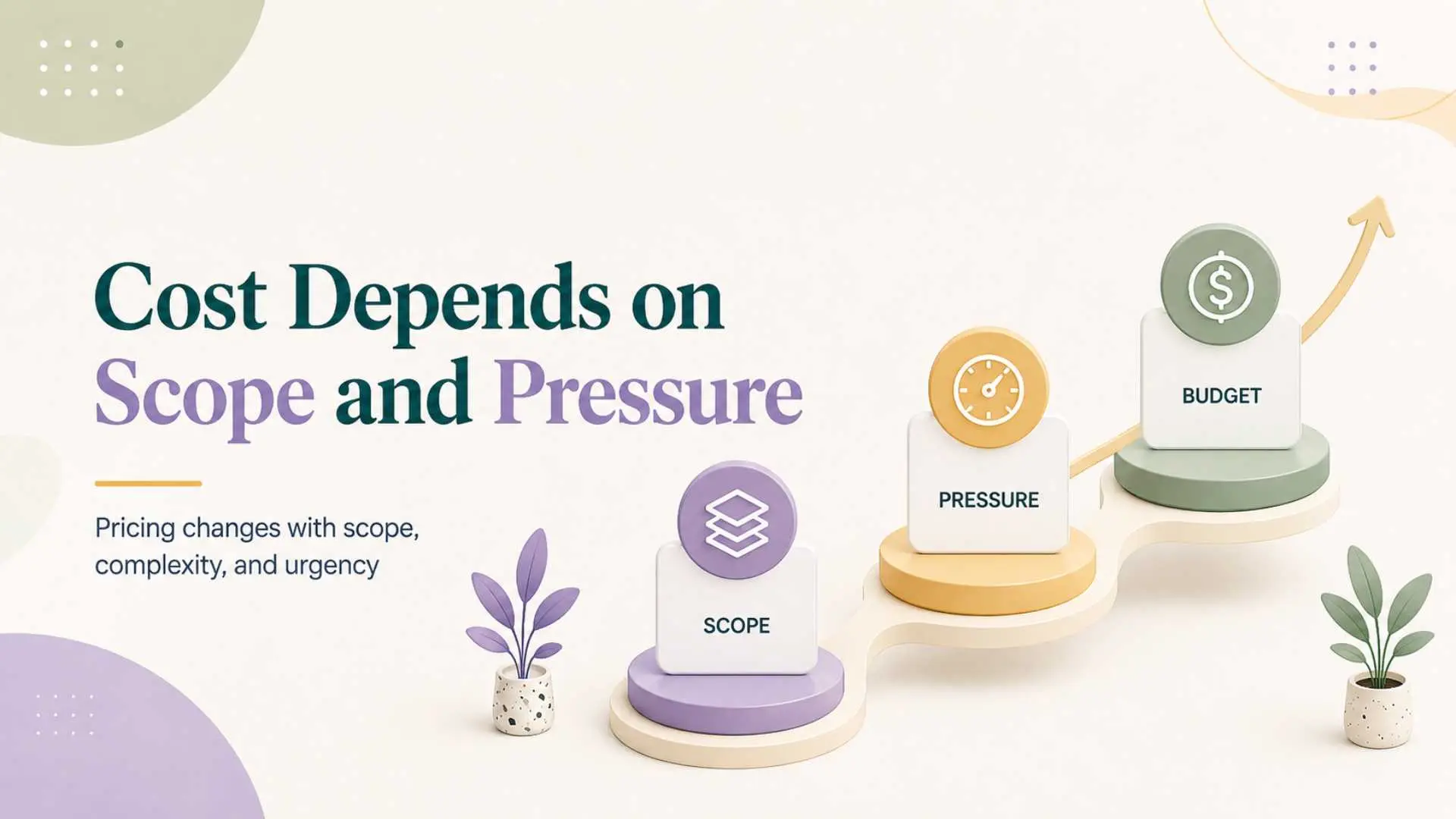
For smaller B2B companies, a realistic starting point is usually somewhere in the low-to-mid thousands per month. Programs with full execution often exceed $10,000 monthly, and media budget is almost always billed separately from the retainer — so the total investment is higher than the headline number suggests.
The cheapest option isn’t automatically the safest one. A low retainer typically means limited senior involvement, templated work, and reporting that tracks activity without connecting any of it to revenue. A higher fee doesn’t guarantee better results either. What matters is whether the agency can explain — specifically, not in vague terms — how its work connects to pipeline.
Also Read: Most Effective Lead Generation Tips for Tech Startups in 2026
Questions Worth Asking Before Signing Anything
Start with how the agency defines success. If the answer stays at impressions, clicks, or form fills, the engagement will drift toward surface metrics and stay there. Good demand work needs a direct line to what’s happening in sales — not just what’s showing up in a marketing dashboard.
Ask how they stay connected to actual sales conversations. Programs that run entirely inside a reporting tool tend to drift. They need regular input from the people hearing buyer objections every week, otherwise campaigns can look healthy on paper while the quality of what sales receives stays flat.
It’s also worth being honest about internal readiness before signing anything. An outside team can create qualified interest — it can’t repair a broken follow-up process on its own. If response times are slow, CRM notes are incomplete, or the offer itself isn’t fully clear yet, outside help will expose those problems faster than it fixes them.
The companies that get the most from this kind of engagement usually share one thing: a solid product and a real buying audience, but no reliable path between the two. That’s a fixable problem. A good agency builds the path — and the sales team finally has a pipeline worth working.