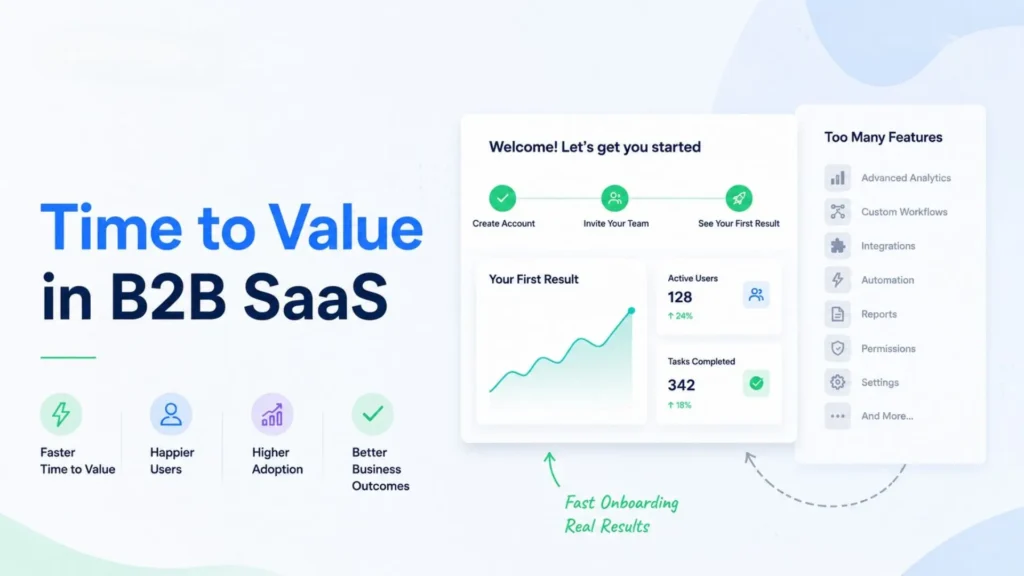
Time to Value Is the Gap Between Access and Evidence
Amplitude defines time to value as the time it takes customers to reach their first meaningful outcome. That wording matters. Opening the app, completing a product tour or changing a profile photo may be onboarding activity, but none of those events necessarily prove value.
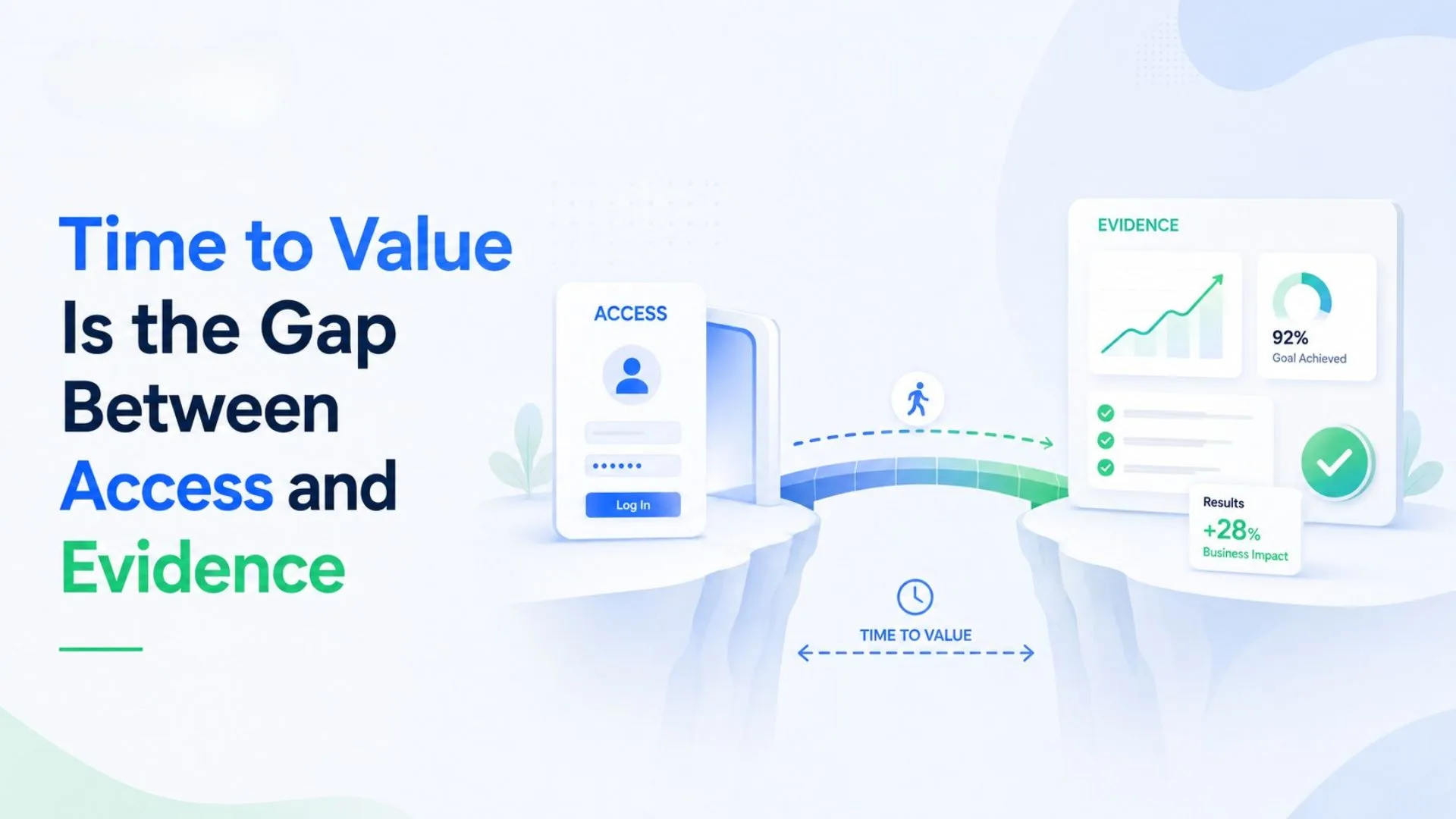
In B2B software, the value event depends on the job the customer hired the product to do: a first project successfully shared, a reliable report built from live data, or a customer request handled through the new workflow.
There is also a difference between first value and full value. A complex platform may take months to become deeply embedded across an organisation, while still delivering a useful result in its first day or week. Good onboarding does not try to compress the entire implementation into one session. It finds the earliest outcome worth caring about.
Pendo’s onboarding research reports an average time to value of about 1.5 days across companies in its benchmark data. That figure should not be treated as a universal target—enterprise and specialised products can require much longer—but it is a useful reminder that customers judge software before they have explored most of it.
The Feature Trap: Capability Is Not the Same as Experienced Value
Feature development is visible. Teams can announce a new automation or AI function and add another line to a pricing page. Onboarding friction is less glamorous: confusing setup, empty screens, unnecessary permissions and too many decisions before the user has achieved anything. The result can be a feature-rich product that still feels slow.
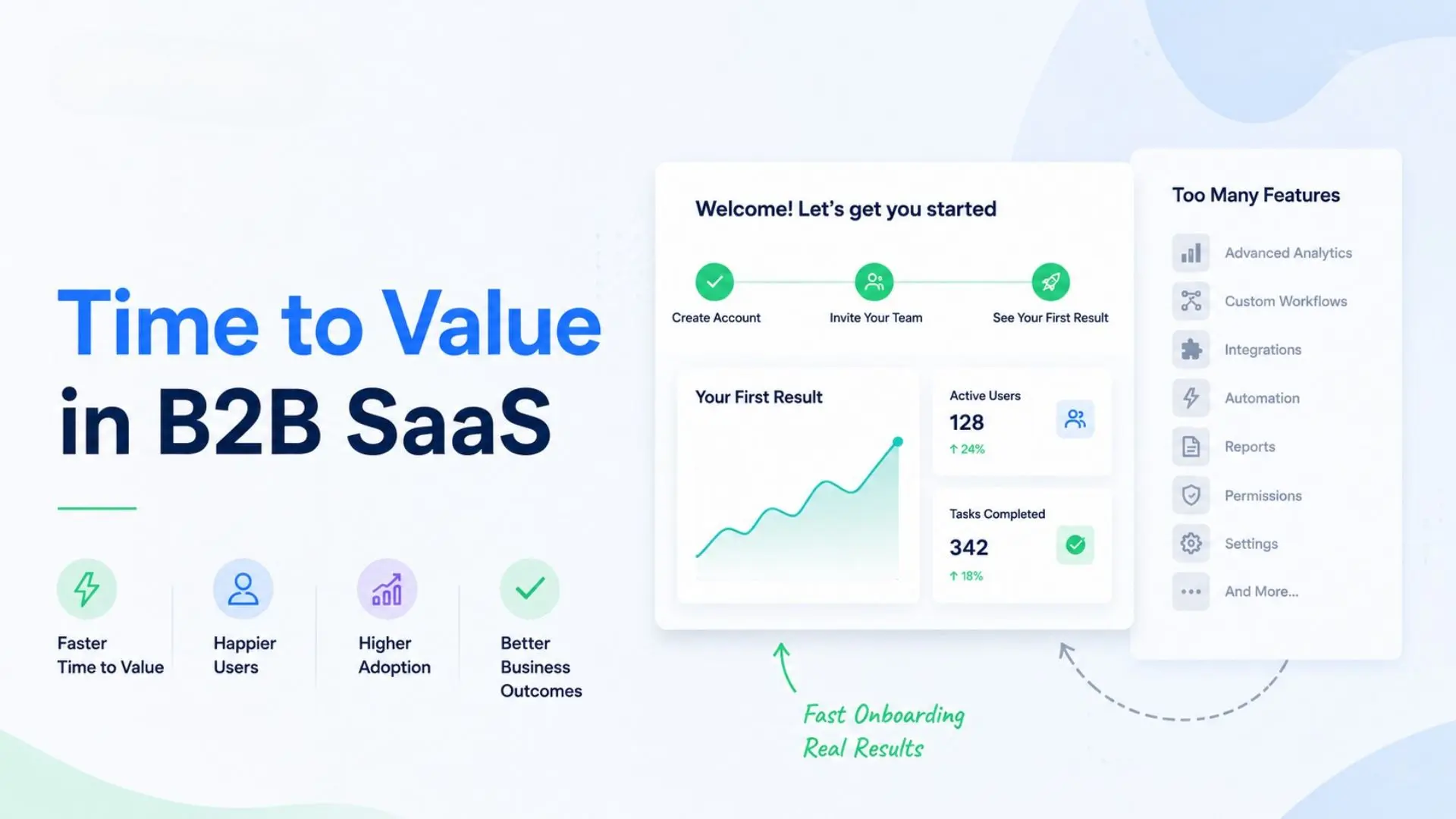
Pendo reports that, on average, only 6% of features account for 80% of click volume in the software it studied. The exact pattern will differ by product, but the implication is useful: customers do not need to understand everything before they can succeed. They need the right capability at the right moment.
This is especially important when a company already operates a complicated business SaaS stack. A new product is not entering an empty environment. It must fit existing data, people, permissions and workflows. If adoption requires employees to learn ten secondary features before the core job works, the vendor is effectively asking the customer to finance complexity before receiving proof.
More features can increase long-term value. They are not a substitute for a short path to the first useful result.
B2B Onboarding Runs on Three Clocks
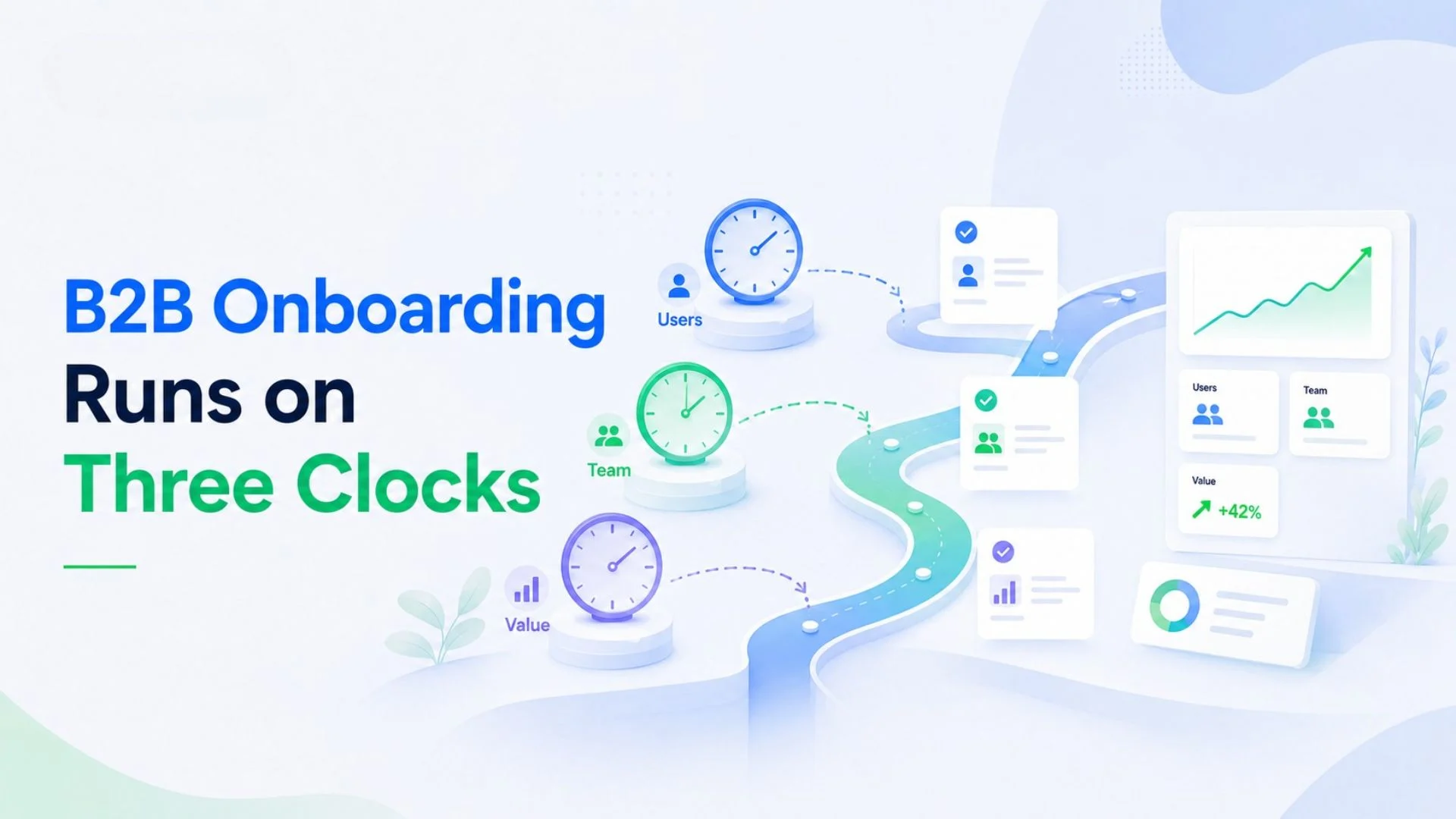
One reason SaaS teams misread TTV is that they measure only account setup. B2B adoption usually has at least three clocks running at once.
1. Technical Readiness
The account is configured enough to function: essential data is connected, permissions are workable and the product can perform its core task.
2. Role-Level Value
An actual user gets an outcome that improves their work. A sales manager sees a pipeline view they can use in a meeting. An operations lead automates a recurring handoff. A marketer creates a campaign report without rebuilding it in a spreadsheet.
3. Repeatable Team Value
The result happens again and becomes part of normal work. Other users can participate, the workflow survives beyond the original champion, and the software begins to earn a durable place in the company.
A team can therefore celebrate a technically completed implementation while users are still waiting for role-level value. A useful TTV strategy has to connect all three clocks.
The XtraSaaS Value Path: Build Onboarding Around Proof, Not Product Tours
A practical way to design onboarding is to map four stages of value instead of introducing features in menu order. We call this the XtraSaaS Value Path:
Ready → First Proof → Repeatable Result → Embedded Workflow
Ready means the minimum configuration required for the product to do real work. First Proof is the earliest output the customer would be disappointed to lose: a completed task, useful report, successful automation or resolved customer request. Repeatable Result proves that the outcome was not a demo trick. Embedded Workflow arrives when the product becomes part of how the team routinely operates.
The model changes a simple onboarding question—“Which features should we show?”—into a better one: “What must happen for this customer to believe the product is useful?”
Intercom’s customer onboarding guide likewise treats onboarding as a connected process for helping customers understand and receive product value, not merely a welcome screen or one-time tour.
Design the First Session Backward From the Outcome
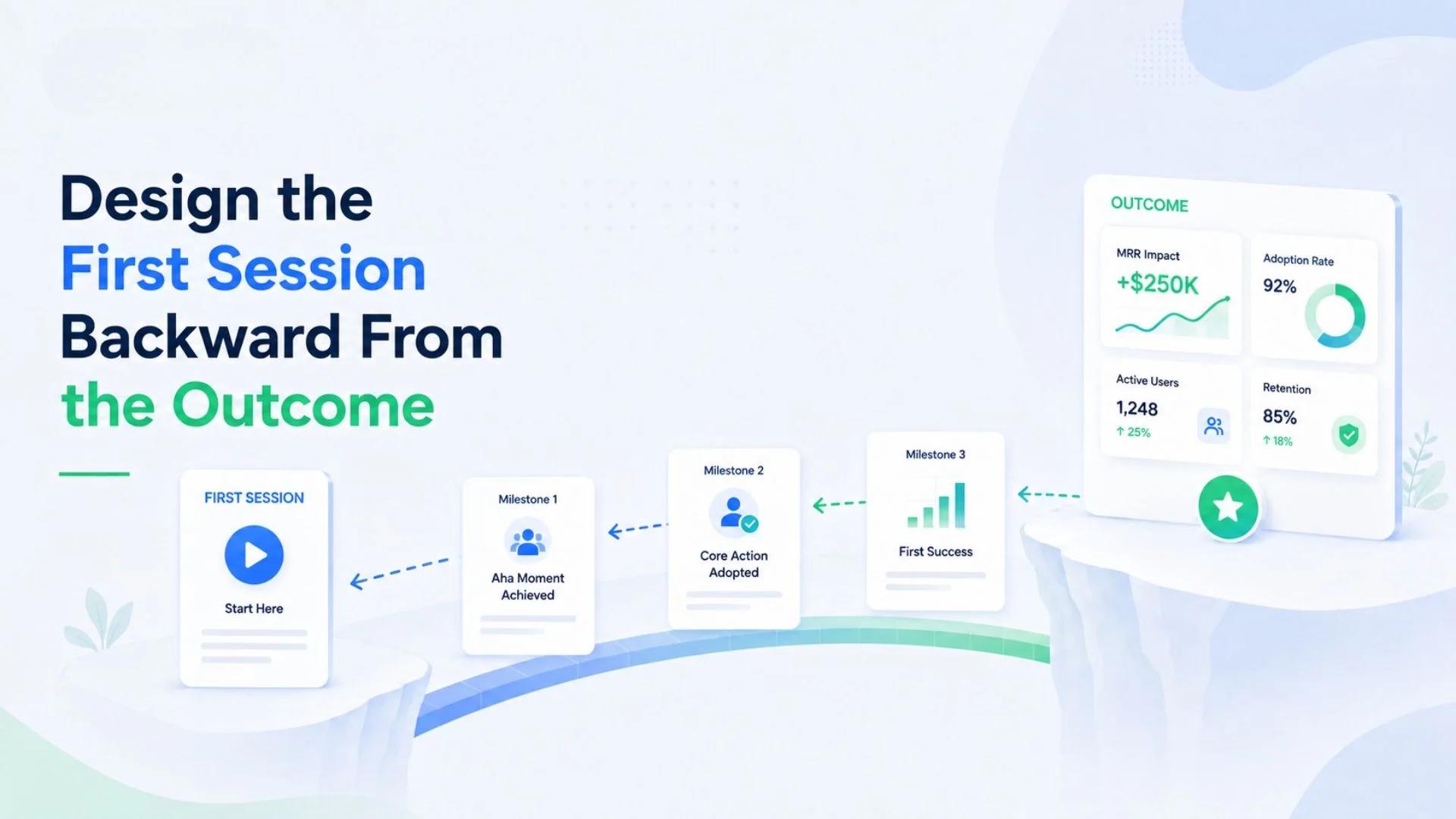
Start by naming the first value event in plain language. “Create workspace” is a product event; “see all open customer requests in one queue” is an outcome. “Invite three users” is setup; “assign a request and move it to completion” demonstrates a workflow.
Once the first value event is clear, review every step that appears before it. Some setup is essential, while other steps may simply reflect how the product was built rather than how the customer wants to work.
Sample data can make an empty dashboard immediately understandable. Optional settings may be better introduced later, once the user has context for them. In some products, the first useful result can happen before every integration is connected. Role-based onboarding can also reduce noise by showing each team only what matters to its job. Templates are especially useful when they help customers start from something recognisable instead of facing a blank workspace.
The ideal onboarding path also varies by product type. A broad collaboration tool and an industry-specific platform should not force customers through identical onboarding logic; the workflows and domain assumptions are different. That distinction is one reason it helps to understand whether a product behaves more like horizontal or vertical SaaS.
Human help still has a place. Complex B2B accounts may need migration support, workflow design or administrator training. The goal is to use human expertise where it genuinely reduces uncertainty.
Measure Value, Not Completion
A high onboarding-completion rate means little if the checklist has weak connection to customer success. TTV becomes useful when measurement is tied to a meaningful event.
Track the median time from a defined starting point—such as account activation or usable access—to the first value event. Then segment it. A five-person agency, a 500-seat enterprise account and a customer migrating years of data should not necessarily share the same benchmark.
Four supporting measures make the number more actionable:
- Value-event rate: the percentage of new accounts that reach the first meaningful outcome within a defined window.
- Pre-value drop-off: where users abandon setup before reaching that outcome.
- First-to-second value time: how long it takes a customer to repeat the useful result.
- Assistance before value: the support tickets, calls or manual interventions required before the first outcome appears.
Amplitude’s 2025 analysis found that products with strong early activation were also more likely to show strong three-month retention; 69% of products in its strong early-activation group were strong retention performers at three months. That is an association, not proof that faster activation alone causes retention, but it reinforces why the first useful experience deserves serious measurement. See Amplitude’s time-to-value and retention analysis for the methodology and cohort findings.
A Worked Example: Reduce the Distance, Not the Product
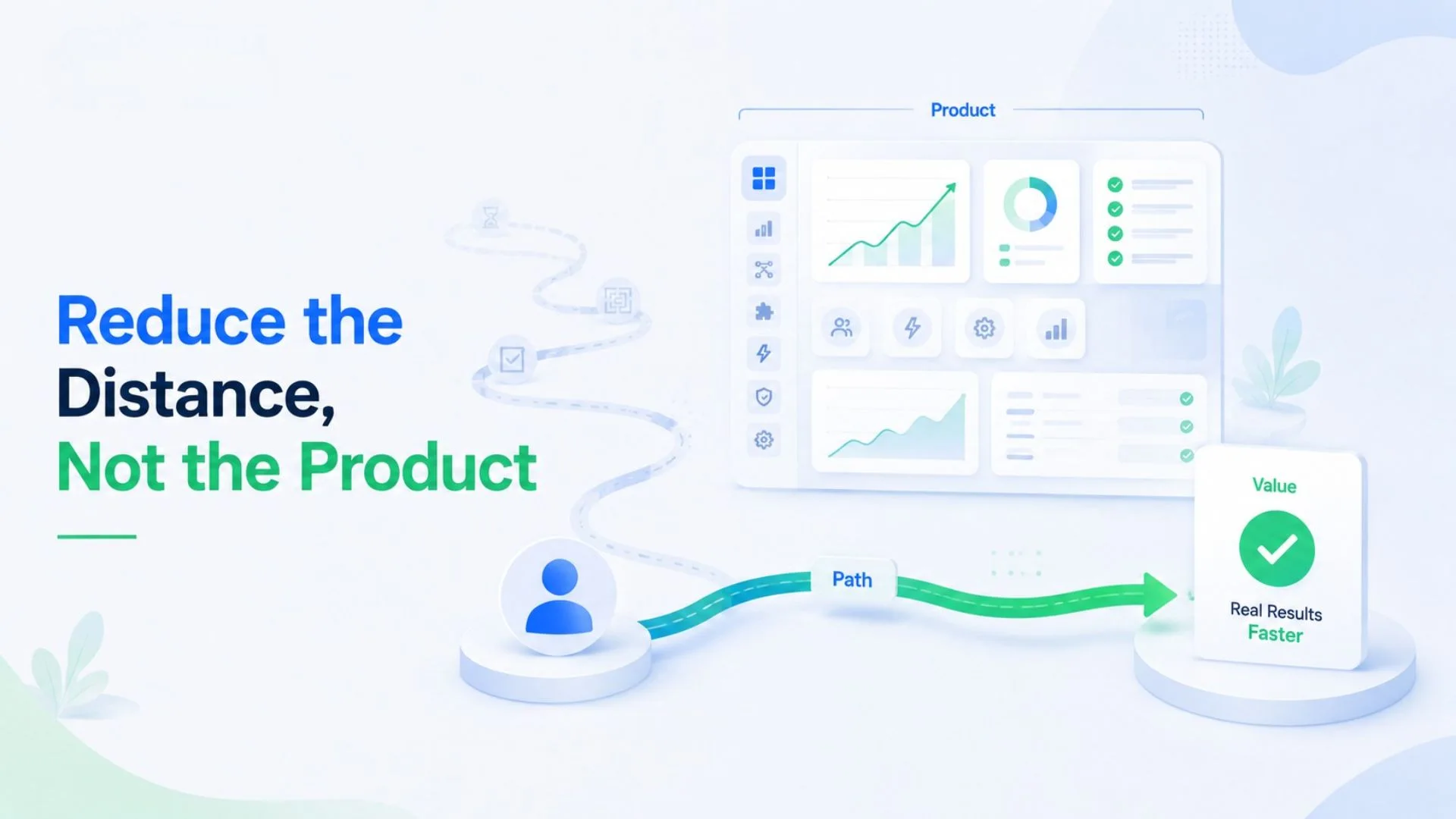
Consider a hypothetical B2B reporting platform. Its original onboarding asks customers to invite the team, connect six data sources, define permissions, configure alerts and build a report from scratch. The first trustworthy output appears on day three.
A redesigned path asks for one primary data source, recommends a dashboard based on the customer’s role and generates a live report immediately. The user can verify the numbers, save the view and share it. Additional integrations, permissions and alerts appear later, when they improve an outcome the customer already understands.
No feature was removed; the sequence changed. Progressive onboarding can make advanced software easier to appreciate because customers encounter complexity in context rather than as an entrance fee.
Fast TTV Does Not Mean Rushing Every Customer
Some B2B products require slower onboarding. Data migration may need validation, and an enterprise rollout may involve administrators, integrations or training. A specialised workflow cannot always be reduced to a two-minute wizard.
The useful target is therefore not the shortest possible TTV. It is the shortest credible path to meaningful value.
Cutting a required step just to improve a dashboard metric is not optimisation. Fast onboarding works when speed comes from removing waste, not substance.
This also protects the wider software environment. When employees cannot get value from an approved product, they may fall back to spreadsheets, side tools or duplicated applications. Over time, those workarounds can contribute to the kind of confusion described in our guide to SaaS sprawl.
Customers Remember the First Useful Result
B2B SaaS companies compete through feature pages, but customers experience products through workflows. A feature has practical value only when it helps someone complete a job, make a decision or reduce effort.
That is why onboarding should not be treated as a tour of everything the product can do. It should be the shortest well-designed route from expectation to evidence.
Define the first meaningful value event. Remove setup that does not support it. Measure how long different customer segments take to reach it. Then help customers repeat the result until the software becomes part of normal work.
Features still matter—especially once a product is embedded. But before customers explore the depth of a platform, they need a reason to stay. As we noted in our look at what modern SaaS founders can learn from legacy platforms, the products that endure tend to become useful parts of real workflows. Fast time to value is where that relationship begins.