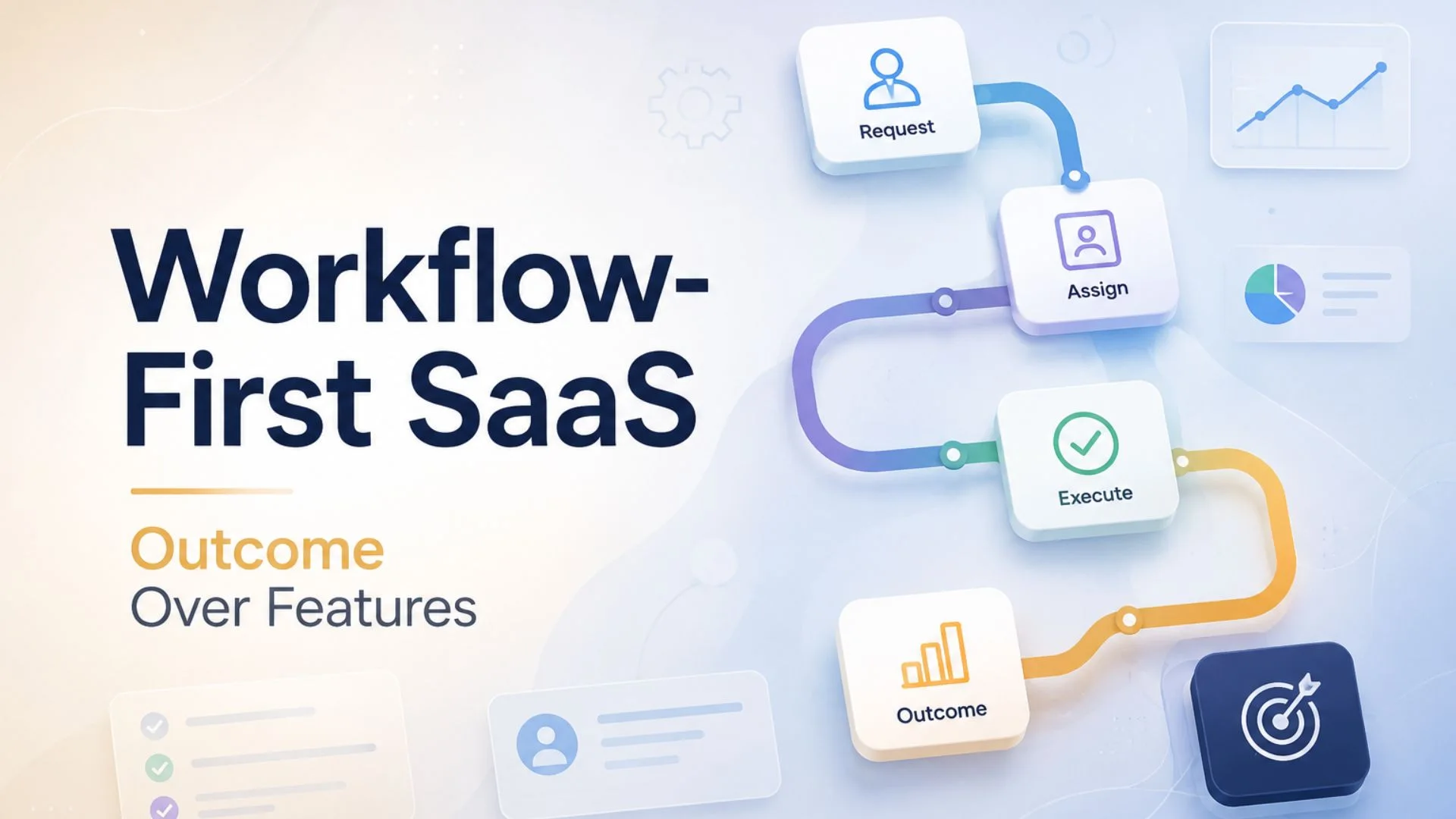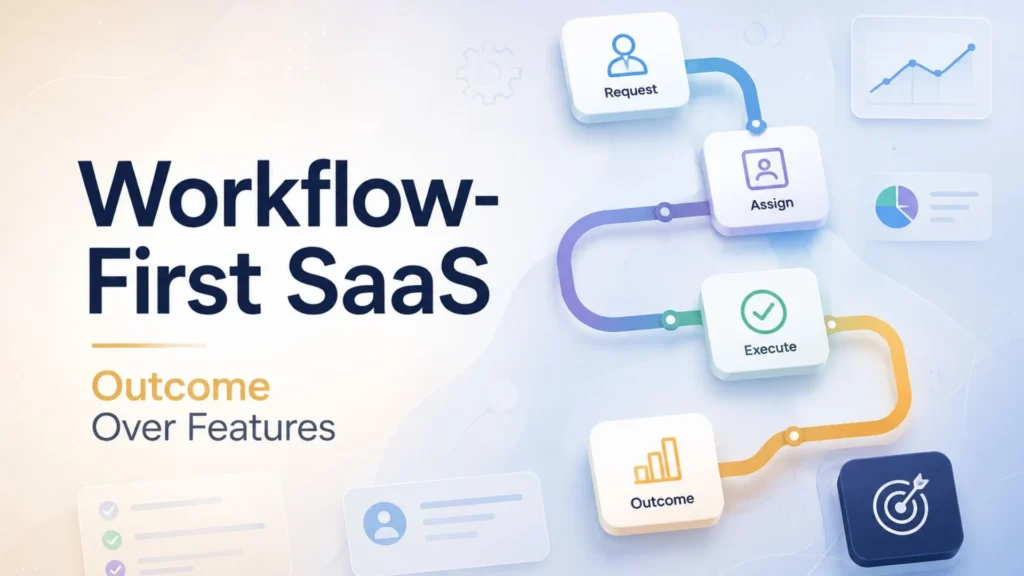
This is the idea behind workflow-first SaaS: evaluating and designing software around the outcome a business is trying to produce, then fitting features into that process where they actually help.
The Buying Conversation Is Moving Closer to Business Results
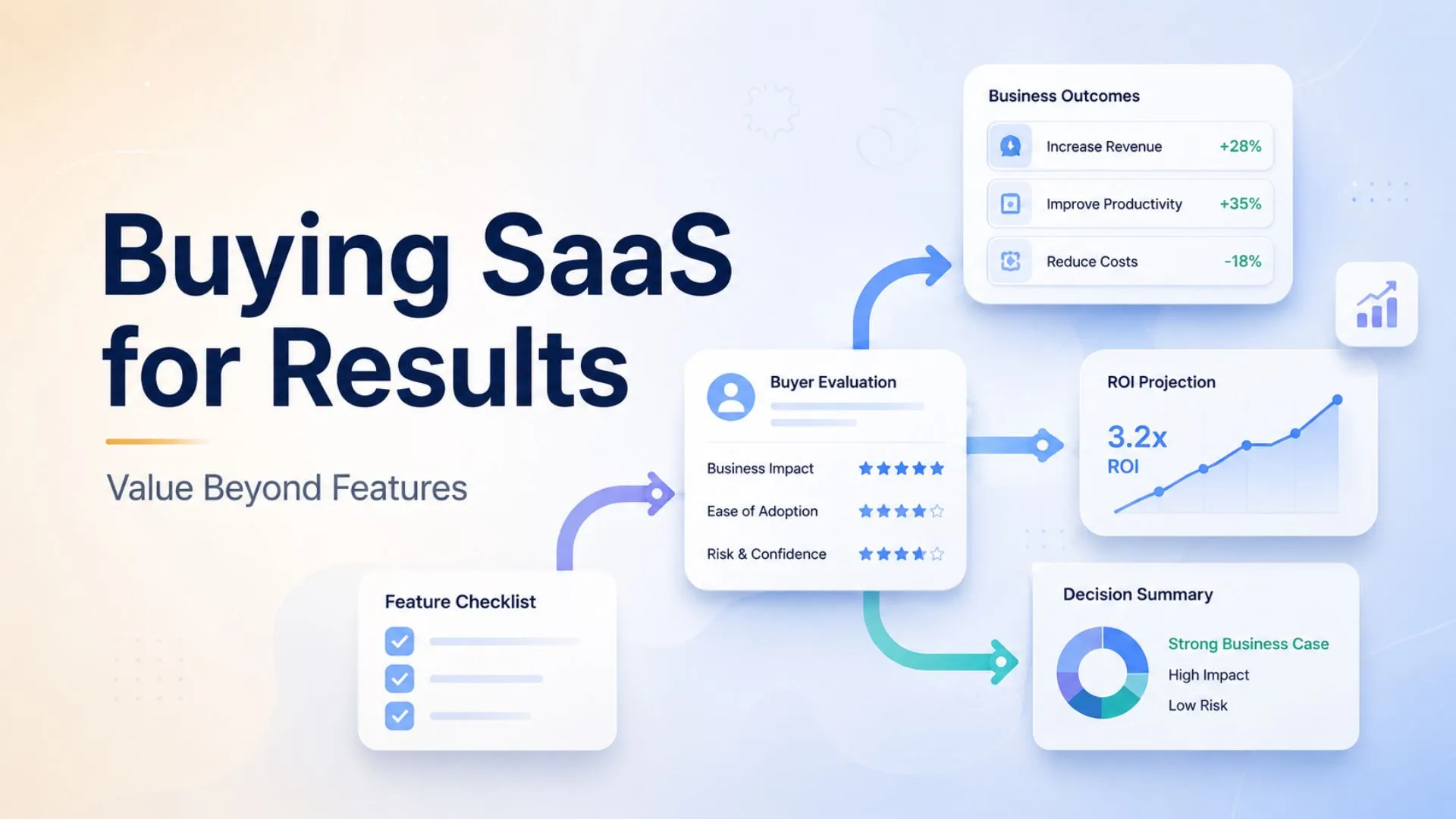
B2B software buyers have become more demanding about proof of value. G2’s 2025 Buyer Behavior Report findings, based on a survey of 1,169 B2B decision-makers, show how strongly this expectation has developed.
More than two-thirds of respondents said they would pay a premium for AI functionality, rising to 88% among self-described power users, when vendors could clearly demonstrate value or productivity gains. G2’s recommendation to software sellers was equally direct: lead with ROI rather than features.
The shift goes beyond AI. As businesses accumulate more applications, each additional purchase has to justify the effort required to introduce it into an existing environment. A company with a mature business SaaS stack already has established systems for communication, customer management, reporting, projects and data. A new application succeeds when it improves how those systems and the people using them work together.
This changes the buying question from “How much can this product do?” to “How much useful work will this product help us complete?”
Features Live Inside Workflows
Features are building blocks. Workflows provide the sequence that gives those blocks meaning. Microsoft describes business process flows as defined steps that guide people toward a desired outcome. Atlassian similarly describes workflow management as organising the sequence through which work moves from one stage to another.
That sequence might be simple:
Request received → owner assigned → work completed → approval recorded.
Or it may cross several departments and applications:
Lead captured → account enriched → sales qualification → proposal approval → contract signature → customer onboarding → billing.
A feature-first evaluation tends to inspect each capability independently. The CRM has automation. The proposal platform supports templates. The billing tool has an API. Every box appears checked.
A workflow-first evaluation follows the work across those boundaries. It looks at how information moves, where employees intervene, what happens during an exception and whether the final result can be measured.
That broader view often reveals friction that a feature checklist misses.
The Handoffs Are Often Where Software Earns Its Place
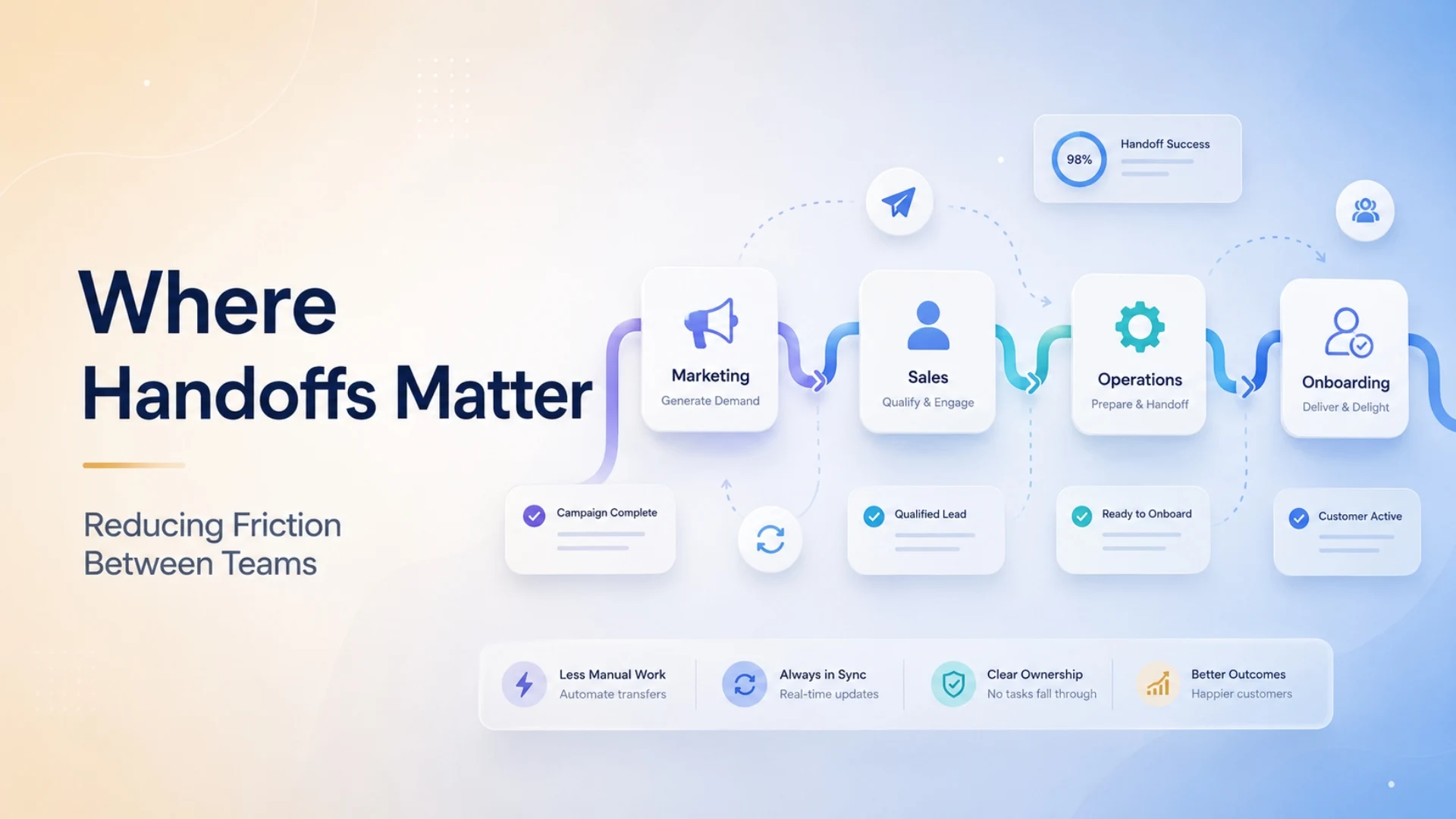
Most business processes contain handoffs. Marketing passes a qualified lead to sales. Sales passes a new customer to implementation. Support escalates an issue to engineering. Procurement sends a request for approval.
Each transition creates an opportunity for delay, duplicate data entry or lost context. Consider a B2B service company where a salesperson closes a deal in the CRM. Someone then copies customer details into a project-management platform, creates a billing record, messages the delivery team and emails the customer separately.
The company may own excellent software in every category. The workflow still contains four manual bridges. A workflow-first product or well-designed integration reduces those bridges. Closing the opportunity could create the project, transfer the agreed information and trigger the appropriate onboarding tasks. Employees remain involved where judgement matters while routine movement happens consistently.
This is also where SaaS sprawl becomes relevant. Multiple tools create less operational friction when each one has a defined role and the flow between them is clear. Problems grow when teams compensate for gaps with exports, spreadsheets, duplicate records and repeated copying.
A Practical Workflow Fit Review for B2B Buyers
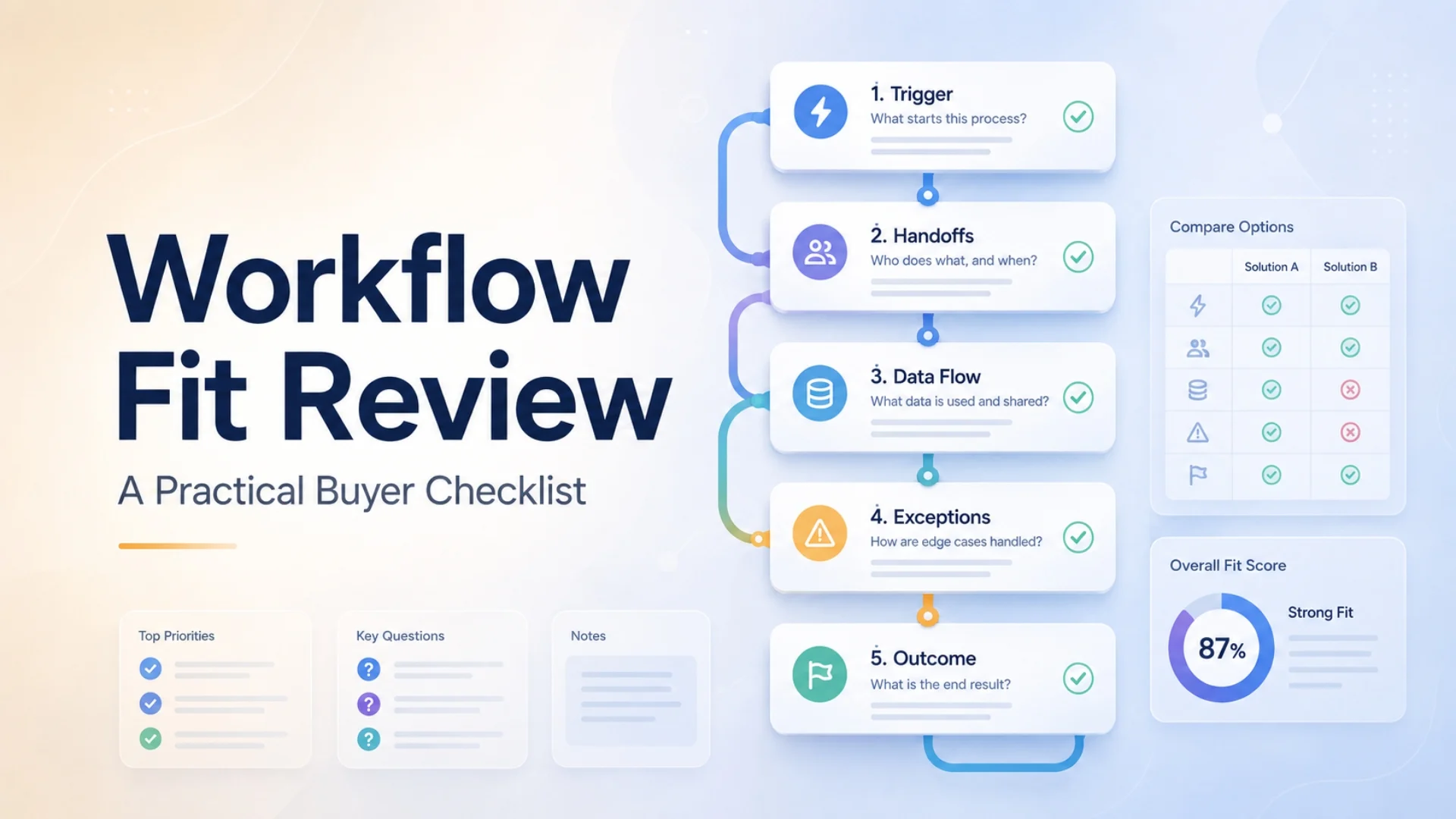
Feature comparison still has a place during software selection. It becomes more useful when it follows a workflow review rather than leading one. Before scoring vendors, map one important process the software is expected to improve. Keep the map grounded in real work rather than an idealised process diagram.
Start with the trigger
Identify the event that begins the workflow. It might be a new sales enquiry, support request, purchase request, uploaded document or completed order. A strong product should recognise that starting point cleanly and capture the information required for the next stage.
Follow the handoffs
Track every point where responsibility moves from one person, department or system to another. These transitions deserve more attention than individual buttons because they often determine whether work keeps moving.
Watch the data
Record which information has to travel with the workflow. Customer identity, project status, approval history and commercial details should remain consistent as work moves between stages. Repeated re-entry is useful evidence that the software environment is creating administrative work of its own.
Include exceptions
Clean product demos usually follow the happy path. Business operations contain incomplete records, rejected approvals, changed deadlines and unusual requests. A useful workflow review therefore includes at least one realistic exception. The way software handles that situation often says more about operational fit than another advanced feature demonstration.
Define the observable result
The workflow needs an end state that the business can recognise. “Uses automation” is a capability. “Qualified enquiries reach the appropriate sales owner within ten minutes” is an operational result. That level of specificity makes vendor comparisons much more meaningful.
Workflow Fit Depends on the Type of SaaS
The importance of workflow depth changes across product categories. A horizontal application designed for many industries usually has to remain flexible. It may rely on configurable fields, integrations, templates and automation to support different ways of working.
Vertical SaaS can encode more industry context directly into the product because its users share specialised processes, terminology and constraints. Our guide to horizontal vs vertical SaaS explores that distinction in more detail.
Neither approach guarantees strong workflow fit. A flexible horizontal platform can become deeply embedded through thoughtful configuration. A vertical platform can understand an industry well yet handle a particular organisation’s process poorly. The useful evaluation remains the same: trace the work.
AI Makes Workflow Design More Important, Not Less
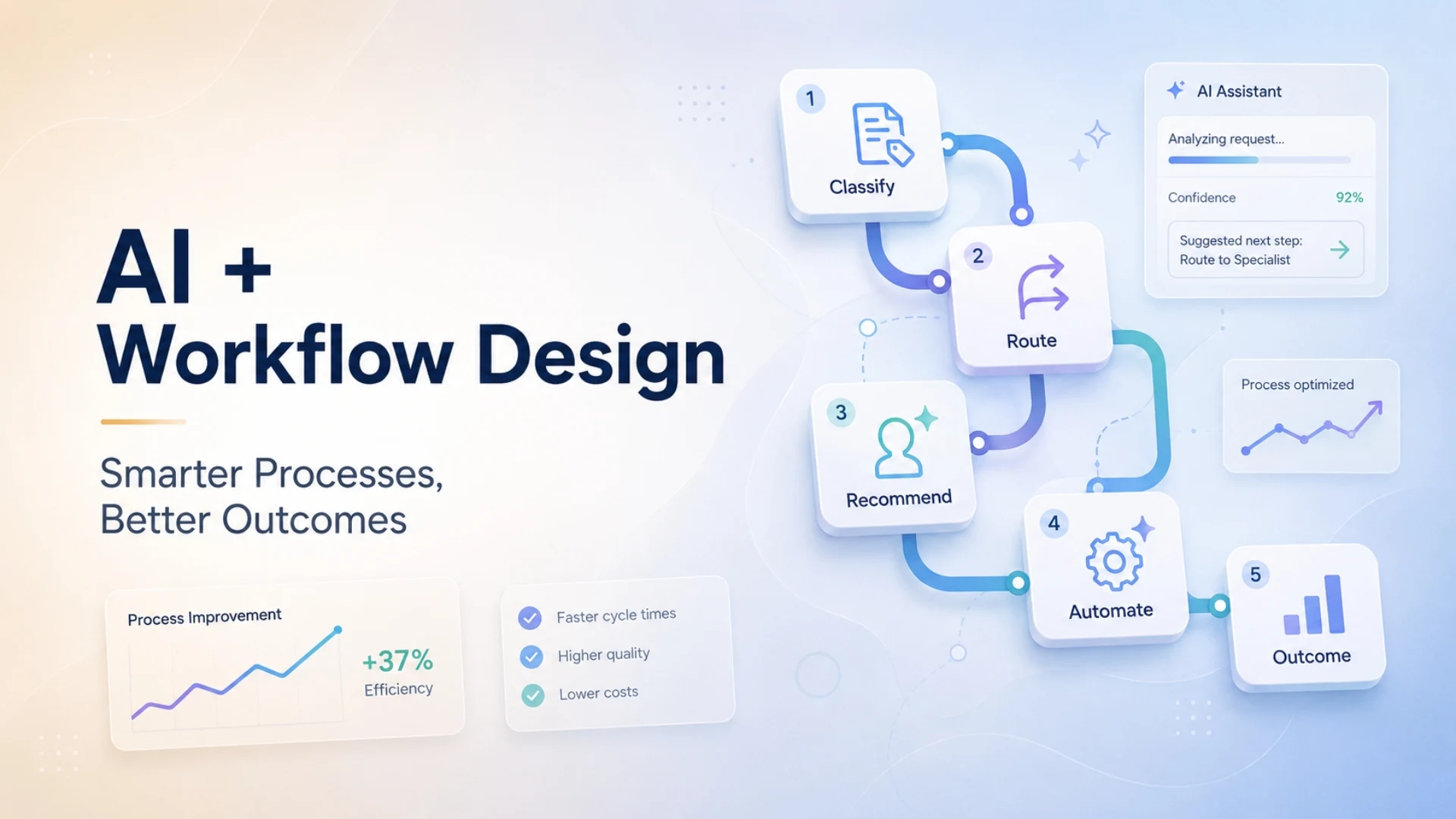
The current AI wave gives this discussion another dimension. Adding an AI assistant to a dashboard is relatively easy to demonstrate. Producing a measurable improvement across a complete process is a harder product problem.
Microsoft’s Power Automate platform increasingly combines AI with process automation across applications and systems, while newer agent-based tools are designed to carry out multi-step work rather than simply generate isolated outputs.
The difference becomes clear in a support workflow. An AI feature might summarise a customer ticket. A workflow-oriented system can classify it, retrieve account context, route the case, suggest a response, trigger an escalation when required and update the record as the case progresses.
The summarisation feature may still be valuable. The larger operational gain comes from what happens around it. This is one reason the industry discussion around AI is moving toward processes and outcomes. G2’s 2025 research found that buyers increasingly expect vendors to demonstrate productivity gains, while Microsoft describes AI-enabled automation in terms of improving business processes rather than treating AI purely as a standalone capability.
Feature Breadth Can Still Matter
Workflow-first thinking does not reduce software selection to one process. B2B products need enough capability to grow with customers. Reporting, permissions, administration, integrations and configuration can become critical as adoption spreads. A product that handles today’s workflow beautifully may become restrictive when the organisation adds regions, departments or new operating models.
The distinction is one of priority. Feature breadth describes potential capability. Workflow fit shows how much of that capability becomes useful in the customer’s environment.
A mature buying process examines both. The workflow establishes the real-world requirement first; the feature set then shows whether the product can support that requirement today and as it evolves.
Embedded Work Becomes a Stronger Moat Than a Long Feature List
There is also a strategic lesson here for SaaS companies themselves. Competitors can copy visible features surprisingly quickly. Reproducing a product’s place inside a customer’s operation is harder.
A tool becomes increasingly valuable when teams rely on it for handoffs, records, approvals, integrations and routine decisions. This helps explain why some older software remains deeply entrenched even after newer alternatives arrive with cleaner interfaces and broader feature lists.
We explored the same idea in what modern SaaS founders can learn from legacy platforms: durable products often survive because real processes have formed around them.
Workflow-first product development builds toward that kind of relevance deliberately. Product teams study where work begins, how context moves, where people wait and which steps create the final result. Features are then judged by the contribution they make to that journey.
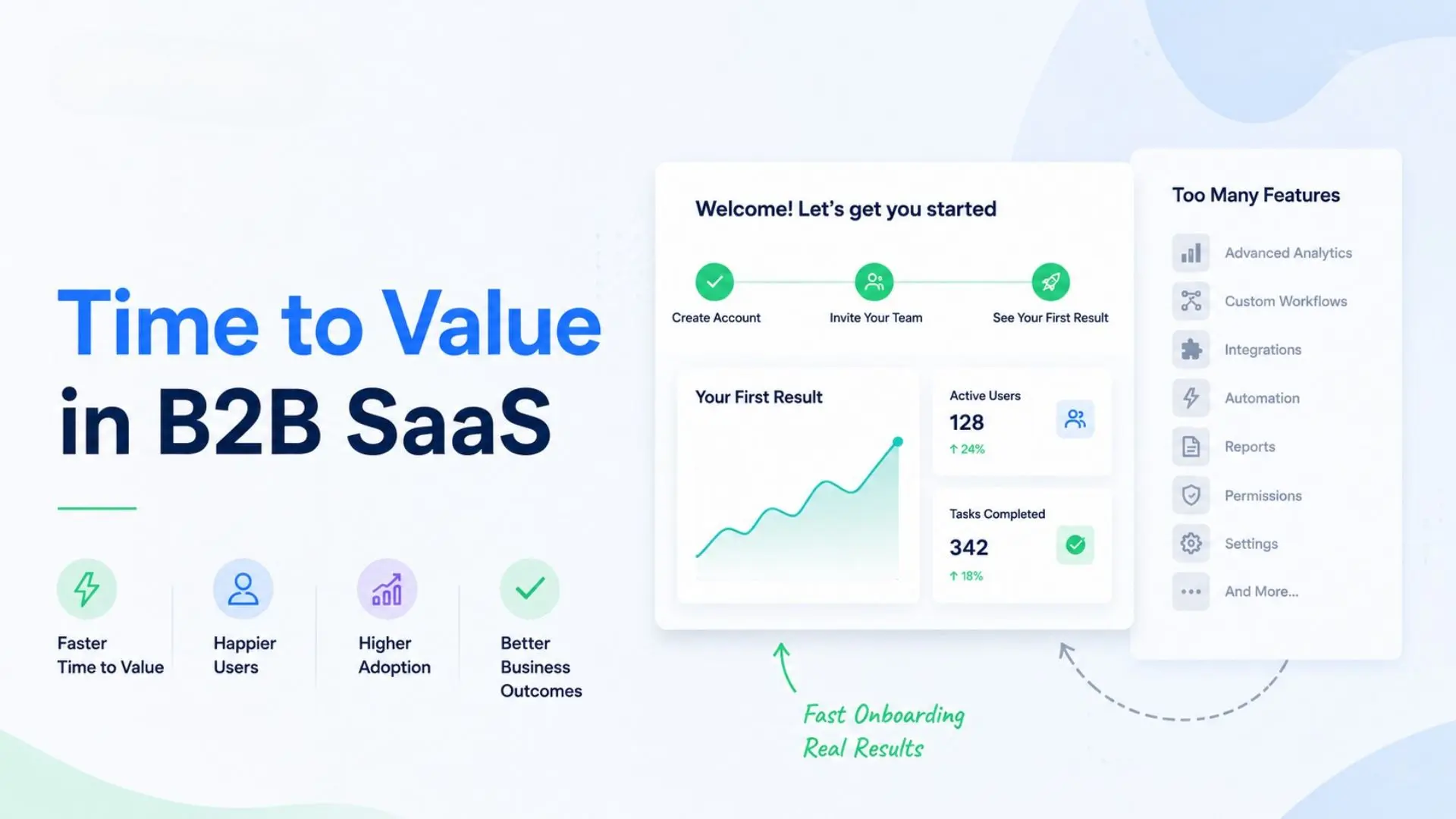
Also Read: Time to Value in B2B SaaS: Why Fast Onboarding Matters More Than More Features
Software Buyers Are Ultimately Buying a Change in How Work Gets Done
A company rarely purchases SaaS because it wants another interface. It wants customer requests handled faster, projects coordinated with fewer gaps, reports produced with less effort or decisions made with better information.
That is why workflow-first SaaS is a useful lens for modern B2B buying. Start with a real process. Trace its data and handoffs. Include the messy exception that usually appears after the demo. Decide what a successful outcome looks like. Only then evaluate which product capabilities make that result easier to achieve.
A long feature list can describe an impressive product. A well-supported workflow shows what that product will actually change.