Two companies can use the same SaaS product through very different technical setups. One might receive a dedicated application and database. Another might share infrastructure with hundreds of customers while tenant-aware controls keep its data separate.
That is the practical difference between single-tenant and multi-tenant SaaS. The choice shapes cost, scalability, security, customisation and upgrades. The right model depends on what must be isolated and what can safely be shared — not on which one sounds more secure.
What Is a Tenant in SaaS?
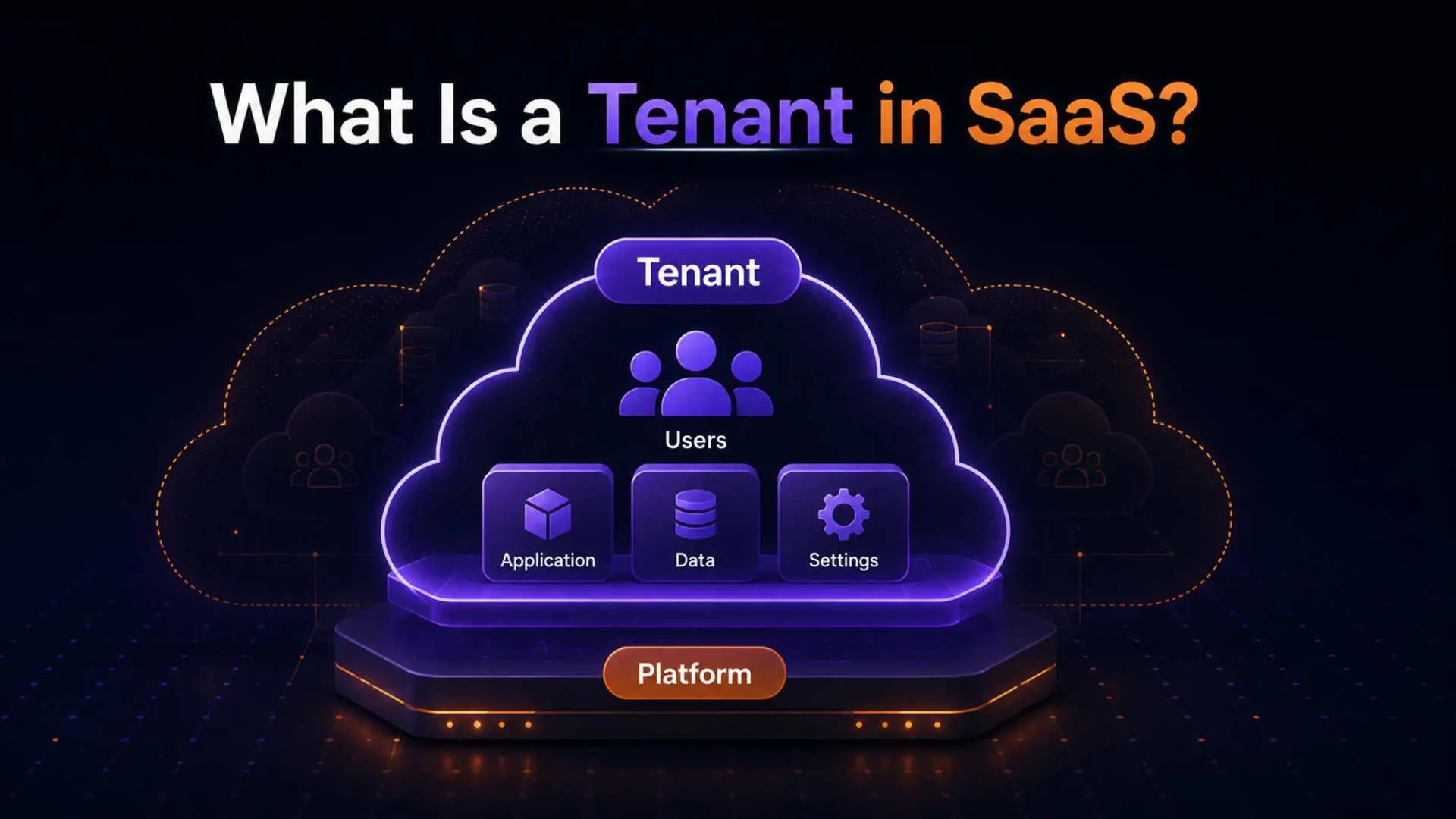
A tenant is a customer or customer group using the application within its own controlled boundary. In B2B SaaS, one tenant commonly represents a company with many users.
A tenant represents the customer boundary; users are the individual people or accounts inside it. A project manager and an accountant may be separate users within the same tenant. One deployment may serve several tenants, or a deployment may serve only one tenant.
Tenancy describes product architecture, while horizontal and vertical SaaS describe market scope. A product can be horizontal or vertical while using either tenancy model.
What Is Single-Tenant SaaS?
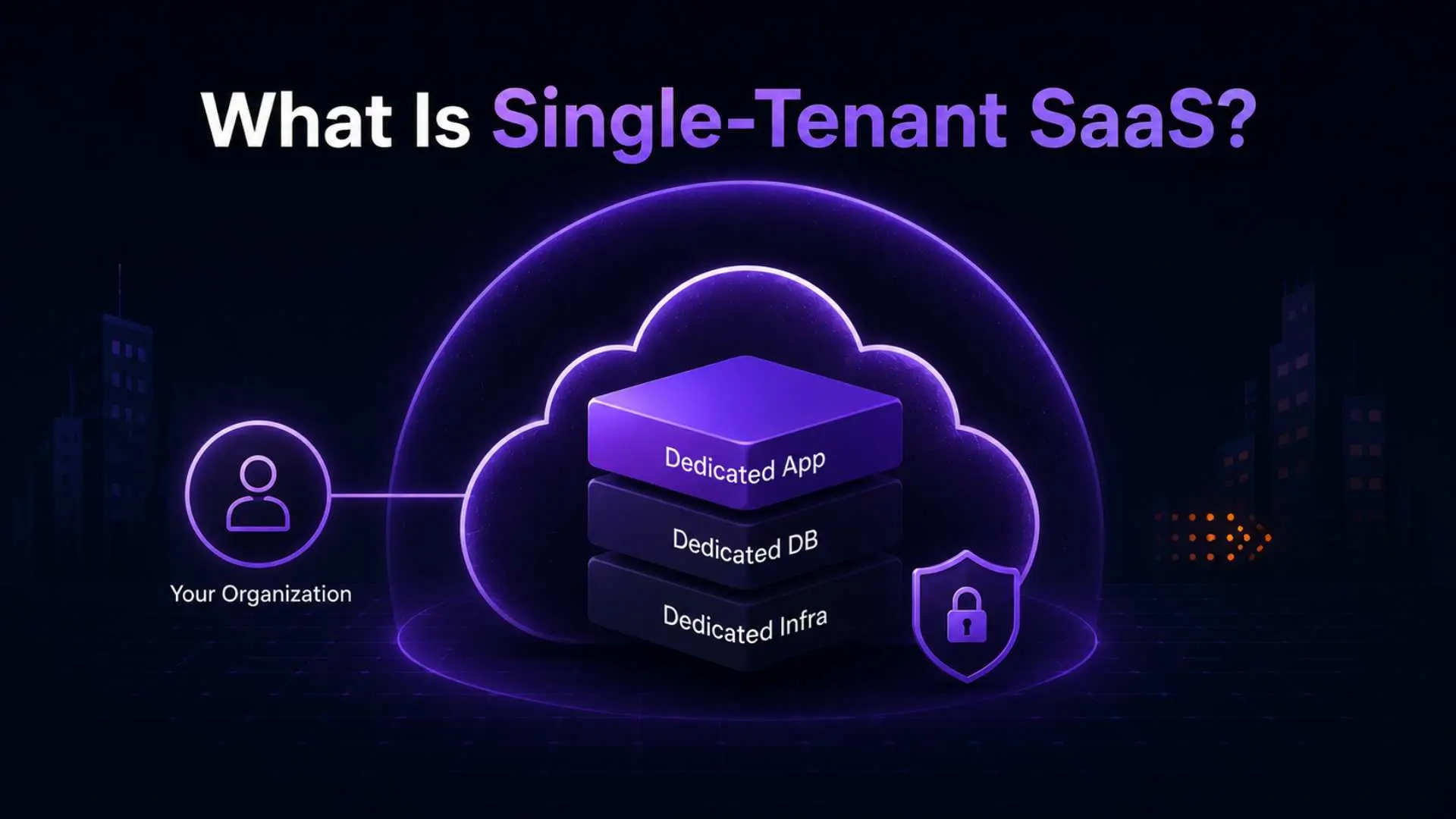
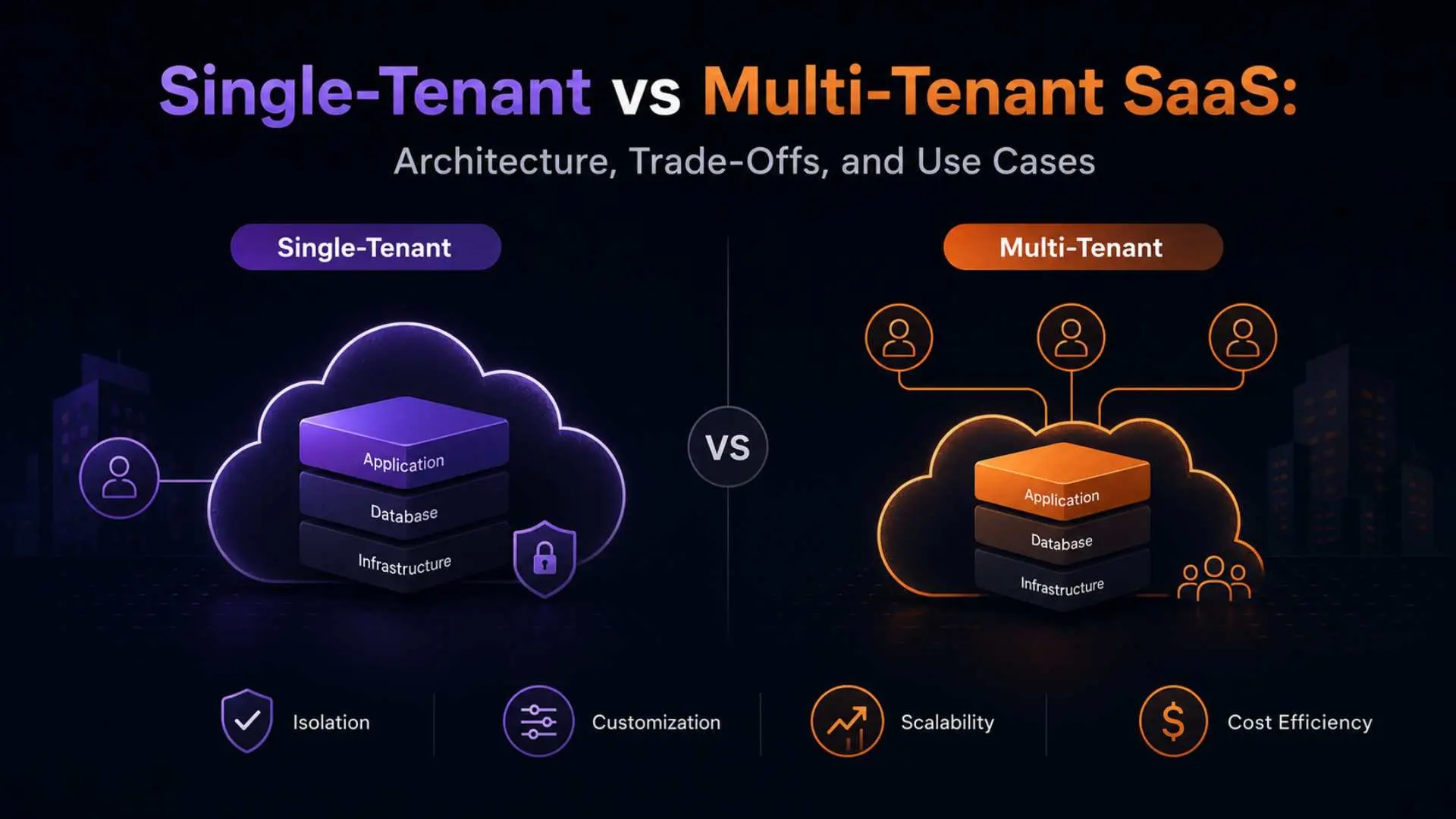
In single-tenant SaaS, each customer receives a dedicated application instance and often dedicated resources, such as a database. The provider can host and maintain the product in the cloud, preserving the managed SaaS delivery model.
Think of it as a separate flat in a managed building. The provider looks after the property, but each customer has a more distinct technical boundary.
This model can make customer-specific configuration, performance, maintenance windows and data-residency requirements easier to accommodate. Each tenant also adds infrastructure to provision, monitor, patch and upgrade.
What Is Multi-Tenant SaaS?
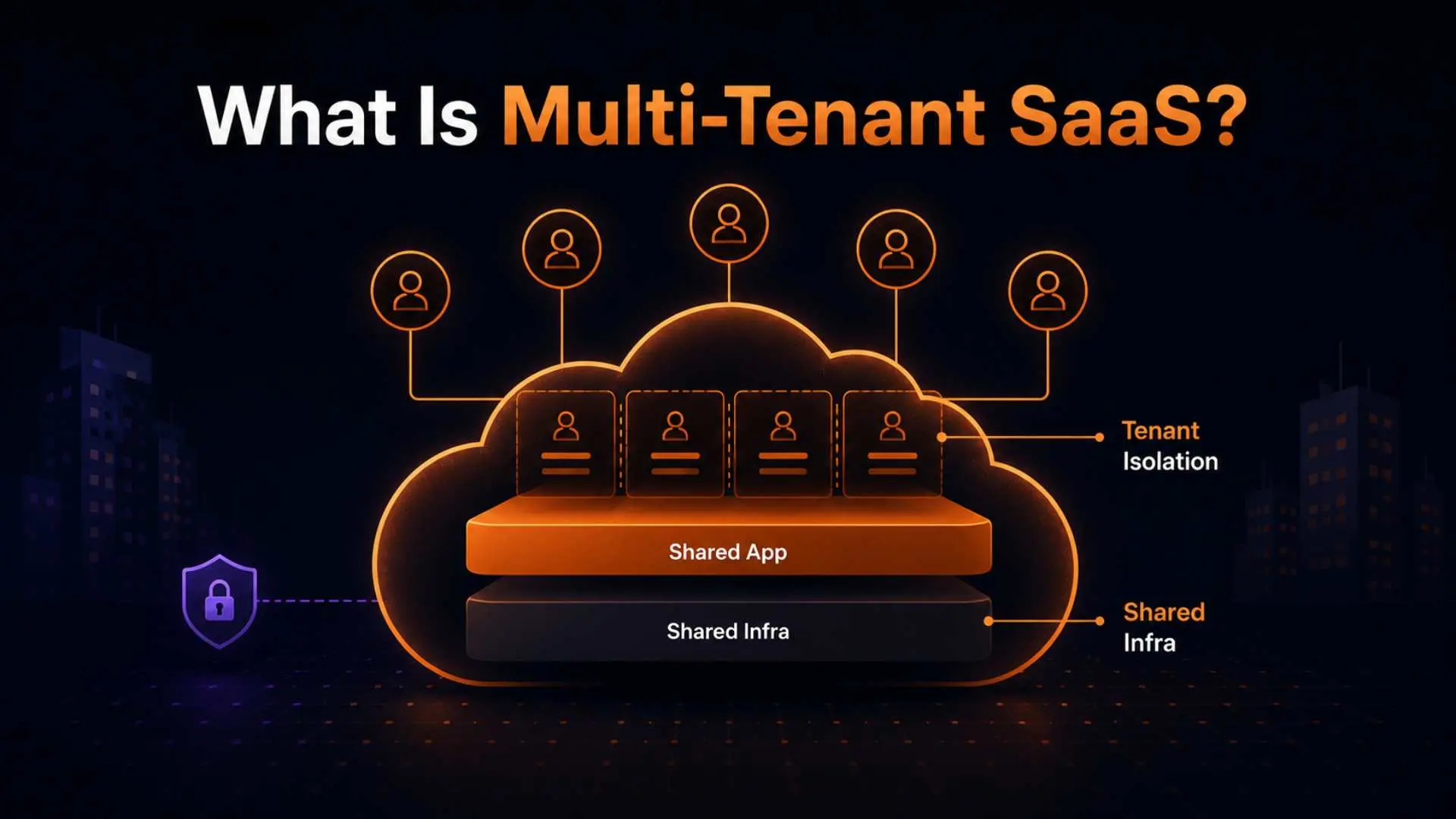
In multi-tenant SaaS, customers share at least some application or infrastructure components. Their data and access remain separated through tenant-aware identity, authorisation and data controls.
It is closer to an apartment building with shared foundations and services but locked private units. Shared capacity lets the provider use resources efficiently, onboard customers quickly and deploy one product update across the user base.
Providers can choose the isolation boundary separately for each layer. For example, the application may be shared while every tenant receives a separate database. Microsoft’s multitenancy guidance describes a range of resource-sharing models rather than a simple shared-or-dedicated switch.
Single-Tenant vs Multi-Tenant SaaS at a Glance
| Area | Single-tenant SaaS | Multi-tenant SaaS |
| Application | Separate instance per tenant | One or more shared instances |
| Data | Commonly a dedicated database | Shared database, separate schema or separate database |
| Cost per tenant | Often higher because resources are duplicated | Can be lower at scale |
| Customisation | Greater tenant-level flexibility | More standardised configuration |
| Scaling | Resources scale tenant by tenant | Shared capacity can scale across tenants |
| Updates | Can allow separate schedules | Usually released centrally |
| Performance | Dedicated capacity is easier to reserve | Requires controls for resource contention |
| Operations | More environments to manage | Fewer deployments, but more tenant-aware logic |
| Isolation | Clearer infrastructure boundary; controls still required | Logical or mixed isolation; controls must be enforced |
| Best fit | Complex enterprise requirements | Standardised products serving many customers |
The Main Architecture Trade-Offs
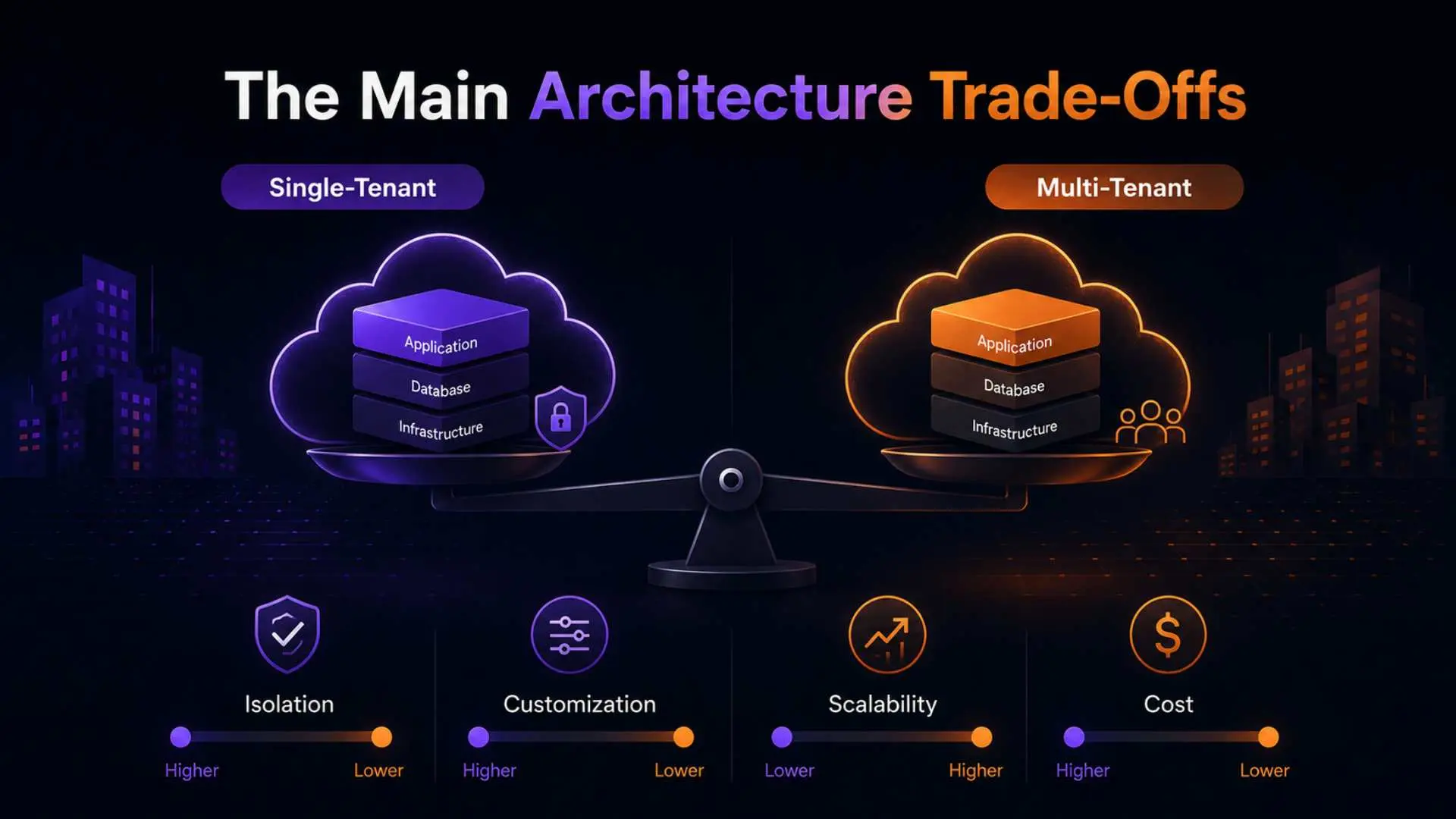
Isolation and Security
Dedicated infrastructure creates a clearer boundary. Security still rests on correct access controls, secure code, credential protection and reliable configuration.
Multi-tenant systems need isolation controls at every layer. AWS describes tenant isolation as the mechanisms that prevent one tenant from accessing another tenant’s resources. Authentication verifies identity; tenant-aware authorisation must then carry tenant context through every request, query, cache entry, file and background job.
Cost and Operational Effort
Multi-tenancy spreads compute, storage and operational work across customers, which can lower the provider’s cost per tenant at scale. Pricing remains a business decision. A shared deployment also gives the operations team fewer environments to patch and monitor.
Single-tenancy duplicates more infrastructure. Automation can reduce the burden, but the vendor still manages a growing fleet of tenant environments. Pricing must cover that cost.
Scalability and Performance
Shared capacity lets a pooled platform expand as demand grows. Heavy usage from one tenant can still reduce performance for others; AWS calls this the noisy-neighbour problem. Quotas, rate limits, workload scheduling and per-tenant monitoring help protect service quality.
Dedicated resources reduce cross-tenant contention and make capacity easier to reserve. Shared dependencies and application bottlenecks can still affect performance, while unused headroom increases cost because each environment must be sized for its own peaks.
Customisation and Updates
Single-tenant deployments can support customer-specific configurations, versions and maintenance schedules. Too much variation creates version drift and harder testing.
Multi-tenant products favour configuration over custom code. Central releases give every tenant fixes and features quickly, but customers have less control over upgrade timing. Strong feature flags and backward-compatible APIs can provide flexibility without splitting the codebase.
Reliability and Blast Radius
A fault in a shared service can affect many tenants at once. A dedicated deployment narrows that blast radius. Operating many environments creates a different risk: configuration can drift across the fleet.
Reliable SaaS architecture combines tested backups, observability, capacity planning and recovery. These operational controls matter alongside tenant isolation and other secure SaaS development practices.
Common Multi-Tenant Data Patterns
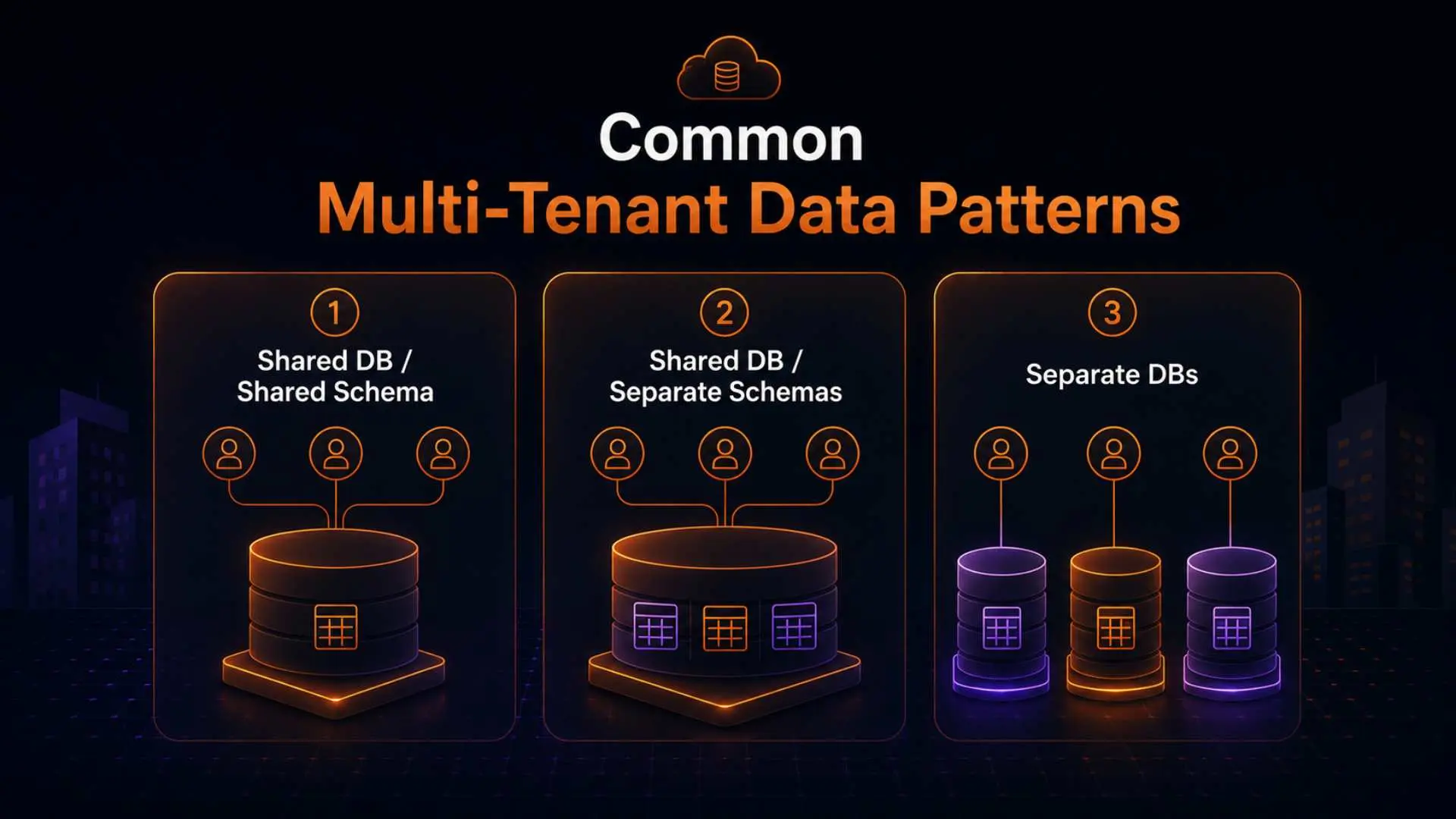
Multi-tenant SaaS can separate data in several ways:
- Shared database and shared tables: each record carries a tenant ID. This pattern is efficient at scale and requires consistent query scoping, access policies and tenant context in caches, object storage and background jobs. Database features such as row-level security can add another enforcement layer.
- Shared database with separate schemas: tenants share the database service while their data is organised into distinct schemas. The boundary improves organisation; permissions and tenant-aware application controls provide the actual security enforcement.
- Separate database per tenant: the application may be shared while data stores are isolated. This pattern strengthens data separation and can simplify per-tenant restores, while provisioning, connection management and maintenance become more complex.
Tenant count, workload size, compliance obligations, restore needs and the team’s automation maturity should drive the data pattern. A later migration can be expensive, so teams should make this decision early and document a path for moving tenants between models.
Also Read: Micro-SaaS: Why Small Tools Are Beating Big Platforms in 2026
When Each Model Makes Sense
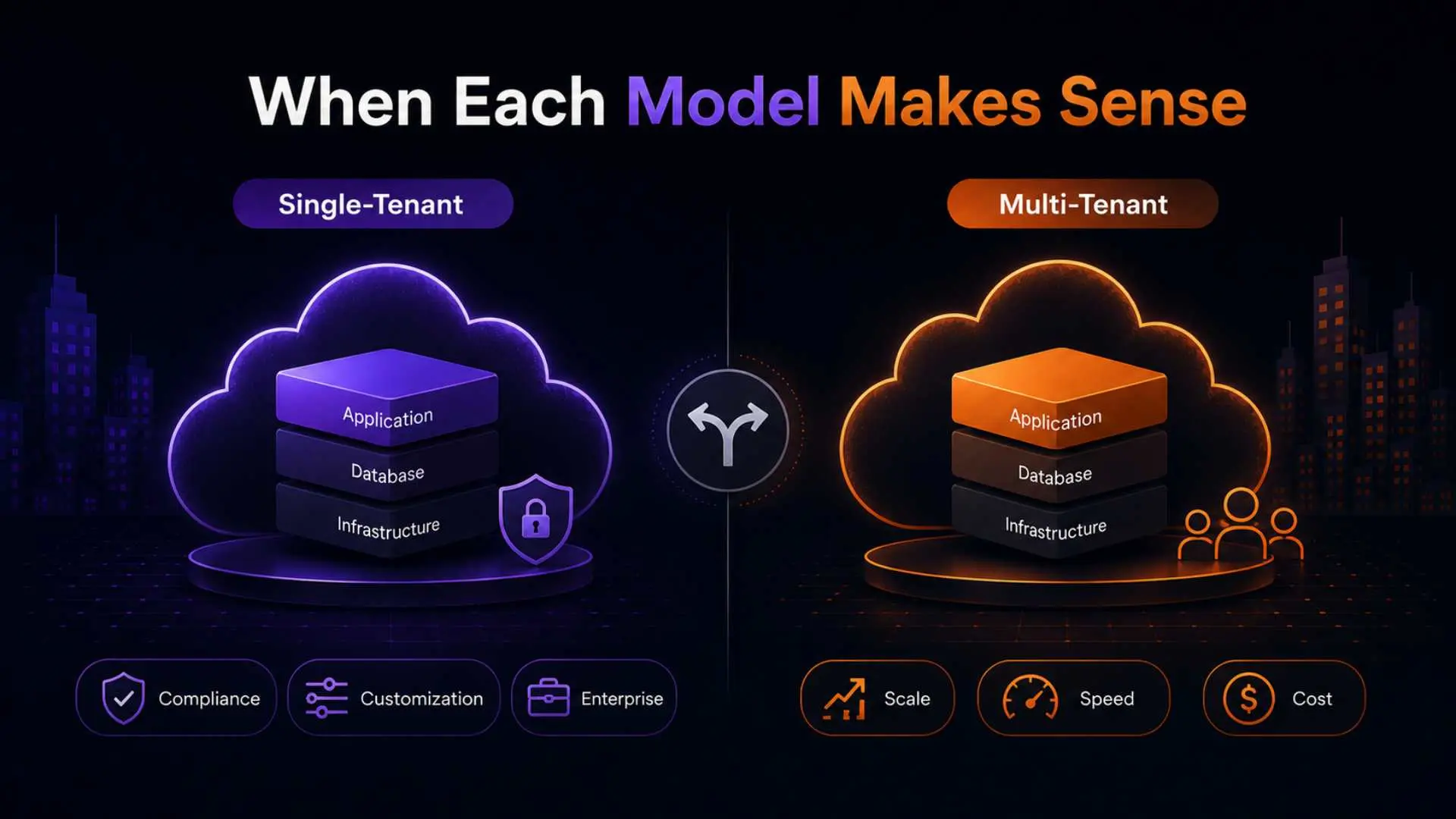
Single-tenant SaaS fits customers that need dedicated infrastructure, specific data-residency arrangements, reserved performance, separate maintenance windows or extensive configuration. It often suits a smaller group of high-value enterprise customers where the business case supports additional operating cost. Regulated organisations may request these controls, although the applicable law, contract and data sensitivity determine the required architecture.
Multi-tenant SaaS fits products serving many customers through a largely standard experience, such as CRM, collaboration, project-management or marketing platforms. It works well for self-service onboarding, predictable workflows, frequent releases and efficient scaling.
Mixed customer needs often call for a hybrid or bridge model. Most tenants can run in shared pools while larger or sensitive customers receive dedicated databases, compute or complete deployments. This approach applies pooled and siloed isolation at the layers where each creates the most value.
A practical decision review should cover:
- What isolation does each customer actually require?
- How many tenants must the platform support?
- Can provisioning, upgrades and monitoring be automated?
- Do customers need reserved performance or unique maintenance windows?
- Will contract value cover dedicated infrastructure?
- How would a tenant move from a shared pool to a dedicated deployment?
Final Takeaway
Single-tenant SaaS gives each customer dedicated resources, greater customer-specific control and a smaller failure boundary; the provider carries more infrastructure and operational overhead. Multi-tenant SaaS concentrates customers on shared services, supporting efficient scaling and consistent releases while demanding rigorous tenant isolation and workload controls.
Many products benefit from a blended architecture. Design isolation at the application, data and infrastructure layers according to risk, customer value and operational capacity. The strongest choice is the model the team can secure, automate and support reliably as the customer base grows.
Frequently Asked Questions
Is multi-tenant SaaS less secure than single-tenant SaaS?
Security comes from the controls implemented across the system. A well-designed multi-tenant platform can protect customer data through tenant-aware authorisation, encryption, monitoring, patching and consistent isolation. Single-tenancy adds a clearer infrastructure boundary, yet the same security disciplines remain essential.
Is single-tenant SaaS the same as on-premises software?
Single-tenant SaaS remains a vendor-hosted, vendor-managed cloud service. On-premises software runs on infrastructure managed by, or specifically located within, the customer’s environment.
Can a SaaS product use both models?
Many providers combine the two. Standard plans may use shared infrastructure while enterprise customers receive dedicated resources. The layers can also differ: shared compute may sit above a separate database for each tenant.
What is the noisy-neighbour problem in SaaS?
A noisy-neighbour event occurs when one tenant’s heavy workload consumes shared resources and reduces performance for others. Rate limits, quotas, workload isolation, autoscaling and per-tenant monitoring can reduce the risk.